جادوی ِ خاطرات
هر کسی از ظن خود شد یار من ... از درون من نجست اسرار منجادوی ِ خاطرات
هر کسی از ظن خود شد یار من ... از درون من نجست اسرار منArifureta Shokugyou de Sekai Saikyou
Arifureta Shokugyou de Sekai Saikyou
نام انیمه: Arifureta Shokugyou de Sekai Saikyou
نام انیمه: From Common Job Class to the Strongest in the World
نام انیمه: Arifureta: From Commonplace to World's Strongest
انیمه: ありふれた職業で世界最強
نام انیمه: از معمولی تا قوی ترین جهان
ژانر: Action, Adventure, Fantasy, Harem, Isekai
تاریخ پخش: تابستان 2019
وضعیت: تمام شده
تعداد قسمتها: 13 قسمت – فصل یک
مدت زمان هر قسمت: 23 دقیقه
منبع: Light novel
استودیو: asread., White Fox
کارگردان: Yoshimoto Kinji
زیرنویس فارسی و انگلیسی دارد
+ لینک دانلود انیمه (MKV, 720P, ~150MB)
+ تصاویر انیمه: عکس // عکس // عکس // عکس
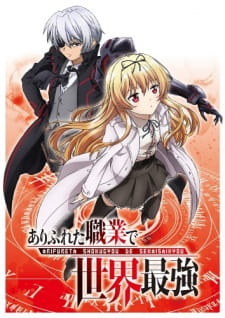
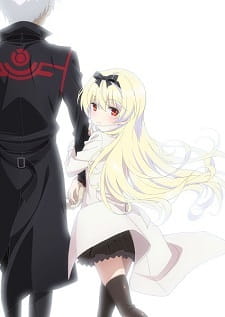
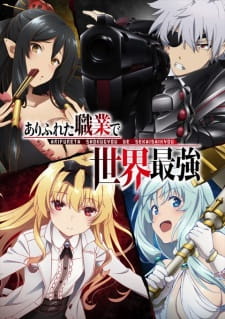
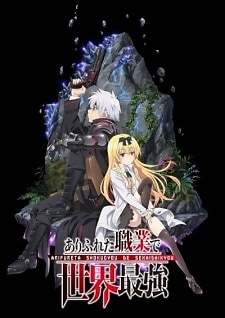
+ لینک دانلود انیمه (MKV, 480P)
+ لینک دانلود انیمه (MKV, 480P, 720P, 1080P) – هاردساب فارسی
+ لینک دانلود انیمه (MKV, 480P, 720P, 1080P) با زیرنویس فارسی
+ لینک فایل تورنت (MKV, BDRip, 1080P, EN Sub, 4.6GB)
+ لینک فایل تورنت (MKV, BD, 1080P, EN Sub, 13.3GB + Special)
+ لینک فایل تورنت (MKV, 1080P, EN Sub, 17.3GB)
+ لینک فایل تورنت (MKV, x265, 1080P, EN Sub, 3.5GB)
+ لینک دانلود انیمه (MKV, 720P, EN Sub, S01+S02)
خلاصه داستان (منبع)
هاجیمه ناگومو 17 ساله یک اوتاکوی معمولی است. ولی، زندگی ساده او از شب بیداری و خوابیدن در مدرسه ناگهان زیر و رو میشود، همراه باقی کلاس، به دنیایی فانتزی احضار میشود! همچون قهرمانان با او رفتار میشود و وظیفه نجات بشریت از انقراض به او سپرده میشود. اما چیزی که به نظر آرزوی هر اوتکویی است به کابوس هاجیمه بدل میشود. در حالی که سایر همکلاسیها قدرتهای خداگونهای دریافت کردهاند کار هاجیمه تنها یک مهارت تغییر شکل دارد...
خلاصه داستان (منبع)
هاجیمه ناگومو 17 ساله یک اوتاکوی معمولی است. ولی، زندگی ساده او از شب بیداری و خوابیدن در مدرسه ناگهان زیر و رو می شود، همراه باقی کلاس، به دنیایی فانتزی احضار می شود!همچون قهرمانان با او رفتار می شود و وظیفه نجات بشریت از انقراض به او سپرده می شود. اما چیزی که به نظر آرزی هر اوتکویی است به کابوس هاجیمه بدل می شود. در حالی که سایر همکلاسی ها قدرت های خداگونه ای دریافت کرده اند کار هاجیمه تنها یک مهارت تغییر شکل دارد. باقی همکلاسی ها او را به خاطر ضعف مسخره می کنند و او به زودی خودش ر در ناامیدی می یابد. آیا او می تواند در این دنیای خطرناک پر از هیولاها و شیاطین زنده بماند؟

Tejina-senpai
Tejina-senpai
نام انیمه: Tejina-senpai
نام انیمه: 手品先輩
نام انیمه: Magical Sempai
نام انیمه: سنپای جادویی
ژانر: Comedy, Ecchi, School Life, Seinen
تاریخ پخش: تابستان 2019
وضعیت: تمام شده
تعداد قسمتها: 12 قسمت
مدت زمان هر قسمت: 12 دقیقه
منبع: Manga
استودیو: LIDENFILMS
کارگردان: Katsumata Hideo
زیرنویس فارسی و انگلیسی دارد
+ لینک دانلود انیمه (MKV, 480P, ~50MB)
+ لینک دانلود انیمه (MKV, 480P, 720P, 1080P)
+ لینک فایل تورنت (MKV, BDRip, 1080P, EN Sub, 3.2GB)
+ لینک فایل تورنت (MKV, 1080P, EN Sub, 6.4GB)
+ لینک فایل تورنت (MKV, BD, 720P, EN Sub, 2.5GB)
خلاصه داستان (منبع)
قهرمان ما میفهمد که مدرسه از او میخواهد به یک کلاب ملحق شود و در حین جست و جوی مخالف میلش به تجینا-سنپای بر میخورد که سعی دارد در اتاق کلابش شعبده بازی کند. تجینا-سنپای ترس بسیاری از روی صحنه دارد و حالا که بینندهای دارد تلاشهایش در یک کلمه خنده دارند.
خلاصه داستان (منبع)
Starting his new term at Tanenashi High School, an unmotivated freshman searches for a club that requires minimal participation to suit his needs. He then comes across the magic clubroom, and inside is a cute upperclassman practicing her magic tricks. Suffering from stage fright that causes her to slip up in her acts, she has a tendency to end up in the most embarrassing situations. Despite having little interest in a club run by an incapable magician, the freshman finds himself involved as a new member, experiencing all sorts of awkward moments with his eccentric mentor.
Black Clover - Episode 98 [Review]
http://s9.picofile.com/file/8322105034/Anime_All_Folder_2.png

O Maidens in Your Savage Season - Episode 9 [Review]
I have to admit that it was almost a relief when I got to be mad at Niina and Milo-sensei again for their intensely stupid or annoying actions after the first half of this episode. Not that I approve of what either of them are doing, or particularly enjoy watching people actively be jackasses, but the walking-on-clouds first love aspect of Kazusa and Sonezaki was also incredibly irritating. In that case, however, it's not because the characters are being ninnies, but rather because it's all too familiar from my own high school days – the way a friend suddenly became some mushy pink lump the moment they began dating someone.
As I've said before, with O Maidens in Your Savage Season, part of the difficulty in reviewing is distancing myself (or perhaps yourself as a viewer and reader) from the parts of it that hit too close to home. At this moment, and possibly for the remainder of the series, Momoko is the most relatable character for me, because while she's dealing with one very important realization about Niina and her own feelings, right now she's much more invested in trying to preserve her friendship now that A Boy has gotten in the way. Momoko's afraid that Kazusa's and Niina's crushes on Izumi are going to destroy their friend group, something that Niina is all too willing to facilitate. She flat-out tells Momoko (or implies, at least) that she's going to choose her crush on Izumi over her friendship with Momoko and Kazusa, which is an awful (albeit fairly believable) thing to say. Momoko quickly goes into crisis mode, desperately trying to keep the trio together, but while she's doing that Niina is actively sabotaging her efforts, along with Izumi's relationship with Kazusa. Her parting line, that you don't have sex with your friends, sends Momoko reeling, but we can see her quickly shove that little moment back into its lockbox in her brain as something she's not ready to deal with yet. While that's a little too bad, it also makes sense, since two of her clubmates and friends are currently obsessing over romantic feelings for boys. This is not the moment she wants to pop up and say that she's different, especially since the Niina/Kazusa dynamic is so threatening to her peace of mind and ideas of the way things have always been in the first place.
It's worth wondering about Niina's motivations for what she's doing as well. There are definitely a few options here: she could be reeling from Izumi's rejection (when, after all, she's The Pretty One as far as the school is concerned, so how could he choose someone else), she could be suffering from her abuse at the hands of Saegusa, who continues to take advantage of her for his own entertainment, or she really could be exactly what everyone thinks she is – the kind of girl who steals someone else's boyfriend just because she can. Since reality is rarely so neatly divided, the truth is probably some combination of all three, and Niina's own internal wounds are almost certainly driving her actions.
The use of Antoine Saint-Exupery's novel The Little Prince is particularly interesting here. Saegusa tells Niina that she is the Fox in the novel, while Izumi is the Prince and Kazusa is the Rose. The Fox wishes desperately to be tamed by the Prince, to have her wildness removed and to belong to him, because it will make the Fox special and unique among foxes, just as the Prince's Rose is special and different from all other roses. But the Prince can only have his Rose, and at the end of the novel he sheds his corporeal body so that he can return to his planet to be with her again, his ephemeral something, ultimately leaving everyone else – Fox and Narrator, King and Lamplighter – behind. Even if Niina does succeed in briefly winning the Prince (in this case, sleeping with Izumi), this seems to imply, she is not his eternal, ephemeral Rose, and she never will be. Perhaps even more important is the fact that it is the Fox who tells the Prince that true things are seen with the heart rather than the mind, which is a lesson Niina herself could definitely stand to learn.
Regardless, what she's doing is awful. And Milo-sensei agreeing to sleep with Hongo? Also bad, although I'm definitely not sure he'll go through with it. Hongo probably should know better than to proposition him, but he's still the adult in this situation, and he really should have shut her down right away instead of letting this play out.
But maybe everyone in this story is just living out their time as the King in Saint-Exupery's book – trying to order the sun to rise and set when and how it suits them best.
@@@@@@@@@@@@@@@@@@@@@@@@@@@@@
http://s9.picofile.com/file/8322105034/Anime_All_Folder_2.png
Is It Wrong to Try to Pick Up Girls in a Dungeon? II - Episode 8 [Review]
Haruhime's situation, it turns out, is even worse than Bell and Mikoto at first assumed. Not only was she tricked and sold to Ishtar and forced to become a part of her familia, it wasn't just for her special skill of raising people's levels temporarily. Or rather, it was, but not in the sense that she's simply brought into the Dungeon to buff someone. Because why settle for that when you could give everyone in the familia the ability to raise their own levels via magic cheat? Sure, the way to do that is not only forbidden but also will result in Haruhime's death, but as they say, to make an omelet, you've gotta crack those eggs.
The egg in question is actually a stone – a Killing Stone, to be precise. It's a ritual performed on Renards in order to separate them from their innate abilities by placing those powers into a magical stone via soul transfer. Once the soul is in the stone, it can then be shattered, and each shard will contain the powers of the whole. The catch is, of course, that the soul will also be broken, and there's absolutely no way to put it back together again. The Renard then dies, but her power lives on, usable by anyone who possesses a piece of Killing Stone. That's what Ishtar has planned for Haruhime, and since the only actual requirement for the ritual to create a Killing Stone is a full moon, that implies that making Haruhime work in a brothel has all just been her own twisted idea of fun. It isn't enough that she plans to murder the young woman; she feels the need to humiliate her first and break her spirit. I'd say that perhaps Ishtar just wants to give Haruhime a taste of the sort of activities she herself clearly enjoys, but given that we've now seen her sexually assault both Hermes and Aisha and that Phryne, who also gets a kick out of nonconsensual sex, is her right-hand Amazon, any sort of altruistic motive doesn't seem terribly likely.
This all makes Ishtar the most threatening villain of the series thus far. Apollo was petty and selfish, Freya's calculating and probably going to try something else not good in the future, but Ishtar is utterly ruthless and has zero compassion or concern for the wants or well-being of others. As we saw with Aisha's flashback, she doesn't hesitate when it comes to brutal punishments if she's crossed. Both Bell and Haruhime are just means to a desired end for her, which means that she basically sees them as disposable tools rather than people. She's about as far from Hestia and Takemikazuchi as it's possible to be, almost making Soma look like a semi-decent god.
It also makes “threat of rape” the main weapon for this particular story arc, and I can't say that I'm wild about that. This is the second time Bell has been in danger of being assaulted by members of Ishtar Familia, and Phryne is a terrifying predator. At least the scene in Phryne's sex/torture dungeon isn't played for laughs like Bell's earlier experience with Aisha and the other Amazons. It's also followed up by a very sweet moment when Haruhime comes to rescue him and he hugs her while sobbing. Bell's trust in Haruhime, the fact that he turns to her for comfort, is a balm for both of them: Bell because he's traumatized and she's a safe person, and Haruhime because it means that Bell sees her as a person, one trustworthy and good enough that she can soothe him in his time of need. Given how she sees herself as tainted, Bell's trust and approbation go a long way towards her regaining some sense of self, although this episode makes it clear that she's still more than willing to just give into her fate as Ishtar's sacrifice rather than fight to live.
Fortunately for Haruhime, Mikoto, Bell, and the rest of two familias are willing to fight for her. This may not achieve the scale of the War Game with Apollo Familia, but the emotional value of it may be much, much higher.
@@@@@@@@@@@@@@@@@@@@@@@@@@@@@
http://s9.picofile.com/file/8322105034/Anime_All_Folder_2.png
Black Clover - Episode 98 [Review]
A while back we met Fuegoleon Vermillion, the captain of the Crimson Lion Kings. He was immediately one of the coolest and most likable characters in the series by virtue of his strength, but also his willingness to support others. His "Being weak isn't something to be ashamed of," pep talk to Noelle is probably the single best piece of rhetoric in the show. However, he was quickly dispatched by the Eye of the Midnight Sun, losing an arm and falling into a series-long coma which led to his sister taking over his squad. This week, Fuegoleon finally returns in a blaze of glory.
The majority of this episode focuses on the remaining members of the Crimson Lion Kings fighting off the elves while Mereoleona is away from home base. Before Fuegoleon's arrival, this is Leopold's brief time to shine as he proves to himself that he has the grit to one day lead the squad. Our main antagonist is an elf whose name I don't think we receive, so we'll just call him "Randall" after the Lion King vice captain whose body has been taken over. The audience doesn't really have any stake in who Randall was before the possession, or who he is now in elf-form. He's a cookie-cutter bad guy so the heroes have something to react to.
There are only so many ways to extol the virtues of raw shonen magnetism, but the Vermillion family exemplify that spirit unlike anyone else in this show. They'd come across as parodic in their "RAH RAH, NEVER GIVE UP," passion if they weren't so charismatic. As opposed to Asta, who is an underdog with something to prove, the Vermillions are royalty and have already claimed positions of leadership. Their conviction is a part of their responsibility—if they can't stand up for what's important, then who will? Black Clover has been hit-and-miss when it comes to streamlining Shonen Jump tropes, but this week is working for me. Fuegoleon is in a very Goku-like position where he's been taken out of commission long enough for the weaker characters to struggle and fight, and then he appears to save the day when he's most needed. He even arrives with an unexpected power-up in the form of Salamander, the fiery dragon spirit that was fighting with Fana a few arcs ago. The story could not get any more straightforward than this, but the emphasis is on the strength and dependability of heroes like Fuegoleon. We follow him for a reason.
The episode caps off with a tease of what's to come. Elves are gathering all over the kingdom, and the ones we've been fighting are just the tip of the iceberg. We meet Latry, the elf inhabiting Langris' body who also happens to be Patry's cousin. He's powerful enough to fight his way out of the prison that Langris was being kept in, and the episode ends with Finral waking up with the determination to save his brother. (Even though Langris, like, super doesn't deserve it.) With so many moving pieces and various battles all running simultaneously, I'm reminded of Dragon Ball Super's Tournament of Power. There's suddenly a ton going on in the story, but it's all in service of setting up fights and I worry that there won't be enough variety in the plot to help structure it all. It's working well so far, since we can take it one week at a time, but Black Clover's magic duels have a pretty dry pattern to them. On its own, this episode is snappy and exciting, with just enough visual polish to keep things impactful. Whether or not the show can keep building on this momentum is dubious, but for now I'm still enjoying myself.
Fruits Basket - Episode 21 [Review]

Fruits Basket - Episode 21 [Review]
After so many weeks of going out of its way to see the hidden good and potential for change in everyone, Fruits Basket finally reaches the limits of its empathy with Motoko Minagawa and her underlings. The Prince Yuki fan club refuses to learn from their mistakes so hard that their own feature episode is actually about their sworn enemy instead, Saki Hanajima, who manages to grow from the valuable lesson that these three stooges miss completely.
To be fair, Motoko and her posse aren't painted as malicious on the same level as Akito Soma or Tohru's extended family members; they're irredeemable yet harmless laughingstocks rather than actual threats, and it's still entirely possible for them to get more development in the future—but this episode promises no such future, because Fruits Basket seems to understand that a redemption arc for this trio just isn't something the audience is dying to see. In a story about outcasts and weirdos forming found families by learning to grow alongside one another, the Prince Yuki fan club's greatest limitation is their own banal normalcy. Even the charming girl-next-door Tohru feels like a believable outsider thanks to her difficult personal history, but despite the trio's wildly differing personalities, it's easy to sum up all three as easily freaked-out squares who don't have to learn from their mistakes to blend into society and blunder their way through life with the begrudging support of other exhaustingly insecure normies. (Mio has always been my personal favorite. She's like the Karen Smith of the group, the girl most likely to leave all this drama behind once she finds less toxic friends.) After high school, either their teenage hormones will finally ebb, or they'll turn their bullying energy toward harassing other tired moms on the PTA until another Hana or Megumi finally calls them out so they can blame everyone but themselves all over again.
The Prince Yuki fan club's presence in Tohru's life is best played for laughs rather than drama, so Motoko's warped perspective on our heroine provides engaging if unexceptional comedy this week, as she and her minions blunder their way through a revenge plan that was doomed to failure from the start. Because we already know the softer side of Hanajima, the relative normalcy of her house doesn't offer the audience any surprises—with the exception of her bizarre little brother, Megumi. It's anyone's guess how this very cool middle-schooler (perhaps what Hiro would be like with a stronger support network) became so wise beyond his years, but his presence helps shake up a dynamic that could otherwise have become stale as Hana remained unflappable in the face of Motoko's monotonous empty threats. Of course, considering that Megumi's so close with his sister, it's reasonable to assume his insights into the nature of jealousy come from personal experience, as he's watched Tohru and Uo steal away Hana's time just like the Somas have gradually taken Tohru further away from her middle-school friends.
Between its many lighthearted scenes of effortlessly terrorizing would-be bullies, this episode's theme packs a surprising punch for how it stands out against Fruits Basket's usual messages. In a story that usually focuses on the importance of finding diverse ways to share your feelings with others, Hana realizes the necessity of holding back when the love you feel turns into entitlement, sometimes without you ever noticing the change. Megumi points out that "love" is such a powerful word that people will often use it to excuse horribly selfish actions, simply because they feel love toward the person they're mistreating, disrespecting, or attempting to control for their own satisfaction. Love can be an emotion, but cultivating a loving relationship, rather than admiring someone from a distance, has to be a two-way effort that both sides practice together. Feeling love toward someone makes this hard work easier, but it is work because love means choosing to put another person's feelings before your own as much as possible. At the point you claim that speaking over that person or crossing their boundaries is actually "love", simply because you feel love toward them while using parts of their life to enrich your own, you can't be surprised when their feelings toward you turn to hatred, just like Yuki has come to hate Akito despite the admiration he must have once felt toward his master. In his own way, Megumi is actually being quite kind to Motoko and friends, warning them of the nightmare that could ensue if their secret fantasies about Prince Yuki ever did come true.
Motoko's problem isn't that she doesn't "really" love Yuki—her infatuation and admiration for her Prince are not only genuine, but quite possibly stronger than Tohru's own feelings—but she's been using that passion to try and control him by saying Yuki belongs equally to everyone (and therefore no one), without regard for his own desires. This is especially tragic considering what we know about Yuki's growing need for support and intimacy with people outside the Soma family. Who knows how much more difficult the Prince Yuki fan club's machinations have made things for a boy who already struggles with opening up to others? As the narrator points out, the secret ethos of the Prince Yuki fan club is basically "Since I'm not good enough to have him, I'll only be happy if nobody can." Motoko assumes that Tohru thinks she's better than everyone because she's breaking their rules, but Tohru hasn't been thinking about herself at all. She may not feel love toward Yuki as powerfully as Motoko does, but she's much better at the work of loving him in the ways he needs, which is what's allowed Prince Yuki to become even more beautiful to all the girls basking in the glow of his newfound happiness.
I don't think Hana was ever in danger of locking Tohru up in her lair out of jealousy, but her frustration with so many Somas stealing her best friend's time away is certainly valid, so her loneliness could have deceived her into making more selfish demands on Tohru's life over time. Seeing how ugly Motoko, Minami, and Mio's entitled flavor of "love" has made them gives Hana a wake-up call, just in time to be reminded that Tohru will always come running when she needs her most. This was a slight but vital step forward for Fruits Basket's story, reminding us yet again why Uo and Hana are such an important part of Tohru's life—perhaps even the most important, as they firmly put the "support" in supporting cast. No matter what Akito and Shigure are scheming in the shadows, and no matter how Yuki and Kyo stumble in their efforts to support the first girl they've ever come to love, we can rest assured that Tohru's guardian demons will be there to protect the bond they've forged together not just in their hearts, but in their actions.
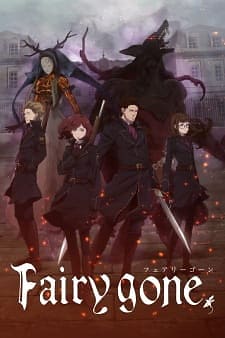
Fairy Gone
Fairy Gone
نام انیمه: Fairy Gone
نام انیمه: Fairy gone フェアリーゴーン
ژانر: Action, Demons, Fantasy, Magic, Supernatural
تاریخ پخش: بهار 2019
وضعیت: تمام شده
تعداد قسمتها: 12 قسمت – فصل اول
مدت زمان هر قسمت: 23 دقیقه
منبع: Original
استودیو: P.A. Works
کارگردان: Suzuki Kenichi
زیرنویس فارسی و انگلیسی دارد
لینکهای مربوط به انیمه
+ لینک دانلود انیمه (MKV, 480P, EN Sub, ~75MB)
+ لینک دانلود انیمه (MKV, 720P, EN Sub, ~140MB)
+ لینک دانلود انیمه (MKV, 1080P, EN Sub, ~280MB)
+ لینک دانلود انیمه (MP4, EN Sub, ~100MB)
+ لینک دانلود انیمه (MKV, 480P, ~75MB)
+ لینک دانلود انیمه (MKV, 720P, ~150MB)
+ لینک دانلود انیمه (MKV, 1080P, ~250MB)
+ لینک دانلود انیمه (MKV, 480P & 720P & 1080P)
+ اطلاعات بیشتر: سایت // سایت // سایت // سایت // سایت
+ تصاویر انیمه: عکس // عکس // عکس // عکس // عکس // عکس // عکس




+ تماشای آنلاین انیمه: لینک // لینک
+ لینک فایل تورنت (MKV, x265, 1080P, S01 & S02, EN Sub, 5.3GB)
+ لینک فایل تورنت (MKV, x265, 1080P, EN Sub, 5.3GB)
+ لینک فایل تورنت (MKV, x264, BD, 1080P, RAW, 20GB)
+ لینک دانلود انیمه (MKV, x265, 1080P, EN Sub, ~220MB)
+ لینک دانلود انیمه (MKV, x265, 1080P, EN Sub, ~250MB)
+ لینک دانلود انیمه (MKV, 720P, EN Sub, ~350MB)
+ لینک دانلود انیمه (MKV, x265, 1080P, ~490MB)
+ لینک دانلود انیمه (MKV, 1080P, ~200MB)
+ لینک دانلود انیمه (MKV, 480P & 720P & 1080P, EN Sub)
+ لینک دانلود انیمه (MKV, x265, 720P, EN Sub, ~130MB)
خلاصه داستان (منبع)
“روزی روزگاری، پری ها ابزار جنگ بودند”. داستان در دنیایی شکل میگیره که پری ها در بدن حیوان ها زندگی وجود دارن و به اونا قابلیت های عجیب میدن. با حذف کردن برخی ارگان های بدن حیوان و تبدیل اونا به انسان، پری ها میتونن به عنوان یه نفس جایگزین احضار بشن و به عنوان سلاح استفاده شن. کسایی که از پری ها به عنوان سلاح استفاده میکردن “سربازان پری” نامیده میشدند. وقتی جنگ تموم و اونا نقش خودشون رو ایفا کردن، سربازها هدفشون رو از دست دادن. بعضی از اونا شروع به کار برای دولت کردن، بعضیا عضو مافیا شدن و بعضیاشون حتی تروریست شدن که بتونن زنده بمونن. شخصیت اصلی داستان یعنی ماریا استخدامی جدید “دوروتئا”ـست، سازمانی که به جرائم در رابطه با پری ها رسیدگی میکنن. به خاطر وضع سیاسی بی ثبات، جرائم در رابطه با انتقام و تروریسم زیاد شده. این داستان سربازان پریه که برای عدالت خودشون با دنیای آشوب زده مبارزه میکنن.
خلاصه داستان (منبع)
داستان در دنیایی جریان دارد که پری ها درکالبد حیوانات زندگی می کنند و به آنها قابلیت های عجیب می دهند. با حذف بعضی از اعضای بدن حیوانات و تبدیل به انسان، پری ها می توانند به عنوان یک سلاح استفاده شوند. کسانی که از پری ها به عنوان سلاح استفاده می کردند "سربازان پری" نامیده می شدند. پس از پایان جنگ بعضی از آنها شروع به کار برای دولت کردند، برخی عضو مافیا شدند و بعضی حتی تبدیل به تروریست شدنتا به زندگی خود ادامه دهند. شخصیت اصلی داستان یعنی "ماریا" به جرائم در رابطه با پری ها رسیدگی میکند. این انیمه داستان سربازان پری ای است که برای ایجاد عدالت مبارزه می کنند...
https://youtu.be/1SSibhkeICk
خلاصه داستان (منبع)
"Once upon a time, fairies were tools of war."
The story takes place in a world where fairies possess and dwell in animals, giving them mysterious abilities. By removing the organs of a possessed animal and transplanting them into humans, fairies can be summoned as an alter ego and be used as a weapon. Such individuals who used fairies as war tools were called "Fairy Soldiers." Once the war was over and they completed their roles, the soldiers lost their purpose. Some began working for the government, some joined the mafia, and some even became terrorists, as each chose their own way to live.
Nine years have passed since the war. The protagonist Mariya is a new recruit of "Dorothea," an organization which investigates and suppresses fairy-related crimes. Amidst the unstable political situation, criminals with lingering wounds from the war and past conflicts emerge and engage in terrorism as an act of revenge. This is the story of Fairy Soldiers, fighting for their own justice in a chaotic postwar world.
Dr. Stone - Episode 7 [Review]
https://cdn.animenewsnetwork.com/thumbnails/max300x600/cms/episode-review.2/150171/drstone7.png.jpg
Dr. Stone - Episode 7 [Review]
Last week's episode didn't give me much to dig into, due to its transitional nature, but now that we've fully moved from escaping Tsukasa into Senku's attempts to rebuild a brave new world, hopefully things will begin to accelerate.
“There's always an idiot that will try anything.”
One of my initial complaints about the core group of Senku/Taiju/Yuzuhira was that Senku was the only one with much motivation. I get that they're trustworthy friends, but their secondary goal of being together had already been met and didn't give much room for growth. So while it seems odd to immediately dismiss two-thirds of the main cast so early on in the show, I applaud the choice now that we have a taste of what's currently replacing them. The stone world villagers all have their own ideals and ways of life, which finally gives Senku something—or someone—new to bounce off of.
While the quick friendship with Kohaku is nice enough (though I could do without the standard insecure strong woman gags), the real star of this episode is the interaction between Senku and the village sorcerer, Chrome. It starts as a one-sided contest, where Chrome does what looks like some basic snake-oil charlantry to impress, only to be immediately deflated by Senku's dull reaction compared to the other villagers. It isn't until the contest is over and Senku gloats over how easily he bested those elementary parlor tricks that he catches himself and the entire tone of the scene changes. He switches from punching down at Chrome's basic skills and turns to admiration for managing to develop them at all in the stone world. It's rare that this type of self-reflection and humility is highlighted rather than simply glorifying the protagonist's overpowered-ness, and it immediately positions Chrome as a more relevant and receptive vehicle to Senku's scientific explanations than Taiju was. That Chrome has also pushed himself in order to save Ruri also conveniently fills Taiju's role of striving to save Yuzuhira, thus making his replacement easier.
The biggest point in favor of this character trade is that it's a much stronger base to showcase Senku's ideals. While Taiju and Yuzuhira had a high school education from their time, Chrome is proof that no matter how hard Tsukasa tries to stop scientific progress, in the long run it's a fool's errand, since science doesn't just come from those that already know it. It comes from curiosity and effort, and as long as there is a goal or a dream, some will seek ways to achieve it. For Senku's new closest allies, Kohaku and Chrome, that means healing Ruri, so rather than Senku's companions aligning to his plans, we've reached a point where Senku has to work towards theirs. This mutual progress is another hallmark of the series, as Senku's recruitment plan isn't as simple as forcing domination or making them pay back debts after he uses his knowledge of modern science to fix their problems, but rather to completely incorporate science into their lives and improve their civilization as a whole. It's grand and audacious, but that's exactly what we need, and I can't wait to see how his influence transforms this future.
Granbelm - Episode 7 [Review]
https://cdn.animenewsnetwork.com/thumbnails/max300x600/cms/episode-review.2/150152/granb072.jpg
Granbelm - Episode 7 [Review]
Poor Anna. It's been obvious for a while now that she was pigeonholed as Granbelm's tragic villain for its first half, and this episode sees her firmly closing the book on her own chapter. My misgivings about motivations aside, this episode absolutely succeeds at communicating that tragedy, and it begins and ends with Anna herself. Her seiyuu, Yōko Hikasa, was absolutely killing it in her swan song for the role this week. She has a great time finding new and interesting ways to scream Ernesta's name, and she sells the breakdown every step of the way down to the end, when she's just yelling the names of brain chemicals. It's a testament to her performance and the execution of this episode that I found Anna such an engaging and sympathetic character, even if I still wasn't completely down with the hows and whys of her turn.
This episode tries to put a new spin on the story we got last week, the idea that Anna's inferiority complex is rooted in her naturally low magical aptitude. I like one major point that comes up late in theory—that Ernesta saw Anna as being in an enviable position for not having to participate in the Granbelm at all. It's an effective contrast coming off last episode, where Mangetsu expressed how fun and exciting she thought the magical battle-royale was. This is a good counterpoint to bring up, especially in light of how wrong we see a fight go by this episode's end, but it feels shortchanging for Ernesta to only voice it late in the game, to say nothing of how she spins it as some sort of raw deal for her to have been born with such a naturally awesome magic power level. Otherwise, the overall motif of Anna's breakdown echoes any number of tragic villains—she was someone who couldn't be happy with herself, who has to hurt and drag others down in order to feel better. In doing so, Anna hurts and loses more and more of herself, all supposedly in the name of proving herself worthy to people who already love her.
The problem is that the previous episode didn't really sell any conflict in Anna's self worth beyond everyone telling her what a lousy mage she was. From what we saw last time, her mother and Ernesta were less about feeling proud of Anna no matter what she did, and more simply accepting her lack of aptitude as the only thing everyone in this show cares about. This whole aspect probably would have hit in a more meaningful way if they'd at least tried to present an alternative route Anna could have gone that may have actually made her happy. But simply living quietly as a pampered rich witch, cozy a deal as that is, doesn't satisfy as a missed opportunity for a tragic character who simply wanted the wrong thing too much. Adding insult to injury, it becomes clear by the end of the episode that her eventual death was ultimately just to provide pathos for Ernesta's character instead. Ouch.
Thank goodness Granbelm shows no sign of slowing down in the giant robot department. I thought that the final fight with Nene was already a high point, but this one pulls out even more stops for a skyrocketing sisterly smackdown between Anna and Ernesta. The lava-baked arena is a cool new place to see the fight take place, and the necessary escalation of this battle means we get to see some extremely cool new tricks pulled out by the ARMANOX. More madcap mid-battle mecha upgrades happen, like getting to see Anna's robot bust out a mane of super-mode energy, manipulating flames and ice and creating an army of doppelgangers for Ernesta to carve her way through. Ernesta believably proves that she has the ample ability to defeat her sister, but she's keeping things in-check as much as possible. One appreciable element of an original anime production like Granbelm is seeing the crew's enthusiasm for all the stuff they get to completely make up to animate. For as much as the subject matter of this show is the most serious it's been, it's good to know that won't stop them from showing off stuff like gigantic fire-axes, mecha that summon even bigger mecha to fight with them, or robots yanking themselves around with shadowy tendril hands.
There's a kinship between Granbelm as a series and its depiction of Anna this week, as I feel kind of bad for both of them in their desperation to be noticed. Last week's shocking cliffhanger scene felt like it was engineered entirely to get people talking, yet I scarcely saw a peep about the show in my own social media-sphere. Anna's attempted mom-murder turns out to not take (she just ends up in a coma), but even shortchanging that shock leads into this showcase of robot battles. There are so many magnificent cuts of imaginative excitement in this episode that even if I disagreed with its ideas completely, I'd still at least stay on for the thrill-ride aspect. Ultimately, they got me to sympathize with Anna, and the final direction of her death scene hit as hard as any of the other major moments Granbelm has delivered so far (to say nothing of the posthumous pathos of finding out that she was the one who encouraged Ernesta's magecraft in the first place). Granbelm clearly has entertainment chops, and now that it's done depicting the prevalent issues with Anna, we can see if the ideas it embraces moving forward will be more balanced.
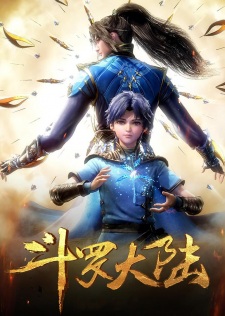
Douluo Dalu
https://cdn.myanimelist.net/images/anime/1438/101531.jpg
Douluo Dalu
نام انیمه: Douluo Dalu
نام انیمه: Combat Continent
نام انیمه: Soul Land
نام انیمه: 斗罗大陆
ژانر: Action, Adventure, Fantasy, Historical, Martial Arts, Romance
تاریخ پخش: زمستان 2018
وضعیت: تمام شده
تعداد قسمتها: 26 قسمت – فصل اول
مدت زمان هر قسمت: 20 دقیقه
منبع: Novel
استودیو: Sparkly Key Animation Studio
کارگردان: Tang Jia San Shao
زیرنویس انگلیسی دارد
* منهوا ترجمه فارسی دارد (آنگوئینگ)

لینکهای مربوط به انیمه
+ لینک دانلود انیمه (MP4, EN Sub, ~800MB)
+ لینک فایل تورنت (MKV, EN Sub, 14.6GB)
+ تصاویر: عکس // عکس // عکس // عکس // عکس

+ اطلاعات بیشتر: سایت // سایت // سایت // سایت
خلاصه داستان (منبع)
تنگ سان زندگیش رو توی بخش بیرونی تنگ گذروند و با مخلوقات و سلاح های مخفی سر و کار داشت. وقتی یه تارخچه مخفی رو از قسمت داخلی دزدید که به هنرش اضافه کنه تنها راهش برای فرار مرگ بود. ولی وقتی خودش رو به هلز پیک مرگبار پرتاب کرد توی یه دنیای جدید متولد شد، دنیای دولو دالو، دنیایی که هر شخصی اونجا روح خودش رو داره و اونایی که روحشون قوی تره میتونن تمرین کنن تا به ارباب ارواح تبدیل بشن. روحی که توی تنگ سان متولد میشه بلو سیلور گرس، یک روح بی مصرفه. آیا تنگ سان موفق میشه که بر سختی ها غلبه کنه به درجات والای ارواح برسه و توی این دنیای جدید براش افتخار به ارمغان بیاره؟

خلاصه داستان (توضیح)
Tang San is one of Tang Sect martial art clan's most prestigious disciples and peerless in the use of hidden weapons. With high expectations, the sect's elders believe his future will be bright; yet Tang chooses to forsake this life at the cost of obtaining the sect's forbidden lore—an action punishable by death. Tang, now content with his ascension of knowledge, sees no reason to keep on living and jumps from Hell's Peak, but little did he know that that would not be the end of his existence.
In Douluo Continent, the strong prevail and the weak perish. Each person possesses an innate spirit, some of which can be cultivated and strengthened, bestowing its user with various benefits. Those who were born with such spirits can become Spirit Masters, a profession regarded as one of the continent's most noble.
Tang, reincarnated into this strange world, knows only the life of a blacksmith's son. At the age of six, he takes part in the Spirit Master ceremony, and discovers his spirit is Blue Silver Grass—supposedly the world's most useless spirit. In contrast, however, he possesses strong spirit power. Now, aided by the memories of his previous life as well, Tang's future as a Spirit Master is in no way bleak.
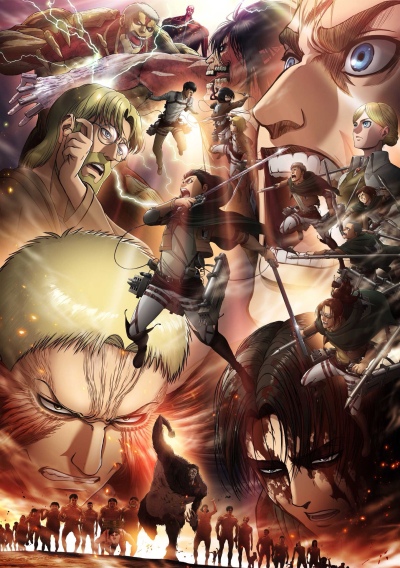
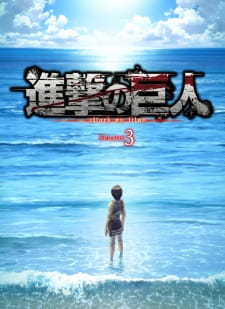
Shingeki no Kyojin Season 3 Part 2
Shingeki no Kyojin Season 3 Part 2
نام انیمه: Shingeki no Kyojin Season 3 Part 2
نام انیمه: Attack on Titan Season 3 Part 2
نام انیمه: 進撃の巨人 Season3 Part.2
ژانر: Action, Military, Mystery, Super Power, Drama, Fantasy, Shounen
تاریخ پخش: بهار 2019
وضعیت: تمام شده
تعداد قسمتها: 10 قسمت
مدت زمان هر قسمت: 23 دقیقه
کارگردان: Araki Tetsurou
منبع: Manga
استودیو: Wit Studio
زیرنویس فارسی و انگلیسی دارد
https://youtu.be/hKHepjfj5Tw
لینکهای مربوط به انیمه
+ لینک دانلود تریلر انیمه – کیفیت 720
+ لینک دانلود تریلر انیمه – کیفیت 1080
+ لینک دانلود زیرنویس فارسی (کانال @AWSub)
+ لینک دانلود انیمه (MKV, 480P, EN Sub, ~75MB)
+ لینک دانلود انیمه (MKV, 720P, EN Sub, ~140MB)
+ لینک دانلود انیمه (MKV, 1080P, EN Sub, ~280MB)
+ لینک دانلود انیمه (MKV, 480P & 720P & 1080P, EN Sub)
+ لینک دانلود انیمه (MKV, 480P & 720P & 1080P, EN Sub)
+ لینک دانلود انیمه (MKV, x265, BD, 1080P, EN Sub, ~600MB)
+ لینک دانلود انیمه (MKV, x265, BD, 1080P, EN Sub, ~600MB)
+ لینک دانلود انیمه (MKV, BD, 1080P, EN Sub, ~1.5GB)
+ لینک دانلود انیمه (MKV, x265, BDRip, 1080P, EN Sub, ~400MB)
+ لینک دانلود انیمه (MKV, x265, BDRip, 1080P, EN Sub, ~500MB)
+ لینک دانلود انیمه (MKV, x265, 1080P, EN Sub, ~450MB)
+ تماشای تریلر انیمه: لینک // لینک // لینک
+ لینک دانلود انیمه (MKV, x264, BD, 1080P, BluRay, EN Sub, ~450MB(
+ لینک دانلود انیمه (MKV, 1080P, EN Dub, ~1.3GB)
+ لینک دانلود انیمه (MKV, 720Pm, EN Dub, ~500MB)
+ لینک دانلود انیمه (MP4, BD, 720P, EN Sub, ~750MB)
+ لینک دانلود انیمه (MP4, 1080P, EN Sub, ~500MB)
+ تصاویر انیمه: عکس // عکس // عکس // عکس // عکس // عکس // عکس




+ لینک فایل تورنت (MKV, x265, 1080P, EN Sub, 4.2GB)
+ لینک فایل تورنت (MP4, 1080P, EN Sub, 4GB)
+ لینک فایل تورنت (MKV, BD, 1080P, EN Sub, 13GB )
+ لینک فایل تورنت (MKV, x265, BD, 1080P, EN Sub, 5GB)
+ لینک فایل تورنت (MKV, x265, 1080P, EN Sub, 6.9GB)
+ لینک فایل تورنت (MP4, 720P, EN sub, 6.5GB)
+ لینک فایل تورنت (MKV, x264, 1080P, EN Sub, 3.6GB)
+ تماشای آنلاین انیمه: لینک // لینک
+ لینک دانلودانیمه (MP4, 1080P, EN Sub, ~450MB)
+ لینک دانلودانیمه (MKV, 480P, EN Sub, ~75MB)
+ لینک دانلودانیمه (MKV, 720P, EN Sub, ~150MB)
+ لینک دانلودانیمه (MP4, 720P, Indo Sub, ~180MB)
+ تصاویر انیمه: عکس // عکس // عکس // عکس // عکس // عکس // عکس



+ اطلاعات بیشتر: سایت // سایت // سایت // سایت // سایت
داستان
ادامهی فصل سوم میباشد.
https://youtu.be/fJm2nD3cv_4
خلاصه داستان (منبع)
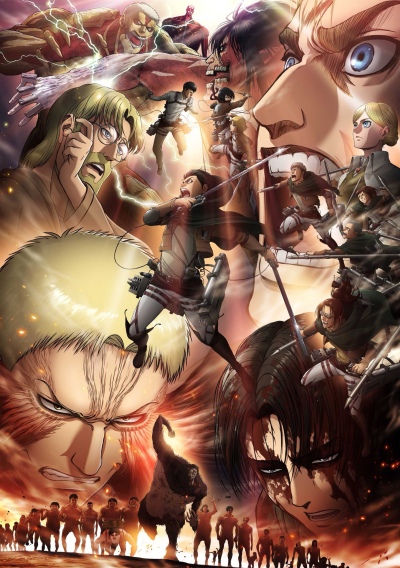
Seeking to restore humanity’s diminishing hope, the Survey Corps embark on a mission to retake Wall Maria, where the battle against the merciless "Titans" takes the stage once again.
Returning to the tattered Shiganshina District that was once his home, Eren Yeager and the Corps find the town oddly unoccupied by Titans. Even after the outer gate is plugged, they strangely encounter no opposition. The mission progresses smoothly until Armin Arlert, highly suspicious of the enemy's absence, discovers distressing signs of a potential scheme against them.
Shingeki no Kyojin Season 3 Part 2 follows Eren as he vows to take back everything that was once his. Alongside him, the Survey Corps strive—through countless sacrifices—to carve a path towards victory and uncover the secrets locked away in the Yeager family's basement.
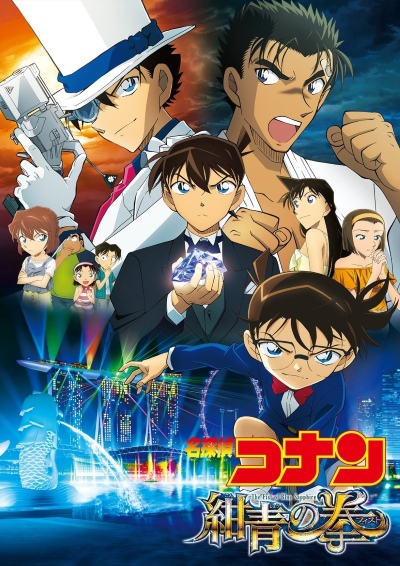
Detective Conan Movie 23: The Fist of Blue Sapphire – 2019
Detective Conan Movie 23: The Fist of Blue Sapphire – 2019
نام فیلم انیمهیی: Detective Conan Movie 23: The Fist of Blue Sapphire
نام فیلم انیمهیی: Meitantei Conan: Konjou no Fist
نام فیلم انیمهیی: 劇場版 名探偵コナン 紺青の拳(フィスト)
ژانر: Action, Mystery, Comedy, Police, Drama, Shounen
تاریخ پخش: بهار 2019
وضعیت: تمام شده
تعداد قسمتها: یک قسمت
مدت زمان فیلم انیمهیی: یک ساعت و 49 دقیقه
منبع: Manga
استودیو: TMS Entertainment
زیرنویس فارسی و انگلیسی دارد
https://cdn-us.anidb.net/images/main/231787.jpg
لینکهای مربوط به فیلم انیمهیی
+ لینک فایل تورنت (MKV, 1080P, BluRay, EN Sub, 4.8GB)
+ لینک فایل تورنت (MP4, x264, BD, 720P, RAW, 1.9GB)
+ لینک فایل تورنت (MP4, BD, 720P, RAW, 2.3GB)
+ لینک فایل تورنت (MKV, x265, BD, 1080P, EN Sub, 1.3GB)
+ لینک فایل تورنت (MKV, BluRay, 720P, EN Sub, 2.2GB)
+ لینک فایل تورنت (MKV, x265, 720P, EN Sub, 1.1GB)
+ لینک فایل تورنت (MKV, BDRip, 720P, EN Sub, 3.5GB)
+ لینک فایل تورنت (MKV, BDRip, 1080P, RAW, 8.2GB)
+ لینک فایل تورنت (MKV, x265, 1080P, EN Sub, 2.2GB)
+ لینک فایل تورنت (MKV, x264, BDRip, 1080P, RAW, 5.6GB)
+ لینک فایل تورنت (MKV, x264, BDRip, 1080P, RAW, 6.6GB)
+ اطلاعات بیشتر: سایت // سایت // سایت // سایت // سایت
+ تصاویر: عکس // عکس // عکس // عکس // عکس // عکس


+ لینک دانلود فیلم انیمهیی (MKV, x265, BD, 1080P, EN Sub, 1.3GB)
+ لینک دانلود فیلم انیمهیی (MKV, x265, 720P, EN Sub, 1.1GB)
+ لینک دانلود فیلم انیمهیی (MKV, x265, 1080P, EN Sub, 2.1GB)
+ لینک دانلود فیلم انیمهیی (MKV, 720P, EN Sub, 2.2GB)
+ لینک دانلود فیلم انیمهیی (MKV, 1080P, EN Sub, 4.9GB)
+ لینک دانلود فیلم انیمهیی (MKV, BDRip, 720P, EN Sub, 3.5GB)
+ تماشای آنلاین فیلم انیمهیی: لینک // لینک
+ لینک دانلود فیلم انیمهیی (MKV, BD, 720P & 1080P, RAW)
+ لینک دانلود فیلم انیمهیی (MKV, BD, x265, 720P & 1080P, RAW)
+ تصاویر: عکس // عکس // عکس // عکس // عکس // عکس // عکس





+ تماشای تریلر فیلم انیمهیی: لینک // لینک // لینک // لینک
+ لینک دانلود فیلم انیمهیی (MKV, BD, 720P)
+ لینک دانلود فیلم انیمهیی (MKV, 1080P, EN Sub, 1.1GB)
+ لینک دانلود فیلم انیمهیی (MKV, 1080P, EN Sub, 4.8GB)
https://youtu.be/2X-JSRWnH1Y
توضیحات (منبع)
23rd Detective Conan Movie.
As of 7 July 2019, the film has grossed ¥9.1 billion ($82,409,621) domestically, making it one of the top 50 highest-grossing films ever in Japan. The Fist of Blue Sapphire became the highest-grossing Detective Conan film, surpassing Zero the Enforcer.
One Piece - Episode 892 [Review]
https://cdn.animenewsnetwork.com/assets/4e963dcb085e9412831ec5d0b16c7c5cd64791eb.jpg
YU-NO: A girl who chants love at the bound of this world. - Episode 15 [Review]
As predicted, this episode of YU-NO turns out to be about Takuya and friends having their beach excursion. It's another of what can be charitably categorized as the ‘faffing about’ parts of the show: These mostly-uneventful interludes where we ostensibly spend time with the characters to endear and develop them so we'll care when the eventual time-travel action starts up again. But you know what isn't so predictable about this one? I actually thought it was okay! Yes, the plot twist this time turns out to be that if YU-NO does something enough it might finally get the hang of it, and in this case that means it got me through a half-hour of Takuya, Kanna, and two supporting characters who don't really matter anymore having fun in the sun without me checking my watch.
The secret to the success of this standout slice-of-life is that it's trading on an idea beyond merely endearing Takuya, Kanna, and their relationship to us. It takes a while to get there, but by the time the relatively low-stress threat of a stray dog has made a mess of the gang's barbecue and fireworks plans, Takuya briefly entertains using the Reflector Device to return to his earlier savestate and try to fix things. He doesn't, of course, because that's a frivolous use of such a power, and robs the friends of the time spent together, good or bad, besides. When you remember that this was the guy who previously was happy to use the device to pass a test in Summer school, it acts as a more-understated-than-expected example of character growth. It also sells us on why this little vacation was presented as uneventfully as it was: These simple, non-sci-fi-enhanced times are the point unto themselves.
Even as I'm not really complaining about it, I should also stress that going on this trip isn't actually as uneventful as I initially described. The main intrigue points revolve around that pendant of Kanna's, and the creepy old man Hojo who seems to be pursuing her for it, for some reason. That he hints at this information while using a public restroom alongside Takuya and also commenting on his junk is probably the least-appreciable part of the whole affair. But then they put him on a train out of the plot for the rest of the episode, so at least that's dealt with.
The other element of the episode with some depth to it is where it's characterizing Kanna. Calling her purely derivative of the old ‘emotionless girl’ anime archetype honestly seems unfair (especially given the age of the character's origins) but thus far there was just that little to go on. This episode actually sneaks in some fun asides that make her seem like she has a real personality, albeit a withdrawn one. Her prowess at watermelon splitting was a fun revelation, and the storytelling and character work here were strong enough to believably present her as someone who wanted to enjoy herself with her new friends. It makes it odd that Takuya's connection with her now was barely established by him trying to speedrun the visual-novel route, since she actually slots into this group quite well despite just barely having met him. Or has she? I'll get to that in a moment.
Just a moment though, because there really isn't that much else to discuss about this episode. It's all very cozy and enjoyably-presented. The aforementioned ideas and functional character work carry it further than YU-NO's usual time-wasting. The most tense part is when Kanna's pendant and the Reflector Device go missing, and even that gets deflated in just a couple minutes when it's revealed to be that stray dog tearing up the place. Even then, I'm so accustomed to the show's adventure-game puzzle-box logic that I was momentary like “Wait, is that supposed to be the curse beast that Eriko's old boyfriend has his soul shunted into?”. Obviously that wasn't the case, but it says something that the episode can deflate a serious situation with an anticlimax like that and have me nonplussed about missed opportunities.
Perhaps that's because this episode is bookended with well-paced intrigue regarding Kanna and how she actually figures alongside Takuya, his father, and the rest of their family. A flashback at the beginning of the episode shows Kanna, seemingly the same age she is now, accompanying a young Takuya at the beach. That's honestly time-travel 101 as far as setting up situations goes, but we seem to be getting right back to it when she has another one of her collapsing fits at the end of the episode. And wait, how did I only just notice that Kanna and Takuya kind of have some family resemblance in their character designs going on? See, this one episode of well-utilized downtime just did its job of pacing out the intrigue in the story, and I'm genuinely ready to keep following it into next week.
@@@@@@@@@@@@@@@@@@@@@@@@
https://cdn.animenewsnetwork.com/assets/08286afc2e54d3dd16b039303a426aca0e37d9af.jpg
One Piece - Episode 892 [Review]
The reputation of the One Piece anime has surely not been lost on anyone. Generally speaking, I'm probably kinder on it than a lot of people have been if only because I still have so much room in my heart of the hundred episode marathons that I raised myself on over the years. Between One Piece and DBZ and the like, I get it. I get that these shows are slow and not always the prettiest, but there's still a charm to be found in a pulp-y alchemic kind of way. Though, even by my own personal metric for One Piece, the point of diminishing returns started somewhere at the 300 episode count. The rise of much higher-quality Shonen Jump adaptations like My Hero Academia certainly haven't helped my ache for something better, either.
Starting with the new opening theme 'Over the Top' by Kitadani Hiroshi, the differences this week are staggering. It's an actual anime opening! One of my big pet peeves with the New World openings was how they always defaulted to the Straw Hats' Fishman Island outfits, as if that was what the characters actually wear on a regular Tuesday. This new opening shows the crew in their new ninja/samurai duds, really selling us on what's actually going to be happening in this story arc. The new sketchy hand-drawn art style is also greatly appreciated, and the (slightly) shorter runtime for the opening means there isn't as much room for bland or generic shots. It's all action and exciting teases for scenes to come, even if that means the opening isn't shy of spoilers.
As we step into this brave new world, we need to catch up on what the missing half of the crew has been up to since Luffy made his trip to Whole Cake Island. Zoro, Franky, Usopp, and Robin have been blending in as citizens of Wano, taking up local jobs and Japanese aliases. (Zoro's Wano name is "Zorojuro", for example.) They've been instructed by Kin'emon not to make a scene, as they need to wait for Luffy and the others before they can properly begin their attack on Kaido and his crew. An important motif of the arc is introduced to us in the form of a stage curtain opening to reveal Wano's landscape. This arc is a samurai film/kabuki play/rakugo performance and this is formerly 'Act One' of Wano. The curtains go along with the masked shamisen player—a teal-haired woman who's sure to become an important character soon enough. I eagerly await how this arc is going to develop its act structure hook. I feel like we have to see the artifice take on a literal meaning by the end of the story.
For all the updates to the visual and directorial style, the question of pacing is still a big one. I felt as though the voice actors were talking slower than usual this week, like the anime is trying new ways to pad the story out without it becoming immediately apparent. There's at least one significant flourish to the plot, as we're being led step-by-step through the events that led Zoro to being tried for murder, something the manga just cut to in media res. Obviously, he didn't do it, but the sequence leads to a showstopping fight scene where Zoro smokes a bunch of swordsmen with a tiny seppuku blade. He's not blending in very well, is he?
Things are really looking up for the Wano anime, as we've barely gotten started and the visuals are already singing. At its heart, this is still a fairly standard One Piece episode, but there's so much more care put into avoiding the trappings that made our last few adventures feel like a chore. Even when the animation quality inevitably takes a backseat again, the new art direction will ensure that there's at least some baseline charm keeping the show's head above water. There's a lot of good anime being released every season, so it'd be nice if One Piece had a chance at competing with any big franchises other than itself for once.
Demon Slayer: Kimetsu no Yaiba - Episode 14 [Review]
https://cdn.animenewsnetwork.com/assets/7810c2d09f75e1a2ed2c0223d1f75bd81b4c9222.jpg
Demon Slayer: Kimetsu no Yaiba - Episode 14 [Review]
Let's talk about Tanjiro's fight with Inosuke, the Boar Guy. It takes up entire the first third of “The House with the Wisteria Family Crest”, and it does exactly what it needed to do, which is give Tanjiro and Inosuke a chance to throw down so ufotable can flex their muscles and remind folks why so many consider them to the producers of some of the best fight scenes in the business. There's not a lot to analyze about the sequence, outside of marveling at all of the little animation cuts that make Tanjiro and Inosuke's movements feel weighty yet effortless, but there's virtually nothing to complain about, either. It's a quick and brutal tussle between two expert fighters, and the simple satisfaction that it provides is exactly what I come looking for in a good Demon Slayer episode. However, if action and drama is your primary hook as an audience member, then this episode of Demon Slayer is likely to disappoint you, because once Tanjiro and Inosuke finally call off their bout, the rest of “The House with the Wisteria Family Crest” is devoted completely to broad, wacky hijinks.
It starts when Tanjiro finally headbutts the boar mask off Inosuke to reveal that, underneath his beastly guise, the monstrous fighter is really pretty. It's a goofy joke, and definitely not the kind of thing I'd spend three whole weeks building up to, but Demon Slayer isn't out to rock anyone's world with its jokes this week. Inosuke is a beautiful but insane brawler, Zenitsu is a screeching oaf, and Tanjiro is the straight-man type that desperately tries to hold all of the insanity together. The rest of the episode has no plot to speak of – Tanjiro's raven simply guides the bickering boys to a local Inn that can help them rest and recover their wounds (all three of them managed to break their ribs over the past few episodes). The script isn't concerned with laying track for future plot threads or crafting deep moments of character development – this is Demon Slayer the Sitcom, through and through, and all you need to get out of this week's story is that these three dysfunctional Demon Slayers are just so much.
I can already predict a lot of viewers dismissing this episode entirely, and I wouldn't entirely blame them. Zenitsu has already proven to be a divisive character, and Inosuke is just a different brand of loud, buffoonish crazy person. Over dinner, Inosuke reveals that the only reason he's a Demon Slayer is because he's a literal Crazy Mountain Man who robbed an actual Demon Slayer of his weapons and fought in the Final Selection just to see what killing demons was like (as you might have guessed, he really likes it). Later, when Zenitsu discovers that the demon Tanjiro has been carrying around all this time is his ridiculously cute little sister, Zenitsu flies off into an uncontrollable rage. There are many choice reaction faces from nearly every character involved and, to absolutely nobody's surprise, a hell of a lot of yelling.
As for me, I actually dug this episode a lot. I think it veers a little too hard into pumping out comedic relief, but Demon Slayer was never going to last with just Tanjiro and Nezuko as our leads, and even though Zenitsu and Inosuke are incredibly obnoxious in their own ways, I like the dynamic they share with our hero. The show has done such a good job handling its mythology and the more serious episodes that I'm willing to indulge its wackier instincts, at least for now. I wouldn't want to watch week after week of Three Teenagers and a Little Demon Lady, but given how gory and morbid Demon Slayer can be, there's no harm in the show embracing its goofier side. Humor is subjective, though, so I won't be surprised if fans decide to fast-forward through episodes like this one so they can get to the actual demon slaying that Demon Slayer does so well.
@@@@@@@@@@@@@@@@@@@@@@@@
https://cdn.animenewsnetwork.com/assets/5a98d8e3edbdb7466fe4450775b1a66b54e710a0.jpg
JoJo's Bizarre Adventure: Golden Wind - Episode 37 [Review]
Alright, this is it. For all intents and purposes, this is the climax of JoJo's Bizarre Adventure: Golden Wind. From the sound of things, there will be a one-hour finale send-off in a few weeks and there remains a tiny bit of the final battle left to show after this week's cliffhanger, but in terms of emotional punch this week's episode feels like a resolution.
For starters, we must finally say goodbye to Bruno, who ascends to heaven like the cherub angel baby that he is. The stylized clouds do a ton of work in conveying the otherworldly sensation that comes with this scene, and the solid gold that force-ghost Bruno radiates makes him pop from the background in a way that's distinct even by JoJo's standards. This scene makes me wish there had been a little bit more bonding between Bruno and Giorno throughout the show. Most of their personal connection happened nonverbally to keep Giorno's mob boss ambitions a secret from the rest of the team. Abbacchio's death had a really clear poetry to it that spoke to his personality and inner-conflict, but each successive death has resonated slightly less with me. They're more tragic inevitabilities that barely scratch the surface of what their respective characters have been through. Bruno's death is very "Thanks, Dad."
With Chariot Requiem defeated by Bruno's final actions (again, I don't really understand the back-of-the-head light thing) the battle refocuses on the golden arrow and getting to see who upgrades their Stand next. Diavolo is rejected by the arrow and Giorno is the one whose hand it ends up in. There's an interesting beat here where Diavolo plans to retreat, but because Trish calls him out for it he decides to stay and finish the fight despite having clearly lost. This gives Diavolo a brief glimpse of hope when it looks like the arrow is rejecting Giorno as well, but in actuality Gold Experience is going through a metamorphosis and becoming Gold Experience Requiem. Giorno's hair grows longer and he can hover off the ground with his new Stand, so he looks like the halfway point between a godlike being and a Super Saiyan. This is a Shonen Jump manga after all.
The arms race of confusing Stand powers has reached its natural conclusion, where the heroes and villains are at the furthest points in their stories and the author likely doesn't have to write serious challenges for them to overcome anymore. What does Gold Experience Requiem do? Whatever it needs to in order to give the middle finger to Diavolo specifically. There's some time rewinding to repair King Crimson's erased time, and Requiem will always stand between Giorno and whatever premonition Diavolo sees. If a character must operate in another dimension of space and time in order to defy conventional logic, then the way to beat him is to operate in the dimension beyond that.
As formless and unyielding as this final conflict has been, it's too visually interesting for me not to concede to it in the end. I'm certainly going to remember Bruno's ascension and Diavolo's panicked demise for years to come, though hopefully that upcoming one-hour finale can offer some balance after everything that's left me scratching my head. JoJo's is a special series in that it has such a clear personality and soul beneath all the weirdness, and it validates my belief that an audience will be rewarded if they open their hearts to all kinds of possibilities within storytelling. The way Golden Wind has balanced the love between its characters and the dark fascinations of its author really put it a step above the rest of the franchise for me, though I think back to how much I loved the end of Diamond is Unbreakable and I've yet to feel anything like that in this final stretch so far. As of right now, Part Five is still ending strong, but the flicker in its eyes is hardly the bonfire I once saw.
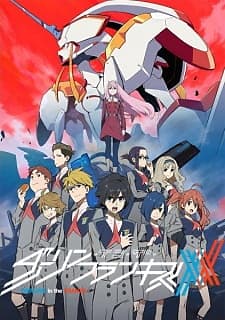
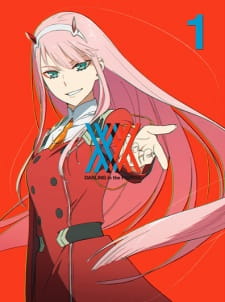
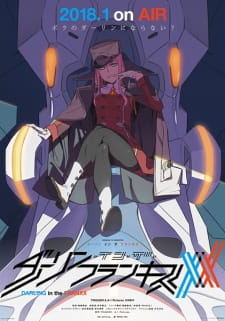
Darling in the FranXX
https://cdn.myanimelist.net/images/anime/1614/90408.jpg
Darling in the FranXX
نام انیمه: Darling in the FranXX
نام انیمه: DARLING in the FRANXX
نام انیمه: ダーリン・イン・ザ・フランキス
ژانر: Action, Drama, Mecha, Romance, Sci-Fi
تاریخ پخش: زمستان 2018
وضعیت: تمام شده
تعداد قسمتها: 24 قسمت
مدت زمان هر قسمت: 24 دقیقه
منبع: Original
استودیو: A-1 Pictures, Trigger, CloverWorks
کارگردان: Nishigori Atsushi
زیرنویس فارسی و انگلیسی دارد
لینکهای مربوط به انیمه
+ لینک دانلود زیرنویس فارسی (@AWSub)
+ اطلاعات بیشتر: سایت // سایت // سایت // سایت // سایت
+ لینک دانلود انیمه (MKV, x265, BD, 1080P, EN Sub, ~350MB)
+ لینک دانلود انیمه (MKV, 720P, EN Sub, ~200MB)
+ لینک دانلود انیمه (MP4, 720P, EN Sub, ~250MB)
+ لینک دانلود انیمه (MP4, BD, 810P, EN Sub, ~220MB)
+ لینک دانلود انیمه (MKV, x264, 720P, EN Sub, ~420MB)
+ لینک دانلود انیمه (MKV, 480P & 720P & 1080P, EN Sub)
+ لینک دانلود انیمه (MKV, BD, 1080P, EN Sub, ~300MB)
+ تماشای آنلاین انیمه: لینک // لینک
+ تصاویر: عکس // عکس // عکس // عکس


+ لینک فایل تورنت (MKV, 1080P, EN Sub, 14.3GB)
+ لینک فایل تورنت (MKV, x265, BD, 1080P, EN Sub, 7.5GB)
+ لینک فایل تورنت (MKV, x265, BD, 1080P, 37.5GB)
+ لینک فایل تورنت (MKV, 720P, EN Sub, 8.1GB)
+ لینک فایل تورنت (MKV, x264, 1080P, BDRip, 53.7GB)
+ لینک فایل تورنت (MKV, 1080P, EN Sub, 17.6GB)
+ لینک فایل تورنت (MKV, BD, 1080P, EN Sub, 16.7GB)
+ لینک فایل تورنت (MKV, 720P, EN Sub, 7.8GB)
+ لینک فایل تورنت (MKV, 720P, EN Sub, 4.2GB)
+ لینک فایل تورنت (MP4, BD, 810P, EN Sub, 5.1GB)
+ لینک فایل تورنت (MKV, BD, 1080P, EN Sub, 25.7GB)
+ لینک فایل تورنت (MP4, x264, 720P, RAW, 8.3GB)
+ تصاویر: عکس // عکس // عکس // عکس // عکس



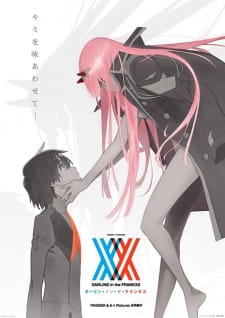
خلاصه داستان (منبع)
In the distant future, humanity has been driven to near-extinction by giant beasts known as Klaxosaurs, forcing the surviving humans to take refuge in massive fortress cities called Plantations. Children raised here are trained to pilot giant mechas known as FranXX—the only weapons known to be effective against the Klaxosaurs—in boy-girl pairs. Bred for the sole purpose of piloting these machines, these children know nothing of the outside world and are only able to prove their existence by defending their race.
Hiro, an aspiring FranXX pilot, has lost his motivation and self-confidence after failing an aptitude test. Skipping out on his class' graduation ceremony, Hiro retreats to a forest lake, where he encounters a mysterious girl with two horns growing out of her head. She introduces herself by her codename Zero Two, which is known to belong to an infamous FranXX pilot known as the "Partner Killer." Before Hiro can digest the encounter, the Plantation is rocked by a sudden Klaxosaur attack. Zero Two engages the creature in her FranXX, but it is heavily damaged in the skirmish and crashes near Hiro. Finding her partner dead, Zero Two invites Hiro to pilot the mecha with her, and the duo easily defeats the Klaxosaur in the ensuing fight. With a new partner by his side, Hiro has been given a chance at redemption for his past failures, but at what cost?
خلاصه داستان (منبع)
آنها در رویایی به سر میبرند! رویای روزی که در آسمان بزرگ پر میگشایند. در آیندهای دور وقتیکه خشکیها ازبین رفتهاند، آدمی در شهر متحرکی به نام “پِلَنتِیشن” سکنا گزیده و خلبان(پایلوت)هایی در قسمتی از آن به نام “میستیلتین” یا “قفس پرنده” بوجود آوردهاند. بچههایی که در این قفس گیر افتادهاند، هیچگاه رنگ آسمان نمیبینند و مجبور هستند برای ارتقای خود مبارزاتی بوسیلهی رباتهایی جنگی به نام FranXX با موجوداتی عجیب به نام “کیوریو” (دایناسور) انجام دهند. این مبارزهها ضامن حیات این بچهها خواهد بود. پسرک قصهی ما “هیرو” که با لقب “کد016” شناخته میشود دارای مشکلاتی هست که موجب نادیده گرفته شدن او میشود، به همین خاطر وجودش غیرضروری شمرده میشود. چرا که عدم توانایی در راندن “فرانکس” مساوی با از دست دادن موجودیت است. اما دست روزگار دخترکی مرموز به نام “زیرو تو” (02) را که دو شاخ بر سر دارد را در سر راه او قرار میدهد.
Fairy Tail: Final Season - Episode 315 [Reveiw]
https://cdn.animenewsnetwork.com/thumbnails/max300x600/cms/episode-review.2/148466/partfive36.png.jpg
JoJo's Bizarre Adventure: Golden Wind - Episode 36 [Review]
Well, there certainly is a lot of stuff happening in these final episodes. Whether that stuff is good or bad, I'm still not sure how to feel.
The name of the game is keeping the golden arrow out of Chariot Reqiuem's hands. Turtle-Polnareff has it, but we've got a multitude of additional problems stacking up, like how Chariot's body swapping is entering a new phase that mutates all the life around it into new shapes, and our heroes are living time bombs as a result. Likewise, the mystery of Diavolo's whereabouts finally becomes pertinent. The gang figures his soul must have transferred inside one of them, and they have to put the golden arrow problem on pause because the second any of them are within King Crimson's reach, they're doomed.
There's plenty of JoJo's weirdness making the rounds here, as the conflict shifts towards our heroes trying to understand the in-universe mechanics of souls. Giorno makes some interesting claims about how his body being empty enough to return to when Narancia died is proof that he's the only soul left in his body, and I'm glad the other characters chimed in with "Wait, why are we assuming that's how souls work?!" because I thought that was weird too. The suspense is super goofy for this whole scene, because they fake you out into thinking Diavolo had remained inside his own body this whole time, which is the least interesting place he could have ended up. It turns out he's actually slumming it in Mista's body with his daughter, so hopefully Trish can get at least a few good hits on him while she can.
The climax of this episode leads Diavolo back to the arrow, where he remarks that what makes Chariot Requiem special is how its shadow exists relative to the individual's perspective. I've been thoroughly warned that this final battle would be where Golden Wind comes off the rails, and while nothing's been as dramatically out-there as I anticipated, this scene is like crashing into a wall of incomprehensible gibberish. Somehow the shadow is the reason why Requiem can control people? And the way Diavolo conquers it is punching the back of his own head and destroying the symbolic "light" that casts the shadow? Oddly enough, King Crimson's powers themselves have been easy enough to follow (it's predicting a short period into the future and erasing people's memory of those few seconds, right?), but Requiem gets one big thinking emoji from me.
With so many pieces moving in this final battle, I wish I could say they were working together better than they actually are. Whether we're focusing on Diavolo or Chariot Requiem, the rules and stakes keep changing on a dime. The chaos doesn't feel like it's funneling to a specific point, it's just a bunch of semi-related ideas wrestling for the viewer's attention. The off-kilter strangeness of JoJo's Bizarre Adventure rarely manages to nail the Rube Goldberg plotting that Hirohiko Araki seems so inclined to tackle. This would be less of a problem if we weren't in the final stretch, where I was hoping the thematic richness of Golden Wind would still be at the wheel, but my favorite elements of this series haven't been present for a few episodes now.
@@@@@@@@@@@@@@@@@@@@@@@@@@@
https://cdn.animenewsnetwork.com/thumbnails/max300x600/cms/episode-review.2/148456/fairy-tale-last-ep-38.jpg
Fairy Tail: Final Season - Episode 315 [Reveiw]
This was another one of those episodes where I was torn between a 2.5 and a 3 for a rating. In favor of the lower grade was the fact that everything really just came too easily for everyone – Erza's amazing overpoweredness, Wendy's pitch-perfect sword enchantment, Irene's change of heart, Natsu's solving of his problem, fixing the land – if it had been any easier, someone would have just snapped their fingers and said “Abracadabra!” The simple resolution to several weeks of fighting just feels a little hollow, like someone realized too late that the pacing needed a kick in the pants.
But the thing is, none of those issues – or at least most of them – ignore the central themes of either sword and sorcery fantasy or Fairy Tail itself. In fact, they work quite well within those strictures. Irene's actions to end the ongoing battle between herself and her biological daughter especially are thematically sound; “family” is the single most important thing to Erza, and that which Irene threw away when she got caught up in her own angst and issues. Central to this is the way that she convinced herself that she could not enchant herself onto infant Erza. The way she initially phrased it made it sound as if she did not have the magical capability to overwrite Erza's soul with her own, like she wasn't powerful enough. But this week she remembers the truth: she would not do it after realizing that Erza was an innocent who had nothing to do with Irene's own problems beyond the fact that she was born to Irene. Irene's problems and traumas belong to Irene alone, and she realized that she had no right to use them as an excuse to use Erza. But she also knew herself well enough to understand that if she tried to raise her daughter, she'd probably try to do it at some point any way. So giving Erza up was truly the best decision she could make.
That sounds a little suspicious when we think about what Erza went through with that whole tower fiasco, and it definitely feels uncomfortable to say “Well, at least she got Makarov, Fairy Tail, and Jellal out of it!” But I'm fairly certain that that's how Erza herself would see it – when Wendy, with her usual empathy, asks Erza if she's okay after Irene kills herself, Erza's response is that ultimately biology means nothing and that her only parent was Makarov. So what Wendy was sensing was Erza's pain at losing her father, not her mother; something that poor Erza then has to tell Wendy. It's a fitting end to the whole Irene mess, really – within Fairy Tail Erza's role really is that of older sister, and it's the older sister's job to tell the younger things like this.
Conveniently, Irene's demise also undoes her Universe One spell, putting Fiore back together, turning the princess back into herself, and getting the injured out of that cold basement where they were being treated. That's pretty standard fantasy genre fare, even if it does feel way too easy for our heroes – when the caster dies, oftentimes their spells are broken/curses lifted or however you want to see it. It's also nicely symbolic if you think about it – Natsu's back on his feet, and he and Lucy are starting back out as a team (with Happy, who I think many of us haven't quite forgiven) from their home, ready to take back their guild.
Yes, technically it's just Lucy's home, but with the amount of time Natsu and Happy spend there, I think we can just go with the feet-on-the-ground symbolism here.
And Natsu does have his feet firmly back on the ground, heading in the direction he needs to go in. His battle within himself ended up feeling a bit anti-climactic, but it's also a very Natsu conclusion. Basically it was akin to a scene in Terry Pratchett's Witches Abroad when Granny Weatherwax is surrounded by mirrors and has to point to which image of herself is real and Granny says, “That's easy” and points to her physical self. Natsu's choice is between what others see him as (dragon, demon) and what he sees himself as – human. Where someone like Irene would get lost in the reflections and be uncertain as to who or what she truly was, Natsu is simple enough to just say what he's always felt – it's easy. It perhaps doesn't make for exciting viewing, but in Natsu's case, the simple answer is usually the correct one, and in this case it's also the answer that's going to get the story moving forward.
@@@@@@@@@@@@@@@@@@@@@@@@@@@
https://cdn.animenewsnetwork.com/thumbnails/max300x600/cms/episode-review.2/148467/satowa.jpg
Kono Oto Tomare!: Sounds of Life - Episode 13 [Review]
This episode of Kono Oto Tomare!: Sounds of Life may not feel like much of a finale, but this is all we're going to get until this split-cour series resumes in October. It's not conclusive in the slightest, but it captures a pivotal moment in time for the Tokise koto club that shows us their growth—less as musicians than as increasingly kind and self-aware human beings. Takezo, Takinami-sensei, and Chika all make bad choices in episode 13, but the reasons they make these decisions further cement this show's optimistic, feelings-first attitude. It's only because of the way the characters have grown to support each other over these past 13 episodes that they're able to turn a disastrous situation into a success, much to Takinami's surprise. Kono Oto Tomare!'s triumph is its emotional intelligence—over and again, characters are urged to express their true feelings and are consequently rewarded for doing so. The result is a show with a narrative tone as warm as the koto music it features.
The episode begins with Chika making the wrong choice: you should never hide an injury or try to play through it. Takinami is the only one that notices, but his decision to talk to Chika in private, telling him his lack of participation in the performance won't change a thing, is designed to rub Chika the wrong way. Even Takezo points that out to Takinami afterward: if he were really so worried about Chika, he could have just taken him directly to first aid. Fed up, Takinami tells Takezo the decision is in his hands now, leading to the third bad decision of the episode: Takezo encourages Chika to perform anyway. Why? Even though he knows “as club president” that it's the wrong decision, he couldn't leave Chika out after overhearing his impassioned speech to Takinami about how important it was for him to play with the group. Takezo's emotions overtook his logical side, and he made a decision with his heart instead of his brain.
Takinami is the least surprised of all when the performance starts off on the wrong foot. Chika's injury means he can't play with his usual resolute clarity, a development that causes a chain reaction of panic and anxiety through the rest of the club. All seems lost until an unlikely hero emerges: Kota! The member of the club who has seemed to struggle the most these past 13 weeks finds a new role as the center of the performance, nailing his part just when everyone else was faltering. His determination is one of the most inspiring moments of the show so far, a scene that breaks through the cynicism of detractors like Takinami. In this fictional world, honesty, emotional transparency, and mutual support actually pay off! This is the kind of wholesome message that has lately gone out of style in anime, but it doesn't feel corny or contrived. I think it's because the show has spent so much time developing each character: his or her beliefs and trauma and unique reason for being drawn to the koto club. It's not phoning it in, which means it can cash in big emotional payoffs later in the game.
I made a mistake in at least one previous review: I thought the contemporary piece they were playing was called Rokudan. But as the title of the episode makes perfectly clear, this is Kuon. You can listen to the official track for the performance in this episode here because while the plot is rewarding and uplifting, it deserves to be listened to uninterrupted by every character's internal monologue. In the end, it's a reminder of what Tokise has that other clubs don't—if not technical exactitude, the heart that Chika's aunt, Isaki, was looking for last week. This uneven but in-the-end successful performance was a microcosm of the first cour itself. This show had some downs (off-model face art, episodes with barely any koto music, villains with weak motives), but its ups (stunning emotional clarity and a powerhouse soundtrack) more than compensated for that.
@@@@@@@@@@@@@@@@@@@@@@@@@@@
https://cdn.animenewsnetwork.com/thumbnails/max300x600/cms/episode-review.2/148435/bungo-stray-dogs-season-3-ep-12.jpg
Bungo Stray Dogs - Episode 37 [Review]
Have you been wondering who the man with the lovely long hair who was absolutely not Pushkin was? Well, wonder no longer! Not only does Bungo Stray Dogs' third season end here, but it also finally gives us a name for him – Ivan Goncharov who, not coincidentally, was one of the authors Dostoyevsky most respected. He's not quite as well used in the story as some of the other authors, unfortunately; his power “The Precipice” is named after the 1869 novella that was Goncharov's third major work, and its plot is about a three-way romantic rivalry. I suppose that we could say that all three men who are the main characters of the novella are standing on a metaphorical precipice, which is commonly interpreted in the literal sense as a cliff, which is made of earth…so Ivan controls earth? It feels a bit more tenuous than some of the other powers in terms of connections, but I'm probably just feeling picky. In any event, the link between the two Russian authors in reality makes Ivan a nice choice for Fyodor's right-hand man, and his fight with Akutagawa and Atsushi is one of the more visually interesting. Ivan's super-creepy golem (it's those hands in place of a head) serves as a solid counterpoint to Akutagawa's tentacles and Atsushi's swift movements, and even without getting to see Atsushi wearing the Rashomon coat, it's really fun to watch.
The cooperation between Dazai's two protégés offers us a chance to see how the two really do balance each other out. Akutagawa is all action, never (overtly) doubting himself and unafraid to take whatever steps he needs to in order to secure the victory he wants. Atsushi is a classic overthinker, mulling over what to do and when to do it, even after the action has been taken. These qualities annoy the one who doesn't have them, but both need to absorb a little of whatever the other has in order to become balanced, both as fighters and as people. Akutagawa seems to realize this first when he brings up Atsushi's deceased “master,” the priest. He asks Atsushi, basically, why he's still listening to the words of a dead man. Atsushi's answer is that now that the priest is dead, he's always in Atsushi's head, and he's unable to escape him. You can't silence the dead, because they can no longer speak for themselves – we can only hear what we associate with them in their nonexistent voices. Until Atsushi can quiet the priest in his head, he can never stop being a stray, something he may not have fully realized until Akutagawa said something.
In a way, this is one of the links between Dazai and Atsushi. Although he hasn't said it, the flashbacks to his past, specifically his friendship with Ango and Oda, have made Oda the voice in Dazai's head. He may also be in Ango's head – we don't really know enough about him to say definitively – but there's a real sense as this series goes on that his death is the true catalyst for Dazai's actions, and therefore a major driving force in the series, even though he's long gone.
We really do see Dazai as the culmination of his experiences in the show thus far in this episode. His strategizing is very impressive, even as Fyodor almost manages to outwit him in the whole escape-from-the-mine sequence. It's a good thing that he hasn't been truly defeated with this finale, because more than anyone else, he's a worthy opponent for Dazai (and Ranpo, really), because he's so damn clever. I love his low-tech solution to avoiding Katai's detection, not only because we got to have that fight/chase scene to Tchaikovsky, but also because it's such a simple solution that most tech-savvy people would overlook in the age of internet and satellite radio. Likewise his decoration of the shipping container as almost identical to the café where he really was nicely circumvents anyone with clairvoyance or a similar ability. He's always thinking and always prepared, and that, more than anything else, makes him a truly interesting villain.
As far as places to end an ongoing story go, this is a good one. Dostoyevsky has been taken into federal custody (which doesn't mean he's gone), relations between Agency, Guild, and Mafia have all been decently patched up, and Dazai is slowly guiding Atsushi and Akutagawa to understand the sort of bonds he had with his friends Sango and Oda in the past, which, I suspect he hopes, will eventually put an end to the cycle of violence that has been plaguing Yokohama. He offers Atsushi a toast to the stray dogs at the end, and while that gives us our series' title drop (hooray!), it also offers us a reminder that they're “stray” dogs, not “wild” ones – and most strays are just looking for a home.
One Piece - Episode 890 [Review]
https://cdn.animenewsnetwork.com/thumbnails/max300x600/cms/episode-review.2/148209/op890.png.jpg
One Piece - Episode 890 [Review]
When the Straw Hat alliance split up back in Zou so Luffy could pick up Sanji, most the remaining gang made their way to Wano to wait for them while Cat Viper took a group of Minks to go searching for Marco and the remnants of the Whitebeard pirates, hoping to recruit even more allies in their battle against Kaido. After Whitebeard died, his crew got into a battle with the Blackbeard pirates, now known as the "Grudge War," and their organization has seen better days. The lives of powerful pirates like Marco, Jozu, and Vista have remained a mystery in the fallout of their crew's destruction.
As of this week, we're not quite done with the expanded world-building in the calm before the Wano arc's storm. This episode sets out to show us where Cat Viper's journey has taken him, filling us in on Marco's new gig as well as providing some fresh insight into the life of the late Edward Newgate. The filler this week puts us in an odd situation, since this episode is very Whitebeard-focused and we already got a Marineford recap a few months ago. The show's solution is to give us another Marineford recap, overlapping footage be damned. I'm going to call this the end of my mini-retrospective reviews, since we're so close to starting a new arc and the new story material this week is interesting enough to discuss.
Marco now lives in a small village and works as a doctor, using his regenerative phoenix powers to heal the local people and animals. This is not the first time a character has been retrofitted into a doctor role (looking at you, Trafalgar Law), but it still makes perfect sense. I'm just never ready to learn that a pirate of such high rank also has a medical degree. The island where Marco now lives is special, because it was Whitebeard's secret pride and joy. The old man used to funnel dirty money into the place, and because the village was poor, it was never able to join the World Government, so it needed protection from somebody strong. There's a surprising amount of heart being communicated in such a small amount of detail. We see Marco fighting back tears, remembering how stingy his father-figure was and how everybody on the crew was okay with it because they knew what he was actually doing with all his treasure. I always appreciate how One Piece can show the delicacy of familial love like that, where a seemingly negative quality has a secret true meaning that only those closest to them can see. Because this island was Whitebeard's final memento, Marco has decided to spend his retirement protecting it in his stead.
It's an interesting piece of the world to show us at this point in the story. When Cat Viper first set out to search for Marco, I figured that had to mean Marco was eventually going to join the main story again, but now he appears to be rejecting that path. He and Cat Viper's conversation is brief but effective, and I can't help but wonder what kind of role Whitebeard's legacy will have in the coming arcs. He could have something to do with Rox (which we know is relevant to Big Mom and Kaido), or perhaps Weevil (the man claiming to be Whitebeard's biological son) is finally going to become important soon. Either way, it doesn't look like the former Whitebeard pirates are going to be following us into Wano.
This is yet another episode that I wish didn't have to be weighed down by excessive amounts of recapping, but I appreciate the new material quite a bit. Even in a vacuum, this side-story paints a complex picture of a man who had already felt like a fully-realized character. When you map out Whitebeard's life story in your head, even the parts that were filled with smiles and happiness leave you with an aching feeling. There's a lot of chest-puffing in this series over who's going to leave the biggest impact and be remembered by history, but even the larger-than-life characters eventually succumb to the fleeting impermanence of life. There's a good mix of sweetness and sadness in this episode, and it manages to say a lot with a little.
Attack on Titan - Episode 58 [Review]
https://cdn.animenewsnetwork.com/thumbnails/fit400x1000/cms/episode-review.2/148237/aot-58.png.jpg
Attack on Titan - Episode 58 [Review]
Despite the portentous title drop, “Attack Titan” is a deceptively low-key episode that pumps the brakes on the action in order to give both the characters and the audience time to reckon with everything we've learned during the bombshell flashback to Grisha's origins. It's actually the kind of story that I love to see from Attack on Titan, one that gives the show a chance to flex its dramatic and comedic muscles in a more naturalistic manner, delivering different kinds of standout moments that remind you how damn good this series can be even when it isn't focused on spectacle.
As far as juicy new morsels of plot are concerned, the Grisha portions of the episode still have a lot to offer. After Grisha understandably asks Eren Kruger why he waited until after his comrades were murdered and his wife had been Titanified to transform, the Owl gives his own backstory monologue. His story isn't much different from Grisha's, it turns out; he too lost family to Marleyan persecution, and throughout his life as a double agent, he's killed many of his own people in order to maintain his position and keep the Eldians' fight going from the inside. He saved Grisha because he thinks that he intimately understands both the hatred and self-destruction that infects the soul through war, and he wants to give Grisha a chance to start over. He tells him to find a new life and build a new family, to establish his mission for liberation on the foundation of love rather than hate, lest all of the Eldians repeat the same cycle of violence and betrayal that got them on top of this wall in the first place. It's powerful stuff that serves to reinforce the core of empathy and self-reflection at the heart of Attack on Titan's story, which helps me contextualize its irresponsible appropriation of real-world iconography as ultimately well-intentioned, despite the accompanying discomfort.
We also get some fascinating (and grim) revelations on the rules of becoming a Titan Shifter. There are Nine Titans whose powers can be passed along to people of Eldian blood, with the Founding Titan being at the center of it all. The whole reason that Eren is privy to the finer details of what Grisha experienced is because the Founding Titan forms a kind of psycho-spiritual fulcrum or “coordinate” that binds the memories and souls of all Titans. This explains why the power of the Founding Titan can manipulate Eldian memories, and how Eren can have such vivid flashbacks of his father's life before coming to the City. That power comes with a price, though – another reason that Eren the Owl gifted Grisha with the power of his Titan, the titular Attack Titan, is because anyone who inherits this power will only have thirteen years to live. After that, their abilities must be consumed by another, or they will be randomly transferred to an unborn Eldian upon death. This means that Armin's resurrection comes with a thirteen-year expiration date, and Eren has only about eight left by now.
It's not all doom and gloom, however – “Attack Titan” is filled with some delightfully sweet and funny moments too, which are all the more important when the stakes have been raised so high. I cracked up when Hange called out Eren's dramatic title drop of “Shingeki no Kyoujin”; what seems like such a cool cut-to-commercial moment would look bizarre to anyone not watching through a TV screen. I laughed doubly at Levi brushing this off as Eren's puberty running wild, and then again when Hange and the military court did the same thing near the end of the episode. It's easy to forget when so much Serious Business™ is going on, but Attack on Titan can be surprisingly funny!
It can also be heartbreakingly earnest, like we see when Queen Historia receives Reiner's letter from Ymir. I hope we get more time to work out their relationship in season 4, because this moment with one of the show's best characters was great but all too brief. More than anything, I appreciate that Attack on Titan doesn't shy away from being explicit about Ymir's feelings. She refers to her message as a love letter and says that her one regret is that she was never able to marry Historia. While making the one explicitly queer character we've met so far such a tragic figure is somewhat unfortunate, I will never turn down an opportunity to shut down the tiresome “They're just good friends!” argument. And judging by Historia's wistful response to her friend's unconventional proposal, there's no reason to believe Historia doesn't reciprocate those feelings.
More than anything, I live for the moments in Attack on Titan that can delight and shock longtime fans in equal measure. These can be small reveals, like when you realize that all of those little exposition excerpts the series has been using for its interstitial eyecatches came from Grisha's notebooks. Or they can be scenes that send chills down your spine in their implications for the characters or the story at large. In this episode's final moments, as Eren is contemplating how his connection to Dina might play into his future relationship with Historia, we cut back to Eren Kruger, who's just about to give Grisha his dose of Titan Serum. He explains the necessity of fighting onward and finding a family to anchor him to the world, but then he says, “To save Mikasa, Armin, and everyone else, you must see it through.” Grisha has no idea who Mikasa and Armin are, and even Eren wonders whose memories just bled into his own. It could be nothing more than a sly easter egg, but the implication that these Titan memories can travel through time is such a cool and unexpected wrinkle that I can't help but feel giddy just thinking about it. At the very least, it's a powerful reminder of how deeply our heroes and the Titans are connected, across a cycle of war and redemption that they've been caught in for generations. It's difficult to say whether they'll be able to make it out of this war intact, but after everything that's happened across these three seasons, I'd like to think they have a fighting chance.
@@@@@@@@@@@@@@@@@@@@@@@@@
https://cdn.animenewsnetwork.com/thumbnails/max300x600/cms/episode-review.2/148240/dororo.png.jpg
Dororo - Episode 24 [Review]
For an anime I have enjoyed as much as Dororo, I was not as impressed as I'd hoped to be with its conclusion. Sure, it checks all the boxes and ties up all its loose ends. But after all the chips fall, our two protagonists' lives drift into a big question mark. Why did they separate? What did they talk about when they finally reunited? Who are they now? I wish I knew. This 2019 interpretation of a story that's over 50 years old has made a lot of changes to its originally rushed pre-cancellation conclusion. It had a lot of chances to innovate on the themes of the Dororo manga, but it didn't take as many opportunities as I would've hoped.
Before we go into the ending, I have to warn you that I'm going to spoil a few elements of the Dororo manga and the video game Blood Will Tell. Prior to the 2019 anime, Dororo's various conclusions have shared one theme: Hyakkimaru is faced with the decision of whether or not to kill Dororo. In the manga, it's a fake-out—Daigo asks Hyakkimaru to kill Dororo to prove his loyalty, and he pretends he's going to comply. In the video game, Dororo is possessed by the demon that has eaten Hyakkimaru's right arm. Then Hyakki discovers a loophole: he can exorcise the demon inside Dororo so that nobody has to die. In this version of the story, however, Dororo isn't part of Hyakkimaru's grand moral awakening at all, but simply relegated to the sidelines. Dororo doesn't appear until Hyakki is done fighting his brother and reuniting with his “mamas” Nui and Jukai. (It's a shame these two had to die, but I can't deny they've both had a series-long deathwish.) Later, Dororo waits passively in the village while Hyakkimaru “checks something.” Finally, Hyakkimaru goes on a multiyear journey without Dororo, and the reveal of their timeskipped character designs and subsequent reunion doesn't do enough to quell my disappointment that an episode titled “Dororo and Hyakkimaru” is anything but.
What does work about this finale is that the final battle cannot be won through violence. Hyakkimaru wins the fight against his brother when he makes the decision not to kill him. Later, Daigo's continued livelihood presents a moral challenge for Hyakkimaru, and once again his choice to spare a life turns out to be the right one. According to Biwamaru, Hyakkimaru has killed far too many people to be redeemed simply by choosing not to kill two more. Still, the belief that he must undertake this journey alone goes against the message the anime has been repeating all along, that Dororo is Hyakki's conscience, the vital factor that's been keeping him from becoming a demon. I thought for sure the path toward Hyakkimaru's regained humanity would be through Dororo, but instead, it's something he needs to reclaim without his companion.
So let's talk about Dororo's gender. “Dororo is pretty,” is Hyakki's first line upon seeing his friend's face for the first time. It's reminiscent of the Dororo manga when Hyakki regains his sight and realizes for the first time that Dororo is biologically female—though it's an identity that the 1969 version of Dororo repeatedly denies. In the 2019 anime, Dororo's gender has hardly been discussed, except for in moments of extreme trauma when his body is revealed against his will. Because Dororo has only had his biological sex connected to moments of violence and disempowerment, I previously went with the manga's assertion that Dororo identifies as a boy. But when we see an aged-up Dororo presenting visibly female, I have to assume that the anime wasn't interested in making that identity part of this retelling. It's the same way that I hypothesized early on that 2019's Dororo might have something to say about disability, and that simply reclaiming body parts wouldn't make Hyakki whole again. But once again, this is something the anime doesn't touch upon; Hyakkimaru's sight is portrayed as something that completes him, allowing him to finally focus on being a good person. (Though I'm disappointed that the ending sequence didn't get any less fuzzy—I thought when Hyakki got his eyes, the sequence would lose its blurriness altogether!)
Even Mio makes her presence known in this final episode, as Hyakki is seen planting her grains of rice before taking off on his journey. At last, when Dororo and Hyakkimaru are aged up (they both look so much like their mothers!), their reunion takes place in a golden field of rice. Where have Hyakki's travels taken him? What kind of trials has Dororo faced while growing up? Surely they will discuss those topics with one another, but unfortunately, we won't get to see it.
Probably. I'm still holding out hope for an OVA.
@@@@@@@@@@@@@@@@@@@@@@@@@
https://cdn.animenewsnetwork.com/thumbnails/max300x600/cms/episode-review.2/147656/froob10.jpg
Fruits Basket - Episode 10 [Review]
"So what was cut from the Fruits Basket manga in the first adaptation?" It's the most common question from fans of the 2001 series who never read the source material, but it's not an easy one to answer. The changes between versions were mostly ones of tone rather than content, so trying to break down the minutiae of what made it in and what didn't was just an exercise in tedium, before this remake proved how much of a difference little tone choices can make between two interpretations of the same plot. But every once in a while, we get a perfect encapsulation of the juiciest cuts from the manga, like in this remake's most mysterious and foreboding episode yet. What was cut from the Fruits Basket manga the first time around? Well, basically everything we get in episode 10.
While Akitarō Daichi's version of this Valentine's Day story only retained the manga's comical chocolate-based escapades before skipping ahead to White Day, Natsuki Takaya's original intention was to make this cuddly holiday about romantic love the most uncomfortable step in Tohru's journey with the Soma family so far. Episode 10 raises a thousand questions but gives almost no answers, leaving us with zero closure for the mysteries raised about Kyo and Shigure's respective motivations. Barring some brief high school hijinks, this Valentine's Day episode is a thoroughly unromantic series of vague conversations in unnervingly quiet spaces, and I love it.
With little in the way of concrete answers for why this time of the year is so painful for Kyo and Shigure, the best we can do is make some educated guesses. Kyo is haunted by a nightmare from his early childhood, where he reached out to someone who appears to get obliterated right in front of him. This helps explain Hana's seemingly contradictory wave report about Kyo's heart being especially "innocent" today, despite being full of chaotic emotions. Kyo is unusually quiet yet extra confrontational around Yuki, because his flashbacks have mentally regressed him to a more childlike emotional state. Instead of challenging Yuki to fight in his more ambitious and rambunctious way, the Cat seems genuinely afraid of the Rat, to the point that he can't so much as look at Yuki's face without bristling up to defend himself. We saw something like this happen to Yuki back in episode 3, when he thrashed Kyo especially hard just so he could stop having to look at him. Yuki explained that this was because he envied Kyo's relative freedom and got angry whenever he was reminded that the Cat wanted to throw it all away just to join the Zodiac's inner circle. But for Kyo, the emotions at play seem to be less irritation and envy and more fear and hatred, feelings so raw that he's too terrified to share any of them with Tohru.
Of course, Tohru is initially relieved to dismiss Kyo's chaotic heart as a consequence of Kagura coming to visit for Valentine's Day. It's nice to see Miss Piggy return to liven up this unusually dour episode, and my favorite detail we learn about her this week is that she sincerely cares about Kyo's well-being outside of their relationship. It would be easy to dismiss Kagura's lovey-dovey enthusiasm as selfish and possessive, but whenever she can manage to cool her head for long enough to express it, the Boar exudes unabashed love for the people in her life, even her romantic rival Tohru. Kagura doesn't just want Kyo to be hers, she wants him to be happy, and she's probably right that his life would improve if he could open up to Yuki, since their mutual admiration is becoming just as obvious as their surface enmity.
But in a first for Fruits Basket, Kyo refuses to take even the smallest step toward addressing the feelings that are tearing him apart, even telling Tohru to ignore his obvious psychological pain that's supposedly none of her business. Fortunately, that doesn't mean Tohru has failed to help Kyo, turning a scene that could have just been foreshadowing for future reveals into a thoughtful exploration of how respecting boundaries—even if we don't understand them—can sometimes heal people more safely than pushing them, especially if they aren't yet feeling strong enough to make changes to their life without breaking their spirits. I love the shot of Tohru gently approaching Kyo while his back is turned to her, curled up on the ground as if trying to protect himself from his own heartache. It's classic Beauty and the Beast imagery that illustrates the power of stubborn kindness in emotionally hazardous situations, eliciting that intoxicating combo of tension and sympathy that makes well-written melodrama so rewarding.
It's not easy to make an episode where "nothing" happens so engrossing, but Fruits Basket makes it look easy as Tohru resolves the situation for now by telling Kyo that it's okay for him to keep hating Yuki, if that's what it takes to keep him stable enough to keep living. Considering that Tohru's New Year's wish was for exactly the opposite outcome, this is difficult advice for her to share with Kyo, but I don't think it's a weak or appeasing decision on her part. Tohru's just coming to understand that the Soma family has damage much deeper than she can handle on her own, no matter how happy it would make her if the boys became friends instead of enemies. She would rather see Yuki and Kyo continue to grow at their own pace than risk damaging their fragile hearts, and after hearing Hatori's story, she probably understands that there's a personal risk to her prying too deeply as well.
While Kyo doesn't feel safe enough to re-open his old wounds to Tohru just yet, it's clear that she's softened his heart once again, as he opts not to run away from home, but return to the cottage after nightfall and even agree to go on a double date with Kagura the next day! Then he delivers the cutest moment of the episode by expressing his growing affection for Tohru with a little bop on the head. We know from past episodes that Kyo is more comfortable expressing himself through his physicality than his words, which must make life difficult for him as a Zodiac member whose options for physical contact are limited, so it's cute to see him finding his own unique way to flirt with Tohru that the otherwise emotionally astute riceball doesn't yet understand.
Unsurprisingly, Shigure's to blame for all this drama, as he reveals to Hatori that he riled Kyo up as part of a little experiment to see how Tohru would handle the situation. Her indomitable empathy had the desired outcome, calming Kyo down from a deeply traumatized state to relative normalcy more quickly than ever before, and these results couldn't be more promising for his long-term schemes. Over the course of one conversation with his "obligated" best friend, all of the audience's trust in Shigure goes right out the window, as he states explicitly that he will follow his master plan to the end, no matter what lies he has to tell or who has to get hurt along the way.
It seems that while the Cat has been running away from a nightmare, the Dog has been chasing a beautiful dream. But the most captivating thing about Shigure's situation is his self-deprecating self-awareness over this wild goose chase that's consumed his life. "I had a dream about the one I love, and then it was all over for me" is his bitter way of summing it up. This mysterious vision from his childhood is one Shigure shared with both his best friend Hatori and another friend we've yet to meet named Aya, but those other two Zodiac members have long since left the dream behind, because time had warped that once-beautiful morning into something painful. As much as he may have tried to move on in the past, Shigure finds himself unable to let go of the eternal beauty he saw in that mysterious love story, which may explain why he devotes his time to writing romance novels that run the gamut from sleazy to sentimental, despite not needing the income and not caring enough about the deadlines involved not to torture his editor. Perhaps it's the only thing he can do to keep that fading dream of love at the forefront of his mind as the decades pass him by alone.
Regardless, it's hard to harbor much sympathy for Shigure's dream when he's so frank about manipulating Tohru and the others to achieve it. While everyone else in the Soma family finds Tohru's boundless optimism soothing, it mostly agitates Shigure, like a demon shrinking away from heavenly light. The darkest and most embittered parts of Shigure find Tohru's innocence irritating, because her level of open-hearted goodness is so alien to his own twisted personality and calluses of life experience. At the same time, the shriveled remains of his conscience that still cares about Tohru and the boys finds her kindness painful, as a constant reminder of how far he must have fallen to be okay with using someone who trusts him wholeheartedly. Since we don't know the true nature of Shigure's dream or what he will have to sacrifice to make it come true, it's hard for us to know what to make of all this, but Hatori's determination to remain neutral in this scheme at least reassures us that Shigure isn't going out of his way to hurt anyone—it's just something that might happen in the fallout, and Hatori doesn't want Shigure to come crying to him when one of the boys (or even Tohru?!) punches him right in his smug face.
So what educated guesses can we make about this mysterious dream and Shigure's plan to make it come true? Well, it obviously has something to do with the Zodiac, and since this is a shojo series, it's not unreasonable to assume that Shigure, Hatori, and "Aya" are the Zodiac's oldest members, now in their late twenties. Since they shared the dream before our teenage members of the Zodiac were born, its secrets are almost certainly known by the Soma elders, including that ominous family head, Akito. Back in episode 5, Shigure mentioned that he understands "jealousy" more deeply than Kagura could know, and in this episode, he mentions being jealous of Tohru, Hatori, basically all the people he considers to be "good" in his life, because his lone quest to fulfill the dream that Hatori and Aya gave up on makes him "the most cursed one of all". So he considers his desire to make this dream come true to be villainous in some regard—even though the dream itself was pure and beautiful—and it all relies on a wager he's made with Akito. We know that Akito is always on the lookout for people who might have the power to break the curse, but that he didn't consider Kana or Tohru particularly eligible for the task. So does Shigure think that Tohru has the ability to break the curse? It's probably not that simple, because Shigure's dream was about creating something that will last forever rather than breaking something. Either way, this doesn't bode well for the three children whose fates are being nudged around like pawns in a childish game between two selfish adults.
We probably won't understand the true nature of Shigure's master plan until we know who matters most to him. Naturally, he gives conflicting answers to this question within the span of five minutes, telling Akito that the Head of the family matters most to him (in a scene that heavily implies they share a sexual relationship of some kind, as Hatori warns Shigure not to let Akito catch a cold while they're playing doctor), before telling his editor that no one matters more to Shigure than himself. Yuki's spot-on in his assertion that Shigure plays a wicked game of letting people in before pushing them right back out, like a ripple on the water (or perhaps an ornery jellyfish). We can only hope that Shigure's better instincts override his temptation to sting those who venture too close to the truth.
Stray Snippets Lost in Adaptation This Week: Tohru originally recognized Yuki's comparison of Shigure to a jellyfish as an analogy that Hatori invented on her visit to the Soma estate, but the mystery of who came up with the initial "ripple on the water" phrase is left unsolved. We only know that the metaphor was floated by a woman around Shigure's age (not his beleaguered editor) who we see in a vague profile shot. On a totally unrelated note, eagle-eyed viewers may have noticed that Mayuko Shiraki, Tohru's homeroom teacher who's intent on dyeing Kyo's hair, is the same woman who visited Kana at the Soma estate before New Year's. Now that's an unexpected connection between two worlds! (Side note: it's my personal headcanon that the Somas are magically unable to dye their hair, because nothing else makes sense to me given how much strife those unusual colors cause them.)
Pandora to Akubi - 2019
Pandora to Akubi - 2019
نام فیلم انیمهیی: Pandora to Akubi
نام فیلم انیمهیی: パンドラとアクビ
نام فیلم انیمهیی: پاندورا و آکوبی
ژانر: Action, Fantasy, Shoujo
تاریخ پخش: بهار 2019
وضعیت: تمام شده
تعداد قسمتها: دو قسمت
مدت زمان هر قسمت: 27 دقیقه
منبع: Other
استودیو: Bakken Record
کارگردان: Takeda Yuusuke
زیرنویس انگلیسی دارد
+ لینک دانلود فیلم انیمهیی (MKV, 480P, 720P, 1080P)
+ لینک فایل تورنت (MP4, 1080P, 1.54GB)
+ لینک فایل تورنت (MP4, 720P, 680MB))
خلاصه داستان (منبع)
پاندورا و آکوبی در ابعاد مختلف سفر میکنند تا «ذرات فاجعه» جمع آوری کنند. ذراتی که قدرت نابود کردن دنیاها را دارند. نیمهی اول فیلم در محیط یک وسترن آمریکایی اتفاق میافتد و نیمه دوم فیلم در کوهستانی برفی که در آن ارواح مرموزی وجود دارند جا میگیرد.
توضیحات
XFLAG and Tatsunoko Production collaboration.
The character Akubi originates from the 1969 Hakushon Daimaou anime, where the Akubi-chan character appears as the daughter of the titular genie character Hakushon. This October marks the 50th anniversary of the franchise.
Meanwhile, Pandora is a "girl of wishes" from the Monster Strike smartphone game.
XFLAG and Tatsunoko Production describe the anime as "battle entertainment for girls."
Along for the experience is a whole bunch of characters from other Tatsunoko properties including Gatchaman, Yatterman, Mach GoGoGo, Oraa Guzura Dado, Ippatsu Kanta-kun, and more.
One Punch Man Season 2 - Episode 8 [Review]
https://cdn.animenewsnetwork.com/thumbnails/max300x600/cms/episode-review.2/147306/ss-2019-05-30-06_34_32.jpg
One Punch Man Season 2 - Episode 8 [Review]
After several weeks of structural chaos, One Punch Man actually delivered a reasonably paced episode with a solid beginning, middle, and end this week. There are a couple diversions to remind us that Garou is playing with a dog and Mumen Rider is defending his friends in the hospital, but aside from that, we focus entirely on the monster assault in the wake of the tournament's end. Most surprising of all, Suiryu steps in as the protagonist now that Saitama has been thrown out of the stadium for his illegal wig. One Punch Man is a weird story, so it's not unprecedented to have an entire episode that (mostly) ignores Saitama, but this honestly felt like a breath of fresh air. In a sense, it's unfortunate to have to resort to plot contrivances that remove the main character in order to craft a story with stakes and tension, but I'm not going to complain.
After moseying towards the stadium for what felt like two weeks (because it was), the Monster Association's secret weapon finally crashes through the gate and reveals himself to be none other than Goketsu, the presumed-dead first champion of the tournament. I didn't expect the story to directly link the monster invasion and tournament arcs at all, so this came as a pleasant surprise, even if it's not the most novel twist. Goketsu reveals another arm of the monsters' master plan, which is to convert normal people into monsters to add to their ranks. The fighters are thus presented with the moral quandary of becoming a monster and working for the enemy versus staying human and dying. This is what I expected Suiryu's conflict to be this week, but he also manages to pleasantly surprise me.
In the wake of his defeat at the hands of Saitama, I expected Suiryu to have more of a cognitive breakdown, but he quickly picks his pieces back up and shoves those uncomfortable thoughts back down where they can fester unseen for a while. I like seeing this new facet of his insecurities, because it humanizes his bravado. He has enough swagger to shamelessly flirt while he preemptively claims victory over the monsters, and he's just arrogant enough to be entertaining. Suiryu also turns out to possess a stronger moral code than I gave him credit for, because at no point does he consider betraying his fellow fighters and turning into a monster. One thing I hope OPM goes into down the line (probably through Garou's story) is that being or becoming a monster isn't an inherently evil act. But in this current situation, Suiryu's refusal demarcates the line between what he's willing to do for strength and what he isn't willing to compromise.
Unfortunately, many other contestants think differently and start chowing down on that monster goo almost immediately. It's especially funny how Choze, Mr. Genetically Pure And Superior In Every Way, exhibits zero hesitation when the opportunity presents itself. It's an understated but pointed observation that guys like him only care about the power to subjugate others, and they have no intellectual or ethical framework outside of that, regardless of their many excuses. Thankfully, Suiryu is all too eager to step up to the challenge and put Choze in his place. As far as fight scenes in the second season of One Punch Man, this episode doesn't do too badly with its intelligible and competently animated brawls. There are still some headache-inducing shots of motion-blurred stills moving on top of each other and plenty of awkward close-ups, but there are several good punches and kicks buried in there too. I have to take what I can get.
Suiryu just barely beats Choze, but the crux of the episode is his gradual realization that he's hopelessly outmatched. Goketsu proves to be every bit the monster he's been hyped up as, swatting Suiryu's body around like a gnat. Bakuzan also emerges as a monster of his own making, similarly giving into the lust for power that tempted everyone else. While he gives his all, Suiryu simply doesn't have enough strength to contend with these titans. The shell-shocked Suiryu is even more flabbergasted once the licensed heroes put their already bruised bodies in between him and Goketsu to help him escape. It's a futile effort and they all know it, but their willingness to try despite impossible odds is exactly the kind of the fist-clenching heroism that makes this kind of story compelling.
I really like how the episode handles Suiryu's experience with palpable fear. This is a guy with the swagger of someone who's never had to struggle with anything, so there's definitely some schadenfreude to his sudden brush with death, but there's also more than just desserts going around. Suiryu begging for help could easily be seen as evidence of weakness—and the monsters even taunt him about this—but it's contextualized as a moment of strength for him. The acknowledgement that he's not all-powerful is an important point of growth. Knowing when to ask for help is a lot harder than most people think, and it's as much a sign of maturity as asserting one's independence. Lucky for him, Suiryu has a bald guardian angel listening to his pleas.
Built around the highs and lows of Suiryu's character arc and culminating in a classic feat of heroic salvation, this is one of the most straightforward and strongest episodes of this arc. I still find it funny that the narrative doesn't really know what to do with Saitama right now, but this is proof that the show can be pretty good in spite of that. After all, Mumen Rider's parts in the first season were some of the most memorable and emotionally resonant. ONE can be excellent at finding the heart in absurd situations, and I hope we see more of that quality as the season progresses.
@@@@@@@@@@@@@@@@@@@@@@@@
https://cdn.animenewsnetwork.com/thumbnails/max300x600/cms/episode-review.2/147229/isekai-quartet-ep8.jpg
Isekai Quartet - Episode 8 [Review]
The prospect of a field trip to the beach, a staple event in any high school anime, is just too big to contain within a single episode of Isekai Quartet, especially given the students involved. As this episode proves, setting up the trip easily warrants a full episode alone.
Spinning off from last episode, Emilia quickly proves to be the ideal choice for Class Rep; she can even soothe Aqua without resorting to intimidation, and that's no mean feat. The activities chosen are all field trip standards, including a Test of Courage, which as Subaru points out, becomes more interestingly twisted when a bunch of monsters are already among the student body. I can't wait to see what Roswaal comes up for this test, especially what might scare Ains and his crew; I dearly hope either giant frogs or alligators are involved for the KONOSUBA crew.(1) The end result could only be a disaster, and I wouldn't have it any other way! Also, there's a nice catch on Puck's reference to the time, which is a deep cut for Re:Zero fans.(2)
Shopping for swimsuits is also a core part of field trip preparations, although it takes on more involved gags for this crowd. The spit-take moment is Albedo and Shalltear's ruminations on possible swimsuits for Ains, with Shalltear crowing about one suit fully showing off his pelvic bone (it's best not to think about that one too much), although Tanya also brings up a point that's only slightly addressed in her series: Visha, her right-hand woman, is the only (other?) female in a battalion that's otherwise all-male. Normally this isn't an issue because the uniform and combat gear mute gender differences, but it won't be possible to conceal Visha's figure in even a conservative swimsuit. Of course, word has probably gotten around to Tanya's underlings that Visha is not to be messed with(3), but I still foresee all sorts of shenanigans coming from this change in appearance.
That brings us to the episode's funniest sequence at the end, where Kazuma and Aqua encounter Albedo and Shalltear. Kazuma finally realizes that Albedo is indeed a succubus(4), but the big joke is that both Albedo and Shalltear have been hiding mortifying secrets. Albedo is actually a virgin despite being a succubus(5), and Shalltear pads her bra. Naturally, the KONOSUBA crew unwittingly walks in on both reveals. (Also watch for a cameo of a random adventurer from KONOSUBA at the end.)
In general, the series is back to maintaining its meticulous balance between the four crossover series, and it's still not missing a single opportunity to make deep references or take advantage of the weirdness that spins out of this group trying to do normal things. The fun continues unabated!
Aqua was once terrorized by alligators, and multiple members of the group have been swallowed by giant toads.
Puck has to go to sleep at sunset.
Visha proved in the epilogue of one episode that she has a mean right hook in her sleep.
This is more significant because Kazuma has some previous experience with a succubi-run bordello.
There's a funny scene in Overlord III, where Albedo isn't able to ride a demonic horse because she isn't impure.
Review
https://cdn.animenewsnetwork.com/thumbnails/max300x600/cms/episode-review.2/147050/bc84.png.jpg
Black Clover - Episode 84 [Review]
The most important story conflicts may have been dealt with already, but the Royal Knights exams still have one heck of a climactic battle up their sleeve with the final match, where Team P (Yuno, Noelle, and En) faces off against Team I (Rill Boismortier and two others). With Asta's crew, there was a clear effort to make teamwork a foundational element of the tournament—even if the fights themselves have been oddly bereft of any actual teamwork—but this week throws pretense completely out the window. This is a Yuno vs. Rill fight, no more, no less.
There is a certain thematic alchemy at play, as we've focused on topics like peasantry vs. royalty and characters working hard to fight their way to the top. Now that the relevant characters have burnt themselves out, the spotlight returns to the wunderkinds. Yuno and Rill are natural talents; they're not bad people like Langris, but there's still a melancholy that comes with them getting the coolest, flashiest fight in Asta's absence. This definitely feels like a counterpart to My Hero Academia's Sports Festival arc, where Midoriya's the most sympathetic fighter, yet it's Bakugo and Todoroki in the final round. But at least MHA is good at giving its whiz kids comprehensible faults and emotional issues. Rill's gifted-artist/mama's boy thing is still loopy, and Yuno is a plank of wood.
However, none of this should distract from how absolutely stellar this episode looks. These two are going all out, and so are the animators. It's nearly twenty minutes of straight flexing, as Yuno's wind spells and Rill's art magic go head to head. The animation is similar to the original Demon Asta fight, where the battlefield is abstracted to a much larger size and the two fighters practically surf on each other's attacks with balletic precision, even if the art isn't as deranged or experimental as that episode. It's easily a production value high point for the entire series.
In the end, Yuno claims the victory, but only because Rill got careless and let his magic go so wild that he shattered his own team's crystal by accident. No one truly won or lost this battle, since the two of them proved to be on roughly equal terms, and losing in the tournament doesn't mean you're out of the Royal Knights. The fight itself is a delight to watch, but the episode's final scene is its strongest moment, where the Wizard King meets with Zora and encourages him to join the Magic Knights for real. The Wizard King was on good terms with Zora's dad back in the day, and the Magic Knights' star ranking system was introduced specifically to reward people like him and move the organization away from royalty masturbation. Zora shrugs the kind words off in order to play it cool, but you can tell a heartfelt conversation was had under the surface. There's an emotional finality to this scene that's really nice.
Overall, the Royal Knights exams have been pretty indicative of how I feel about Black Clover in general. I don't think it's particularly well-executed as a shonen battle series, and having a tournament like this really highlights that this show doesn't know what to do with the genre conventions that it apes so freely. The mechanics of the story are so messy and underdeveloped, which occasionally contributes to that earnest heart-on-your-sleeve fervor, but just as often it feels curiously soulless. Regardless, Black Clover does reliably reach its peaks—moments that come close to making the grind feel worth it—and I wouldn't want to deny it that praise.
@@@@@@@@@@@@@@@@@@@@@@@@@@
https://cdn.animenewsnetwork.com/thumbnails/max300x600/cms/episode-review.2/147048/ss-2019-05-22-20_08_21.jpg
One Punch Man Season 2 - Episode 7 [Review]
It feels like things of consequence actually happen in this episode of One Punch Man, which is small praise but a welcome reprieve from the last few weeks of wheel-spinning. The tournament arc finally comes to a head (and a shiny head at that) as we blitz through the final rounds. There are still too many stories happening concurrently for us to connect with any single one of them, and somehow we're introduced to another new subplot this week about Silverfang's friends. Meanwhile, Garou shows up for all of five seconds, and Genos wakes up at the end of the episode in the same crater the big bad monster left him in at the end of last episode. There's no sense of flow to how all this is pieced together. This probably won't be as glaring an issue when the season is digested all at once by later viewers, but the week-long breaks just add to the sense of disjointedness.
This entire arc feels structured like a hedge maze—full of branches but with few leading anywhere. A particularly weird consequence of this is the name of this episode, “The Class S Heroes.” These heroes are present in the episode, but they're nowhere near what I'd consider the most important part of this segment, which is Saitama finishing his tournament. The staff don't even consider them the most important part, because all of the production value they can muster goes towards Saitama's fight with Suiryu. The handful of Class S heroes pretty much show up to introduce themselves to the audience, presumably because they'll be more relevant later on. That's fine for basic storytelling, but they're certainly not a significant enough presence to deserve the episode title. This might seem like a petty complaint—and it is—but it's one of the many consequences of this arc's lack of focus.
At least the Class S showcase gives One Punch Man the opportunity to flex some if its weirdness. Some of the top heroes have predictable powers—Tornado and her telekinesis, Silverfang and his martial arts, Genos being a robot, etc. But some of them are just plain out there. Garou is all too eager to pick a fight with a dude who wears a dog costume and sits sphinx-like in the middle of a public plaza all day. The big poisonous muscular snake lady is defeated by the Pig God swallowing her whole, like he's some kind of snake. It's hard not to make comparisons to My Hero Academia and its variety of Quirks, but One Punch Man's more jokey nature sees it indulge in much more esoteric means of fighting evil. Sometimes the jokes don't land, but I appreciate the willingness to experiment and poke fun at the absurdity of superpowers.
Despite its many divergences, the main thrust of the episode is the conclusion of the tournament Saitama grifted his way into. Naturally, he makes his way to the final bout with little effort, punching out both the boisterous Sourface and the sadistic Choze on the way. Choze unleashes an entire spiel about his inherent genetic superiority guaranteeing him the victory, only to be immediately knocked into the stratosphere. It's a familiar riff on one of ONE's pet themes, which is that people are defined by their own choices and their own actions. Nobody is born with any kind of guarantee, and that sure as hell applies to a eugenicist wannabe-übermensch. It's good to see some people get punched.
As he finally squares off against Suiryu, the fight actually manages to craft some tension in an amusingly absurd way. Saitama is never in any danger of losing the match, but he is in danger of losing his toupee thanks to the sheer force of Suiryu's blows. It's difficult to make any battle with Saitama interesting, so I'm glad for this outside-the-box thinking. Along the same lines as Choze, Suiryu postures himself as one of the chosen, whose strength alone is more than enough to elevate him above the masses. To him, being strong is fun because it lets him do whatever he wants. Saitama, of course, is the complete opposite. Becoming strong has sapped all of the fun he once had from his life, because there's nothing to struggle against except his own ennui. Saitama is a thoughtful and humble guy when it comes down to it, and Suiryu is too shortsighted and intoxicated with himself to actually reflect on what he could do with his strength beyond proving its potency. His fate is the same as all the others who meet the business end of Saitama's fist—only in this case, it's Saitama's butt, which is even more poetic.
Saitama is still disqualified because his non-Charanko identity is discovered, but the damage to Suiryu's inflated self-esteem is done nonetheless. And the story isn't over, because monsters are still overwhelming the city, and a particularly bad one seems to be headed the tournament's way. This episode also makes sure we know that people can ingest monster cells to become monsters themselves. Silverfang has already cautioned that Garou might be going down that road, and it's possible Suiryu might succumb to that temptation as well in his pursuit of unmatchable strength. Either way, with one of its biggest subplots concluded, the end of this mess of an arc should hopefully be in sight.
@@@@@@@@@@@@@@@@@@@@@@@@@@
https://cdn.animenewsnetwork.com/thumbnails/max300x600/cms/episode-review.2/147098/bungo-stray-dogs-season-3-ep-7.jpg
Bungo Stray Dogs - Episode 32 [Review]
The Great Gatsby fans, this one's for you. After the crash of the Moby Dick at the end of last season, many of the remaining Guild members were left unaccounted for. (And no, I'm not talking about Lovecraft's walk into the sea/journey home.) We know where a few of them are, perhaps most importantly that Nathaniel Hawthorn joined up with Dostoyevsky, and as of recently we learned that Lucy Maud Montgomery has cleaned up her act and now works at the café on the ground floor of the Agency's building. But the most important member of the Guild was missing: leader F. Scott Fitzgerald himself.
Well, wonder no more, because after what we can assume to be months of diligent searching undeterred by the assumption of his death, Louisa May Alcott has found him. As the Moby Dick went down, Fitzgerald unconsciously used his Ability to cash in the last precious thing he had on him – his wedding ring – and save himself, but broken by his defeat and his lack of funds (which equates to lack of power given his skill), he's been living in those same slums that Chuuya started out in. When Louisa finds him, he's a broken man, convinced of his own worthlessness.
Before we get into the fun Gatsby references, however, I'm not sure I'm thrilled with how Louisa May Alcott's being portrayed. Alcott, like many of her heroines, wasn't exactly a wilting lily of a woman, although she may come off that way today if you don't take into account the time she lived in. Her most famous heroine, Jo March, is famously strong, and even her less overtly rebellious creations, like An Old-Fashioned Girl's Polly, show a strength of mind and character that stands out among contemporary children's books. (For comparison, look at the heroine of Kate Douglass Wiggins' The Birds' Christmas Carol.) So why, then, is Louisa so completely reliant upon Fitzgerald? Her one wish when she finds him again is to have him “give her orders,” something not even saintly Beth March necessarily desired. While none of the characters in the show are meant to be taken as exact representations of the authors or their works, Louisa still stands out as feeling very off when many of the other characters have at least a trait or two that is in line with either their source or their bibliography. Perhaps Alcott's books come across differently in Japanese translation.
In any event, Fitzgerald certainly needs Louisa's devotion in order to come back to himself. Whether you read that as her being the Daisy to his Gatsby or not, he certainly doesn't waste any time returning to his old, confident self. Even before we start to get into the Gatsby references, this makes for some fun scenes, not the least of which is him discovering the wonders of bargain shopping, although him just walking into some guy's apartment and sitting down to watch TV is pretty great too. But the real meat of the episode is when he confronts T.J. Eckleberg, a character from his novel. Eckleberg in the book is an oculist, or what today we'd call an ophthalmologist, and in the show he's the developer of a facial recognition software, which seems like a reasonable update. He's also accused of having killed George Wilson, the man who in F. Scott Fitzgerald's novel murders Jay Gatsby. (In the book it's Wilson's wife who dies.) More interesting for fans of the author, the actual killer is Thomas Buchanan, whom Fitzgerald based on William Mitchell, a man he actively resented. Getting to ruin Buchanan in the episode can be seen as wish-fulfillment for Bungo Stray Dogs' Fitzgerald and an example of how the little details can really show the research that went into this.
In terms of the overall plot, we now know that Dostoyevsky has been sitting in a basement slowly filling a vessel with his blood, which can't possibly be good. Fitzgerald is still after the book he initially came to Yokohama for, and with Louisa and now Eckleberg, he's ready to get the Guild going again and resume the hunt. Lucy's friendship with Atsushi also may be a portent of warmer relations between Guild and Agency, because Edgar Allen Poe (and his rabies-bearing friend) and Ranpo clearly still have an amicable relationship, and Louisa does specifically send Poe to Ranpo when they need to solve Wilson's murder. Like the Mafia and the Agency banded together to fight the Guild, perhaps the Guild will now team up with the other two to fight the Rats in the House of the Dead. If Dostoyevsky is as bad as he seems, that may be the only hope any of them have.
Ultraman
Ultraman
نام انیمه: Ultraman
نام انیمه: ULTRAMAN
ژانر: Action, Super Power, Sci-Fi, Seinen
تاریخ پخش: بهار 2019
وضعیت: تمام شده
تعداد قسمتها: 13 قسمت
مدت زمان هر قسمت: 23 دقیقه
منبع: Manga
استودیو: Production I.G, Sola Digital Arts
کارگردان: Kamiyama Kenji
زیرنویس فارسی و انگلیسی دارد
+ لینک دانلود انیمه (MKV, 480P, ~100MB)
+ لینک فایل تورنت (MKV, 1080P, EN Sub, 21.7GB)
+ لینک فایل تورنت (MKV, 1080P, EN Sub, 10.6GB)
+ لینک فایل تورنت (MKV, 720P, EN Sub, 6.2GB)
خلاصه داستان (منبع)
Fifty years ago, an extraterrestrial giant of light known as Ultraman saved the earth but vanished. Ultraman's human host, Shin Hayata, was left with no memory of his time as a hero. Hayata's young son, Shinjirou, is found to have been born with a more powerful and durable body than any normal human. The organization who aided Ultraman, the SSSP, reveals Hayata's past to him. His father then dons a power suit again, assuming the role of Ultraman once more.
One night, Shinjirou is attacked by an alien named Bemular and rescued by his father, who is severely injured in the battle. With dangerous aliens lurking in the city and Hayata out of commission, it falls to Shinjirou to pick up the torch. But in working with the SSSP as the new Ultraman, Shinjirou finds himself wondering how far is he willing to go to help people.