جادوی ِ خاطرات
هر کسی از ظن خود شد یار من ... از درون من نجست اسرار منجادوی ِ خاطرات
هر کسی از ظن خود شد یار من ... از درون من نجست اسرار منFruits Basket - Episode 6 [Review]
https://cdn.animenewsnetwork.com/thumbnails/max300x600/cms/episode-review.2/146638/hiro.png.jpg
Kono Oto Tomare!: Sounds of Life - Episode 6 [Review]
Take that, Vice Principal! With that non-issue out of the way, we get yet another assailant to bring drama to the koto club. This week, Kono Oto Tomare!: Sounds of Life puts its passion for music on the back burner in favor of leaning into its teen drama angle. The title “An Invisible Boundary” refers to the club's emotional weak spots, which both Hiro-senpai and the previously unimportant koto club adviser seem to relish in attacking. Who would have expected a Japanese traditional music club to be such a drama magnet?
I love how the koto club kills the vice principal with kindness. Satowa and Chika know exactly what they're doing when they “thank” the VP, while Takezo and the rest are a little purer in their motives. The group enjoys wild applause, the adoration of their peers, and a soda toast (except for Chika, the big softie who gets strawberry milk) to their renewed commitment of aiming for Nationals. On the surface, the koto club's challenges are all music-based; Takezo wants them to compete in a regional music festival while Satowa wants them to develop a more well-rounded sound by adding a classical piece to their repertoire. But lurking just beyond the club room are two unexpected threats: a callous club adviser and a sinister new member.
Both of the koto club's new villains have something in common, and unfortunately it's weak motives. Takinami is lazy, and Hiro is bored. Takinami-sensei's concern seems to be that if the koto club does well, he'll have less free time and god forbid he possibly have to chaperone them to nationals. But since this show has a habit of slowly peeling away its characters' facades to get at their gooey koto-loving centers, I suspect Takinami may be reformable. There had to be a reason he became the koto club adviser in the first place, right? Maybe some sort of trauma involving Nationals made him stop caring about whether his students make it there or not? Kurusu Hiro is even more of a one-dimensional villain. Her friends call her sociopathic hobby of manipulating people and tearing apart friendships “Hiro's bad habit” and “the worst way to kill time.” But could there be a passionate center underneath Hiro's terrible personality? She tells us that she's not a beginner, and we learn she isn't lying when she says her grandmother plays the koto. It's just that she's clearly distanced herself from it lately—the first thing Satowa notices about Hiro is her elaborate manicure, definitely not the trimmed nails of a musician.
Chika continues to live up to his role as the delinquent with a heart of gold, and while some of the other members may be swayed by Hiro's manipulative insinuations, Chika flat out declares that he doesn't believe anything unless it comes directly from the person's mouth. It's almost enough to make Hiro give up, until she learns that Satowa has a secret that she suspects could be exactly the wedge she requires to destroy the club once and for all. But why, Hiro? It's all drama for drama's sake, the kind of thing that will soon be resolved with a little direct communication between Chika and Satowa—and their budding love story gives them more vested interest in learning to understand one another. It's just not believable that a brand new koto club could possibly make this many enemies so soon, making this one of the show's weaker episodes so far.
@@@@@@@@@@@@@@@@@@@@@@@@@@@@
https://cdn.animenewsnetwork.com/thumbnails/fit400x1000/cms/episode-review.2/146676/fairy-gone-6.png.jpg
Fairy gone - Episode 6 [Review]
Fairy gone hasn't proven to be especially good at any given hook for an anime series. Its animation is often ugly and flat, its characters are one-dimensional, and its obsession with the minutiae of its world-building only highlight its deeply generic and uninteresting setting. None of these criticisms were intended as a challenge for the show to outdo its own mediocrity – yet here we are, with “Fellow Traveler”, an episode that takes the cake for the single most boring half-hour of television I've watched all year.
For the past month-and-a-half, Fairy gone has been just okay enough to keep me interested in where things are going, but this episode doesn't even rise to Fairy gone's tragically low standard of being the kind of entertainment you can put on in the background while you fold laundry or something. It's truly that weightless, lacking in anything worth even half-paying attention to. We open with yet another extended world-building exploration that goes nowhere, this time about the five different dukes who were put into power after the Unification War. Most of them died horrible deaths after being suspected (rightly or wrongly) of treasonous intentions. Given how Fairy gone's political plotline seems to be advancing at a snail's pace, it's possible all of this hokum will pay off by show's end, but somehow I doubt it will end up being worth the wait.
Then one of the government's artificial fairies goes berserk and has to be put down, leading the Dorothea agents to split up and investigate while still hunting for the Black Fairy Tome. The gimmick for this episode is that the usual pair of Free and Marlya are separated; Free goes with Chase to investigate the artificial fairy, and Marlya accompanies Klara on the hunt for the Black Tome page. Free and Chase's B-plot literally amounts to nothing – they wander around not learning anything until the final minute of the episode, when Free just happens to bump into the guy who has information that might prove useful next week.
Marlya and Klara get the meatier part of the episode, though the increase in screen time doesn't amount to more impact, depth, or entertainment. The two visit a morbidly obese informant who eventually spills the beans on yet another secret auction where a man has recently won “The Black Four” pages of the Fairy Tome. Then they find the guy, chase him around, hop on a train, and eventually catch him with little effort. Outside of one mercifully fun little action beat where Marlya and Klara beat up the informant's goons, this plot offers little more than a few barely animated sequences of two women slowly running after some bland-looking guy for a while. It isn't exactly riveting stuff.
To make matters worse, the episode doesn't even bother to do Klara's character justice. She's another generally nice and competent member of Dorothea who speaks mostly in exposition. Her one flashback simply explains that she's a war orphan who owes her life to Nein. That's all. There's no real drama between Klara and Maryla to play with, no conflict for them to resolve outside of chasing some guy down for a while. It's as hollow a narrative as you can get, and Fairy gone commits to its execution with the usual amount of half-hearted energy. At least the soundtrack is nice, I guess.
That's pretty much it for this episode. We meet some more political figures, like the Vice-Minister of the Ministry of Fairies, but lord only knows when their inclusion in the story will manifest in some manner of real drama or intrigue. As with almost every other instance of lore-dumping in Fairy gone, this entire episode feels like it just exists to pad out the show's wiki. Telling an interesting story is apparently a secondary or even tertiary goal. Hopefully Veronica comes back into the picture soon. Her relationship with Marlya is the only thing Fairy gone has going for it now, and without some kind of shot in the arm, this show is liable to put me to sleep before I can even start writing about it.
@@@@@@@@@@@@@@@@@@@@@@@@@@@@
https://cdn.animenewsnetwork.com/thumbnails/max300x600/cms/episode-review.2/146691/dororo.jpg
Dororo - Episode 18 [Review]
This week's Dororo depicts a showdown between opposing factions, but it's nothing so clear cut as good vs. evil. “The story of the cape of no mercy” excels at demonstrating how everyone clings to an uncooperative worldview that looks perfectly reasonable from their own perspective. Caught up in the conflict between Shiranui and Itachi's bandits—and now between Hyakkimaru and his brother as well, Dororo must navigate an unforgiving world filled with adults who refuse to compromise. Interspersed with tension-packed action sequences, this episode's script excels at navigating the moral ambiguity of Dororo's world with well-rounded empathy.
After two episodes apart, it's a softer and wiser Hyakkimaru who reunites with Dororo—and just in the nick of time. Their reunion is utterly adorable; the cheek pinch and forehead rub that Hyakkimaru delivers are the exact same motions that his “mama” Jukai used to greet him in the last episode. It's a fresh indication that Hyakkimaru sees Dororo as his family—and sees himself in a parental role toward the younger brother. Dororo's reaction of embarrassment and half-hearted fury that quickly fades into affection is exactly what we've come to expect from his character. It's little moments like this reunion that give the show its heart, beyond even its most dramatic fight scenes. Hyakkimaru's journey toward becoming “more human” isn't really about arms or legs or hearing or speech—plenty of humans are perfectly whole without those things. Instead, the most pivotal moments of Hyakkimaru's reclamation of his humanity come from these quiet emotional moments.
It's a happy coincidence that Shiranui's demonic shark had Hyakkimaru's leg just when he needed to regain his full mobility. That said, Shiranui's grief and rage aren't necessarily evil. The flashback that shows him with his dying mother draws a parallel to Dororo's own past. Maybe if Dororo had met a pair of sharks instead of a big bro with swords for arms, his life might have turned out differently. Shiranui is one of the three factions Hyakkimaru must battle on this merciless cape. Tahomaru has tracked down his brother to this supposedly remote place—and he's brought an entire army with him. The younger brother has hardened himself against his feelings, but he's doing this to pursue his own vision of morality, by doing whatever it takes to save Daigo's land. Finally, there's Itachi and his bandits single-mindedly making their way toward Dororo's father's gold stash. While they are thieves, they also consider themselves to have honor—when Tahomaru appears, Itachi's primary concern isn't even his life, but making sure the samurai don't get the gold, sharing the same goal that Dororo's father had until his death. Even Hyakkimaru himself follows a gray morality, since his goal to get back his body “because it's mine”. But what about when that body is weighed against the lives of everybody in Daigo's land? This is why Jukai won't help his “child”; he's not willing to make that judgment.
Because everyone has at least some semblance of a sympathetic reason to fight, the episode's body count is indeed a tragedy. It's hard to coldly judge anyone who has died this week or say that they really deserved it in their pursuit of what they thought to be right. It wasn't a clear strength advantage, but simple chaos that led to the chips to fall where they did. In a final summation of this story's rejection of stark black-and-white views on humanity, Dororo decides not to take the money yet—but he still nabs a few coins for the road. “All or nothing” isn't as noble as it's sometimes portrayed, and it's not realistic for a pair that sometimes finds themselves starving to hoard a stash of gold. It's not any one person or any one viewpoint that's evil, but the reliance on violence against others to justify one's actions that's wrong—and this episode is one of Dororo's most masterful examples of this message.
@@@@@@@@@@@@@@@@@@@@@@@@@@@@
https://cdn.animenewsnetwork.com/thumbnails/fit400x1000/cms/episode-review.2/146652/screenshot_20190513-004636_vrv.jpg
Attack on Titan - Episode 52 [Review]
“Descent” is another table-setting episode after last week's explosive standoff with the Armored Titan, and it gives us some long overdue focus on Reiner and Bertholdt. The former is still alive after getting the top of his skull blown off by the Thunder Spears, and Bertholdt is literally thrown into the battlefield to rescue his fallen friend. Leading up to all this, we get some flashbacks to the pair's time working undercover for the human military, along with the sacrifices they've had to make to get this far.
While it's nice to get some more perspective on the Titan side of this war, most of this episode didn't work for me nearly as well as I wanted. The opening act of flashbacks feels very dry and straightforward, even as it reveals how the death of old Marco Bott was directly caused by our Titan traitors. You see, Reiner and Bertholdt were rather stupidly discussing their heinous plans and true identities out in the open during the Battle of Trost way back in season one, and Marco overheard everything. Despite Reiner trying to play it off as a weirdly morbid and specific joke, Marco caught wind of the truth quickly and made a run for it. Reiner and Bertholdt had to get Annie to strip Marco of his ODM Gear so they could leave him for dead, which led to his brutal death.
Given what we already know of Reiner and Bertholdt, this scene doesn't offer anything new for us to chew on, with the one notable exception being Annie's reaction to the whole tragedy. It's been forever since she's been a real presence in the story, and she was always portrayed as the cold and calculating loner of the group, so seeing Annie so shaken up over killing Marco showed us a very different side of her personality, which I appreciated. We also get a reminder of the blond guy who's operating the Beast Titan, which is bound to become relevant soon.
After that, it's time for the scouts to continue their defensive maneuvers against Bertholdt, and this is another sequence that doesn't play as well as it should. The weak direction and inconsistent art of this week's production really hinder the episode's attempts to build tension around Bertholdt's inevitable transformation into the Colossal Titan. We later see the explosion caused by his transformation, which explicitly echoes a nuclear bomb detonation, so there should be some real urgency and danger to Bertholdt's arrival, but it doesn't quite click. Later, when Bertholdt finally does transform, the CG used for the Colossal Titan, especially its lanky arms, looks especially wonky and almost comical.
What I liked about this episode, in spite of its pacing and production issues, was how it got back to AoT's complicated criticism of war and the varied perspectives caught up in it. Armin tries to engage Bertholdt with dialogue rather than violence, but all of this chaos has given the Colossal Titan a newfound sense of grim resolve. He doesn't hate his former comrades, and he doesn't believe they deserve to die, but he'll kill them all the same. His timidity has been replaced with bitter resignation at the battle lines that have been drawn for him, and he'll do whatever he must in order to capture Eren, eradicate the humans within the walls, and buy Reiner time to regenerate from his injuries.
Reiner's apparent anti-human sentiments make him an easy villain in the moment, but Bertholdt proves that not every Titan-shifter shares those feelings. In fact, the Scouts' despair over killing Reiner makes the point of showing how hard it is for soldiers to kill when their formerly monstrous enemies are revealed to be just as human. While I hear the show's handling of its allegorical politics might be getting messy before long, conflicts like Armin and Bertholdt's are enough to keep me interested for now.
@@@@@@@@@@@@@@@@@@@@@@@@@@@@
https://cdn.animenewsnetwork.com/thumbnails/max300x600/cms/episode-review.2/146658/fairy-tale-last-ep-31.jpg
Fairy Tail: Final Season - Episode 308 [Review]
Fantasy worlds are, by definition, lacking in some real-world things in exchange for other, usually more awesome things. Every so often, however, there's a lack that could really use filling because it could help avoid some particularly irritating problems. In the world of Fairy Tail, two of those roles are “bra fitter” and “therapist.” Okay, the first is totally my own pet peeve (maybe magic helps make those tops more comfortable?), but the latter really could help to, if not solve problems within the story, at least prevent them from happening again. I'm speaking specifically of Brandish and DiMaria's issues this week, both of which appear to stem from an inability to recognize and deal with their own emotions on difficult subjects. Sure, therapy may not cure their ills, but it might help them to stop trying to kill other people over them.
Snark aside, both women do stand as foils to Lucy and Natsu in this episode (and Gajeel and Levy, to a degree) in that they cannot handle their conflicted feelings. Where the Fairy Tail members draw strength from the warm feelings they have for each other, whether those be romantic love or familial love, neither Brandish nor DiMaria know how to cope with emotions usually viewed as positive. Brandish, to a degree, seems to know this, and she plays it up in order to hopefully drive off DiMaria, whose burning jealousy she can presumably feel behind her. And yet there does seem to be some truth to her statement to Lucy that she can't deal with the conflicting loyalties Lucy embodies – as a member of the Twelve and Zeref's army, she's supposed to hate Lucy and all of Ishgar. But now that she knows that Lucy was her childhood friend and the daughter of the woman her mother adored, she isn't sure that she wants to hate her, much less hurt her or anyone she cares about. When Brandish says that killing Lucy is the solution to her problems, she may actually mean it, at least in some small corner of herself, because she's been uncomfortable with her role in the entire war ever since the two women met.
Of course, she also knows that DiMaria isn't going to take this well. Technically speaking, she's known DiMaria well for far longer than she's known Lucy, and she has to be aware to a certain degree that DiMaria's not only jealous, but also prone to acting poorly when that jealousy is activated. Like a third grader arguing over who her first best friend and second best friend is, DiMaria isn't going to just stand aside while Brandish finds someone else to be pals with, and her reaction is just as mature: hurt the person who makes her feel this way. In DiMaria's case, that's both Brandish and Lucy, because she blames both nearly equally: Brandish for leaving and Lucy for taking Brandish away. Add in the way Lucy's guildmate Wendy humiliated her and DiMaria's out for some serious blood.
It's this that allows both Lucy and Brandish to shine, though. Lucy has always been strongest in moments where all hope seems lost, and her fights with the two Alvarez wizards are no exception. She doesn't know that Brandish is play-acting, remember, so she's really going all-out with her use of magic in the battle, something we don't often get to see her do. Not only does this give us the chance to see a couple more of her Star Dresses, but it also reaffirms that a large part of her strength is in her bonds with her spirits: among the Dresses she wears is the one for Aquarius, a spirit she's no longer contracted to. Much like Lucy's strength was able to save Loke, now it allows her to call upon Aquarius despite not having her key, something that also speaks to the feelings Aquarius has for her. It really shouldn't be possible for it to happen, whether she has Aquarius' boyfriend's key or not, and it's a good reminder that despite not being as outwardly strong or flashy as some of her guildies, Lucy's still a force to be reckoned with.
That's going to be very important going forward, because Natsu's E.N.D. is showing. Porlyusica's statement that the tumor isn't what she thought it was and that by regrowing it Brandish has triggered something dangerous is no exaggeration, and with Gray reeling from what he thinks is Juvia's death and the revelation of E.N.D.'s true identity, things are not looking good. The real battle of ice and fire is on its way – dragon and demon included.
@@@@@@@@@@@@@@@@@@@@@@@@@@@@
https://cdn.animenewsnetwork.com/thumbnails/max300x600/cms/episode-review.2/146597/froobep6.jpg
Fruits Basket - Episode 6 [Review]
As Fruits Basket's first arc wraps up and a new Zodiac banquet begins for the Soma family (plus one riceball), it's time for this anime to make like Tohru Honda and roll up its sleeves for a little house-cleaning. Episode 6 combines manga chapters 9 and 7 (in that order) to deliver a landslide combo of resolution and setup that leaves little breathing room for emotional release.
Overall, I've been happy with this remake's adaptation changes thus far, but the end result was never going to be without sacrifice. For reference, Fruits Basket's ultimate dramatic structure breaks into three big Acts that each contain several dramatic arcs and a smattering of side stories. (The 2001 anime adaptation ended at the climax of Act 1 but left out its denouement, replacing it with an anime-original conclusion.) The appearance of the Soma family's enforcer Hatori signals the start of the second arc, which means every smaller hanging thread from the first five episodes must be squished together expediently before Tohru's world gets much bigger, even if it squashes down their emotional impact to footnote size in the process. So it's a shame that the handful of sentimental moments in this episode weren't given room to breathe, but on the other hand, there's so much story left to convey in such a limited runtime that if we must rush through material, these more brass-tacks-and-foreshadowing chapters are the best place to pick up the pace.
The surprise appearance of more Soma cousins at his school brings Yuki's insecurities about his body into sharp relief. Not only does Dr. Hatori snap a photo of him in a dress to show Akito later, but he even conducts Yuki's skipped monthly checkup in front of the gawking class. It's obvious that Yuki never wanted Tohru to know that his health was unstable, and it's also relevant to note that children raised in traumatic environments often grow up with weakened immune systems due to stress, which makes getting distance from their abusive families even more difficult. Even if his Zodiac powers allow him to kick a man through a wall, Yuki's asthma flare-ups could send him kicking and screaming back to the Soma house if he's not careful, and going back every month just to keep tabs on his condition may be equally triggering, given that he keeps skipping appointments. Although we still know so little about him, it's possible that Akito has similar persistent health problems, since the only thing keeping the head of the family away from Yuki's school appears to be a high fever.
Anyway, that excitable rabbit Momiji is to blame for all this, and he only makes things worse when he embraces Tohru without a drop of shame, forcing Yuki to emasculate himself even further in front of his classmates. (And in case we weren't already aware of the Soma family's obscene wealth, Momiji's father is the CEO of the corporation that owns the building Tohru cleans. What a spoiled brat!) The whole debacle is played for laughs at first, but Yuki takes his perceived lack of masculinity very seriously, leading to another trademark pep talk from Tohru. (Yuki also had hangups with discussing his feelings around Tohru because "that's shameful for boys", whereas Kyo derides himself for going overboard with martial arts around her. This is another interesting reflection of their equal-yet-opposite fears, since Kyo is afraid of driving others away with his boisterous boyishness, while Yuki is afraid that other people will mock him for not being manly enough.)
Even though the episode sprints through it with fairly workmanlike direction, there's nothing missing from this little detour into Yuki's gender insecurities that won't be revisited more thoroughly later. He needs to learn how to be confident in his own skin and embrace his feminine traits as an equally powerful part of the Prince Yuki underneath that everyone else already sees, but this is something Tohru can't really help him with, because she's bowled over by the beauty of his feminine side herself! As a result, her therapy session in this episode is a little more watered-down than usual, but since Yuki's already started thinking about the many different ways in which people show kindness, he's able to accept that Tohru's right about the class trying to express their love for him rather than mocking him, and that's enough to quell his fears about looking "weak" for now. Maybe someday he'll realize that he's already cool and masculine in all the ways that matter.
After the dust settles, Tohru finally has to reckon with the enormous secret she's been keeping from her two best friends. In the manga, Tohru volunteered this information to Uo and Hana as soon as her living situation with the Somas became permanent, but due to the way the material was rearranged, this remake opts for an accidental airheaded blurt instead. While I think it's slightly out of character for Tohru to hide the truth from her friends even after she's chosen the Somas as her new home, it's also firmly in-character for Uo and Hana to detect something is up for themselves and coax it out of her, so that's probably a harmless nitpick overall. Uo and Hana are fiercely protective of Tohru as a pair of outcasts who found their first and dearest friend but felt helpless to support her after Kyoko's death. By that same token, they've also seen enough hardship and prejudice to be more sympathetic to fellow unpolished weirdos like Yuki, Kyo, and even Shigure. (While he is a published novelist, given that this horn-dog also writes smutty bodice-rippers under a pseudonym "for the lulz", it's possible his livelihood doesn't actually pay for the Soma cottage.)
Uo's won over by Yuki and Kyo's heartfelt assessment of Tohru's character, and Hana sums up their own appeal succinctly: "They have good waves, but they don't know it." While it's not great for their self-esteem long-term, the fact that Yuki and Kyo don't know how special they are probably makes things easier on a self-sacrificial busybody like Tohru. So the girls give the boys their blessing with minimal drama, freeing us to mix up the supporting cast more often going forward. They truly have an invincible friendship, even if I still think Tohru's candid speech about it is one of her most unconvincingly cheesy moments. I love these characters, but moments like that remind me why Tohru would get dismissed as a "Mary Sue" so often in the old days. Would that we all could be so beautifully humble around the people we love.
Then there's that baseball cap. This remake has gone overboard with pregnant shots of this plot device from the start, and this episode finally delivers all its built-up foreshadowing in the last five minutes by raising more questions than answers. It turns out that the hat belonged to Tohru's first crush, a little boy who brought her back home when she had lost her way, even if he kept his distance the whole time and vanished immediately afterwards. It doesn't take a detective to suss out that either Yuki or Kyo was the kid who rescued Tohru that day, but there seems to be equal evidence for both parties. Kyo's the one who overhears Tohru's story with some sense of recognition, but the child's silhouette is closer to Yuki's, and we get a shot of him reading in his room under Tohru's line about the boy likely having forgotten his act of kindness. Is Tohru fated to rekindle her first love once again, just like in a fairytale? Or is the truth behind this baseball cap much more complicated than a kind gesture from one mysterious boy?
Speaking of mirrored meanings, this episode gives us another glimpse of Shigure's dark side, as he leaves the teens behind to scheme alongside Akito once more. It seems like they have some kind of wager going over what will happen to Tohru in the Soma house, but we don't know what outcome either of them is betting on yet. Their rapport is frosty as they sit on opposite sides of the room, yet it's also strangely intimate, as Shigure's jab about Akito being a terrible person compared to Tohru is only met with an amused self-deprecating remark about "always wishing for the moon." So even if they appear to be at odds on the surface, Shigure is clearly acting as a double agent by reporting everyone's actions to Akito, and there's no way he could get away with insulting the head of the family so directly if they didn't share some kind of unique relationship. Just like their chronic illnesses, this "wishing for the moon" phrase is meant to tie Yuki and Akito together, as an abuser and victim who share a history we've only just begun to unravel. Yuki admires Tohru for being brave and strong enough to think of others' needs first, but this could make Akito especially dangerous to her as a person who knows that he makes unreasonably selfish demands but doesn't seem to care.
It seems like it's far too early in the story for these opposing forces to meet, but Hatori Soma has other ideas. Once again, there's a slight change in context for this scene due to reordering manga material, but the only thing we lost this time was the humorous juxtaposition of Tohru being called to the teacher's lounge to meet Hatori mere seconds after she was warned not to be caught alone with him. In this remake, their meeting happens over the phone instead (notably while Shigure isn't home to answer it), without the levity provided by Momiji hopping up to interrupt Hatori's mention of a meeting with Akito Sohma. With the Zodiac's memory-erasing giant and its malicious leader drawing Tohru away from the cottage next week, things look bad for our humble heroine. But then again, Hatori did try to protect Yuki in his own small way by taking Momiji to the culture festival in Akito's place, so perhaps he's got something more benevolent in mind for Tohru as well.
Stray Snippets Lost in Adaptation This Week: Kyo got slightly more lines and focus during the culture festival in the manga, following his embarrassing cat-astrophe during homeroom in episode 3. He puts his all into constructing festival stands after being inspired by Tohru's speech about pickled plums, and his classmates grow closer to him as a result, nicknaming him "cat lover" now that his magnetic effect on felines is common knowledge. Yuki kicks everyone's asses at Rich Man Poor Man to pay off his own confidence boost from episode 3, and most importantly, we learn that he struggles greatly with mornings compared to early-riser Kyo. When Tohru tries to compliment Kyo for not battling Yuki when he's groggy, Kyo begrudgingly reveals that he has tried to attack his rival early in the morning, but Yuki is actually stronger when he's sleepwalking because he isn't lucid enough to hold back. Rats!
@@@@@@@@@@@@@@@@@@@@@@@@@@@@
https://cdn.animenewsnetwork.com/thumbnails/max300x600/cms/episode-review.2/146641/boruto106.jpg
Boruto: Naruto Next Generations - Episode 106 [Review]
As Boruto: Naruto Next Generations heads into a new arc, the titular character and his friends are given an extended vacation. Instead of chronicling one of Team 7's adventures, the latest storyline (an adaptation of a 2016 novel) is a road trip comedy starring Mirai, Kakashi, and Guy. Upon learning that she's been tasked with escorting Kakashi, one of her personal idols, and Guy (whom she has far less reverence for) on a trip, Mirai is over the moon. Believing her latest assignment surpasses an S-rank mission, she can't wait to hit the road with two of the Leaf's greatest heroes. However, by the end of the first day, it becomes clear that Kakashi and Guy aren't on a mission—but rather a hot springs tour. Furthermore, just as Mirai begins getting comfortable with the idea, Kakashi reveals that this “mission” is set to last for 20 days—as opposed to the two-day timeline Mirai had prepared for. With the Land of Steam being the gang's next stop, Mirai ends the episode by reflecting on the prospect of visiting the home country of her father's killer.
It's always nice to get an extended peek at what the previous generation's key players are up to, and Kakashi and Guy make for a consistently fun pairing. Throw in Mirai to act as both an audience-insert and an effective comic foil, and you've got a winning combination of old and new. Her unwavering dedication to her “mission” provides an amusing juxtaposition to Kakashi's and Guy's laidback attitudes, and since the bit would have gotten old if drawn out for too long, her misreading of the situation is cleared up fairly quickly. Given this arc's premise, it should come as no surprise that episode 106 contains a bevy of hilarious moments, most notably Kakashi treating a specific filming location from Make-Out Paradise's big-screen adaptation like hallowed ground.
While this isn't necessarily a mark against the franchise, side stories like this demonstrate that Boruto: Naruto Next Generations is often more focused on being a sequel or continuation to the parent series than a starring vehicle for Boruto. Again, this isn't really a bad thing, as this series' connection to what came before is likely what drives fan interest, and as a protagonist, Boruto isn't quite as interesting as his old man. Plus, with an enormous cast comprised of two generations of characters, having to shoehorn the current iteration of Team 7 is liable to seem cumbersome. That being said, it is a little strange to see Boruto so frequently omitted or reduced to supporting status on his own show.
With a premise that's ripe for shenanigans, the latest arc is off to a very strong start. Kakashi and Guy continue to play off one another nicely, and it's nice to see Mirai receive some time in the spotlight. Having grown up without a father, she may have even more in common with Naruto than his own son, and seeing her come to terms with this absence might provide some compelling parallels to Naruto's journey. Assuming this level of quality is maintained, RobiHachi may have some steep competition for unconventional road trip comedy of the season.

Bungo Stray Dogs - Episode 30 [Review]
https://cdn.animenewsnetwork.com/thumbnails/max300x600/cms/episode-review.2/146608/wnl061.jpg
We Never Learn: BOKUBEN - Episode 6 [Review]
Romantic comedies, Shonen Jump titles, and all the intersections between can sometimes take a while to come into their own. We Never Learn has been no stranger to the checklist of recurring genre building blocks, but all that waiting seems to have finally paid off, as the last couple episodes have been much stronger for their higher volume of content. Interestingly, it seems that putting the more distinctive tutoring elements of the show on the back-burner to focus on the romance itself has been a boon to the show, as the characters' affections grow to make their shenanigans more interesting. This episode is all over the place in terms of focus, but the central thread of Nariyuki and his charges becoming closer keeps it unified enough to be engaging all the way through.
This episode's first priority is to properly introduce another new character: Kirisu, the teacher and former tutor of the girls who's only been on the periphery of the story until now. Granted, even in her starring segment, she mostly functions as a straight-man to facilitate one of the show's funniest gags yet. Each of the girls busting in to futilely ‘explain’ their improbable romcom antics with Nariyuki was a great way to recap how things have gone for everyone so far, with poor Nariyuki delivering his own ‘stop helping me’ reactions. We don't get much to define Kirisu as a character beyond her coldly analytical nature, contrasted with her apparent willingness to give Nariyuki the benefit of the doubt in the face of his tutoring success. Her remarks paint her as someone similar to the girls who ended up having to pursue her natural talents instead of developing what she actually wanted to do, which allows her to let her guard down and develop alongside the other characters later.
For now though, this segment mostly seems to exist for some comedy, recapping the status quo, and making sure we're aware of how Nariyuki and Rizu's accidental kiss will affect the rest of the cast. Rumors spread, and Uruka's conflicted concealed-crush complications can only continue to worsen as this situation carries on. As with last episode, We Never Learn demonstrates a surprising strength when it comes to simple and sincere romance: Uruka's issues with thinking Nariyuki may be out of her reach are played completely straight and land with emotional impact as a result. I keep expecting the show to pull back with a comic-relief punchline or more overblown melodrama, and instead it keeps delivering a decent dose of basic, relatable high-school feelings. If this series wasn't particularly strong on the wacky comedy side of things, just going for the emotional beats like this is a simple, effective way to make up for it.
Surprisingly adjacent to the growing emotional entanglements of everyone else is Fumino, who hasn't really been given many hints of romance with Nariyuki. So she finds herself in a supporting role to the other girls this week, which works well in terms of giving everyone varied roles in the narrative. Fumino is notably the one member of the study group who seems to have a higher degree of emotional intelligence, so she easily decodes Uruka's thinly-veiled requests for romantic advice and figures out what happened between Nariyuki and Rizu. It's sweet to see her trying to figure out how to support both of the other girls, and it's also interesting to see her in this unique role. She's not yet interested in Nariyuki, but now she's the only one fully privy to the pseudo-love-triangle going on. It makes me curious to see how her character trajectory will progress, and while she and the others are still talking about Nariyuki through most of it, it's also nice to see all the girls interacting with each other.
This increasing emphasis on the lovey-dovey elements of the show gets its final boost at the end, as we fully transition over to Uruka's efforts to woo Nariyuki. I continue to prepare myself for disappointment given how tragically perfect I think these two idiots are for each other, and their romantic power-walk is another comic highlight of the series. There's layers of misunderstood messiness to their situation now, with Nariyuki thinking Uruka is interested in someone else so he should keep his distance. The characters' connecting scene at the shrine is bolstered by stronger art than usual in this episode, particularly character animation like Uruka's. And while I shouldn't find myself expecting an actual confession this early in the show, I was still rooting for Uruka to go for it anyway in her roundabout dialogue at the end, and I'm intrigued by Nariyuki's ambiguous reaction, wondering whether or not he's figured it out.
This episode did feel disparate in its focus, like it was wandering between character interactions outside of a clear format, but each portion was entertaining and still stuck close to the focal idea of the developing romances. I definitely feel like We Never Learn wasted its time at the beginning, and halfway through a one-cour series isn't an ideal place for it to finally pick up, but on the bright side, it's good to find myself more entertained and engaged by it now.
@@@@@@@@@@@@@@@@@@@@@@@
https://cdn.animenewsnetwork.com/thumbnails/max300x600/cms/episode-review.2/146591/bungo-stray-dogs-season-3-ep-5.jpg
Bungo Stray Dogs - Episode 30 [Review]
I almost rated this episode lower because it's all over the place – from chilling in the café below the Agency to taking on fingernail-stealing baddies to finding a former Agency member to zaniness with Chigusa. That's a lot of only moderately related stuff to happen in a single episode, and it doesn't quite work in the first eight-odd minutes. But I ultimately went with the higher rating because some of the Chigusa bits are so funny that I enjoyed it far more than I expected. Ratings are always “your mileage may vary,” but this may be one of the most pointed examples of that.
In any event, it is nice to have a more lighthearted episode after the four heavy ones we began the season with. Now that Dazai's backstory with Chuuya is taken care of and we've had a better introduction to Fyodor Dostoyevsky and his dangerous Ability, it's time to check back in with Atsushi and the rest of the modern-day Agency members. What have they been up to since defeating the Guild? The answer is “not much” – as might be expected, everyone is wiped out from their battles and in desperate need of some downtime. The two exceptions appear to be Atsushi and Kunikida, neither of whom may even be aware of the concept of “downtime”. For Atsushi, it's probably more that he's happiest when he feels useful; Kunikida's issue remains to be seen. Both are at their best and most energized when they're doing something, however, which is probably why they're the ones sent out with the Rats in the House of the Dead's bugged computer component to find a former Agency member whose skill lies in electronic manipulation.
This member would be Tayama Katai, best known today as the author of the short story “Futon” (called “The Quilt” in its 1981 English translation). Given that he lived between 1872 – 1930, casting him as a hacker may seem a little bizarre, but if you consider him as a founder of the “I Novel” in Japanese literature, it does make more sense. Apart from the fact that the genre is a confessional-style narrative, which we see today in online discourse like blogs, there's also pretty decent wordplay in there – rather than “I Novel” we could read it as “iNovel,” which has some definite electronic connotations. More interestingly, real-life Katai was close friends with Doppo Kunikida and had a falling out with Koyo Ozaki – who in the show is a member of the Port Mafia.
More importantly for this episode, he's got a crush on a mysterious beautiful lady he spied from his window, and he refuses to do any work for Kunikida unless he and Atsushi help track her down. It's just their bad luck that Chigusa of the Mafia also spotted the lady – getting close with Akutagawa, no less. Since she's got a major crush on Akutagawa, she wants to take out the competition, putting her at cross-purposes with Katai. That everyone's got the wrong idea about the woman, who turns out to be Gin, the Mafia's ninja and Akutagawa's sister, just adds to the insanity of the situation, and the whole thing is played out in an almost Scooby-Doo style that's not only pretty darn funny, but also a nice breather between two darker storylines. Between the panicked way Gin tries to throw on her disguise, Chigusa oh-so-kindly critiquing Atsushi's style, and Katai taking a header into a pile of recycling, it's a good mix of verbal and visual humor. It's also especially silly after one-off bad guy group The Park challenges the Agency only to discover to their horror how insanely good they are at their jobs – you know that Kunikida or Atsushi could have just ended the whole thing in a second, but they're so flummoxed by the whole crazy turn that they just sort of stand there.
Next week is likely to get back to the more serious stories (and more Sad Orphan Flashbacks), so for now treasure the image of Kunikida manically doing Katai's dishes and Chigusa trying to get Gin to call her “onee-san.” You may want those happy memories as things get back on track.
Review
https://cdn.animenewsnetwork.com/thumbnails/max300x600/cms/episode-review.2/146542/wise-man-ep-5.jpg
Wise Man's Grandchild - Episode 5 [Review]
I admit that my stomach dropped when the preview image for this week's episode on Funimation was Sizilien. I find her vastly annoying, but more than that, her storyline at this point doesn't seem to be filling any real need in the series overall except the desire to have a romance included. While I'm all for romance, this show doesn't really need it, and the fact that neither she nor Shin have to work for it instead relying on the insta-love trope, just makes it feel like a distraction to the more interesting plot and characters.
On that same note, did we really need to open with a scene of Maria blissfully enjoying a bidet in Shin's house? Again, it seems to serve no purpose other than to shoehorn in some barely-there fanservice (rather like the girls' school uniform tops or Shin opening a gate and ending up facing his classmate's boobs) and just feels like a cheap way to fill a few seconds or a shameless bid to entice viewers to keep watching. If the rest of the show is done well enough, it wouldn't need to bolster itself with things like this, or if the fanservice was given a more devoted effort, it would feel less intrusive and more like a part of the series as a whole. But this half-assing it just feels like an irritating disruption.
Much more interesting, albeit truncated because this show is trying to do so much, is the fact that Shin is trying to teach his school friends his style of magic as a means of combating Schrom and the demonoids. Shin doesn't believe for a minute that they've seen the last of the villainous fiend, and even though he doesn't find out until the end of the episode that the kingdom's enemy, the Blusfia Empire, is mobilizing troops for war, it isn't hard to guess that he suspects it. Shin may be good, but he also doesn't have the sort of ego that makes him think that he can handle all problems entirely on his own, so he's willing to take advantage of the study group he was basically roped into forming.
It isn't hard to think that this may have been Aug's plan all along, either – despite being all buddy-buddy with Shin, he and his dad are still clearly gearing up to use him in more subtle ways. This is perhaps best seen when Shin goes to the palace to get his medal for defeating the demonoid and Schrom – the king makes a big announcement to the assembled people that Shin is Merlin's grandson. He follows this up with his promise not to exploit Shin for political gains (and Merlin's threat to leave the country if he does so), but the whole thing feels disingenuous. By first announcing who Shin is, he's calling attention to the boy as a potential savior, especially since the nobility can be reasonably expected to have at least heard rumors about Blusfia's war preparations. He's also explicitly stating that he, the king, has made this promise – but not that he's spoken for anyone else on the matter. Basically we can see him as calling open season on Shin, something borne out by the fact that Shin can't get out of his house or school for the crowds trying to get a look at him. It's also notable that Aug has made no such promise, and with every mention of the danger the kingdom and its citizens are in, he can be seen as quietly manipulating Shin's sense of justice and his fondness for his friends into doing precisely what Aug, and his father, want him to do.
With all of this, it's nice to see that Merlin is truly looking out for his adopted grandson. When Shin announces his plans to teach his friends to use his kind of magic, Merlin whips out a gate spell to show that anyone can learn how to do it. Later we find out that he had to really work at it, but he did because he wanted Shin to feel like less of a freak with his friends and to be able to live as normal a life as possible. That's some good parenting and the first true sign of someone looking out for Shin as a person that we've seen since he's hit teenhood, and it's a nice counterbalance to the scheming behind the scenes. If the series can focus more on things like this and trust that its plot is enough to carry the rest, we'll be a lot better off.
@@@@@@@@@@@@@@@@@@@@@@@@@@@@
https://cdn.animenewsnetwork.com/thumbnails/max300x600/cms/episode-review.2/146505/isekai-quarter-ep5.jpg
Isekai Quartet - Episode 5 [Review]
Episode 5 finally delivers the talent show that has been built up for the last couple of episodes. While it's not as riotously entertaining as I'd hoped, it still gets in plenty of decent jokes, including a couple that only viewers who are extremely familiar with one series or another are likely to get.
The most unexpected twist is that teachers aren't exempt from the random selection of participants, resulting in Rerugen getting caught off-guard by being selected first. He's a dutiful guy, so he's not going to shirk from this duty even while dying of embarrassment on the inside, which is not lost on the students; the funniest part isn't even that he's bad at singing his national anthem or that various characters take heart that they can't do anything worse, but that Darkness gets dreamy over experiencing that kind of embarrassment herself. Her own performance, where she virtually begs one of Tanya's upstanding underlings to literally whip her silly, spins the conversation off into condemnation for the underling because she implies that he always does this. It's a wonderfully ludicrous crossover between unexpected characters. I'm honestly not sure what Weiss' deal is though, as I don't remember anything from his series that could be connected to his "talent" or why Tanya would be flummoxed enough to cut him off.
Amongst other foolishness, the star scene is Megumin using her Explosion spell. Unsurprisingly, Ains is keenly interested, even though the target is a bronze statue of Pandora's Actor, a minion of the Great Tomb of Nazarick that he personally created. Ains wanting to follow that up with a display of his own wasn't surprising, but I was surprised that he used some kind of weather manipulation to create a snowfall. That was actually a neat touch, and the episode didn't waste the satisfaction of the moment by lacking in jokes, such as Megumin being helpless in the snow.(1) The other gag that requires deeper knowledge to get is Grantz's reaction to the snow(2), which was definitely worth a chuckle.
That may be the strongest aspect of this series: it doesn't miss any opportunities. The musical selection while it snowed and Ains' reasons for choosing snow were neat touches as well, especially since Overlord has never delved much into the background of Ains' player. This ending does leave the series without any clear direction forward, but I still look forward to seeing what it comes up with next.
1) Megumin depletes all her magical and physical energy after using Explosion, so she's completely helpless.
2) Tanya ran the recruits for her battalion through a winter hell in an effort to get them to drop out (so she could delay going back to war), but to her consternation, all of them bore through it and qualified. Ironically, it's one of the main reasons why her unit is so effective.
@@@@@@@@@@@@@@@@@@@@@@@@@@@@
https://cdn.animenewsnetwork.com/thumbnails/max300x600/cms/episode-review.2/146555/ss-2019-05-08-20_49_10.jpg
One Punch Man Season 2 - Episode 5 [Review]
I'm very amenable to the concept of what's often uncharitably called “filler” material. There's this idea that everything in a story needs to serve a unilateral purpose in regards to moving a narrative forward, but I think that's a narrow-minded way to approach storytelling. People and their relationships are messy and complex, so it's only natural that this be expressed in the way that we tell stories to each other. “Filler” gives creators freedom to explore narrative and thematic avenues they might not be able to touch on otherwise. It can grant depth to side characters or grant additional flavor to an imaginary world. It can provide a grim story with some levity or add weight to a normally farcical one. I always want to see storytellers experiment, and sometimes a narrative detour is the best way to accomplish that.
All that said, this current arc of One Punch Man sure is some frustratingly unfocused filler.
At a distance, it seems like there should be a lot going on. Saitama is checking out a martial arts tournament. Garou is patrolling the city for heroes to hunt. Silverfang is on a mission to reel in his rogue student before he becomes another monster. Powerful monsters are executing a coordinated attack in order to completely overwhelm the Hero Association. And yet it feels like nothing of consequence happens in this episode. With all of these plotlines happening simultaneously, the result is a jumbled mess hopping from scene to scene without letting any of them gain enough momentum to do something meaningful.
Garou continues the fight he started with Metal Bat last week, and like the rest of the fights this season, there's not much to comment on. The gimmick this time is that Metal Bat paradoxically gets stronger the more he gets beaten up, but with no resources to communicate that visually, One Punch Man falls back on merely telling us what's happening, which is neither elegant nor particularly exciting. I do find it cute that the fight ends because Metal Bat's angry little sister shows up and tells them to stop. Again, it highlights that Garou is still a decent guy deep-down, who wouldn't stoop so low as to harm a precocious little girl, and he even defends her from the scheming of two nearby monsters. This is interesting, because as much as Garou aligns himself with the plight of monsters, the monsters themselves have zero allegiance to him. These guys just want to use him to further their own agenda, even trying to lure him in with a phony “Monster Association.” Fortunately for Garou, he's all about that lone wolf lifestyle right now. Since he's currently the most interesting part of the show, I want to see how his own twisted sense of heroic idealism rubs up against the reality of a monstrous situation.
Meanwhile, monsters everywhere are creating more chaos than the heroes can keep up with, but the supposed urgency of the situation is lost when the show keeps jumping back to a martial arts tournament going on without a hitch. It's also difficult to understand what exactly the monsters are trying to do. They make a point of showing that they have more than enough strength to do whatever they want, but then some of them decide to retreat for unspecified reasons. It honestly feels like the show is stalling for time by dangling some mysterious master plan in front of the audience. I have to commend One Punch Man's attempt to pander to me by throwing in another dominatrix villain, but halfway through the season is unfortunately too little too late. I can't even get too excited about a matchup between her and Blizzard because the show isn't able to make its fight scenes very intelligible.
At least the martial arts tournament has finally started! The emcee quickly introduces all of the competitors, and we're treated to some flavor about ongoing grudges and backstories, but it looks like most of this stuff won't pay off for a while. It also looks doubtful that we'll actually get to see any of these fights, but that might be for the best. I did get a modicum of amusement from Zakkos' complete whiff against Saitama, compounded by the spectacular failure of his ambition to propose to his girlfriend. The way Saitama and the audience mercilessly flog his arrogance tickled my schadenfreude just enough in the episode's final moments.
Much like a city-sized centipede burrowing its way underground, One Punch Man currently seems content to stick its head in the dirt and flail around instead of moving forward with any one of its subplots. With almost no narrative hook, mediocre production values, and largely stagnant characters, there's not much punch to be found in this man at the moment.
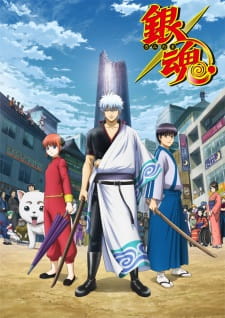
Gintama.: Shirogane no Tamashii-hen
https://cdn.myanimelist.net/images/anime/12/89603.jpg
Gintama.: Shirogane no Tamashii-hen
نام انیمه: Gintama.: Shirogane no Tamashii-hen
نام انیمه: Gintama.: Silver Soul Arc
نام انیمه: 銀魂. 銀ノ魂篇
ژانر: Action, Sci-Fi, Comedy, Historical, Parody, Samurai, Shounen
تاریخ پخش: زمستان 2018
وضعیت: تمام شده
تعداد قسمتها: 12 قسمت
مدت زمان هر قسمت: 24 دقیقه
کارگردان: Fujita Yoichi
استودیو: Bandai Namco Pictures
منبع: Manga
زیرنویس فارسی و انگلیسی دارد
لینکهای مربوط به انیمه

+ لینک دانلود انیمه (MKV, EN Sub, 720P, ~550MB)
+ لینک فایل تورنت (MKV, EN Sub, 720P, 6.4GB)
+ لینک دانلود انیمه (MKV, 1080P, EN Sub, ~1.1GB)
+ لینک فایل تورنت (MKV, EN Sub, 1080P, 14.5GB)
+ لینک فایل تورنت (MKV, 720P, EN Sub, 6.4GB)
+ لینک فایل تورنت (MKV, 1080P, FR Sub, 10GB)
+ لینک فایل تورنت (MKV, 1080P, EN Sub, 14.4GB)
+ لینک فایل تورنت (MP4, 720P, RAW, 7GB)
+ اطلاعات بیشتر: سایت // سایت // سایت // سایت // سایت
+ لینک دانلود انیمه (MKV, 480P, ~75MB)
+ لینک دانلود انیمه (MKV, 720P, ~125MB)
+ لینک دانلود انیمه (MKV, 1080P, ~200MB)
خلاصه انیمه
فصل جدید انیمه گینتاما.
https://myanimelist.cdn-dena.com/images/anime/9/83132l.jpg
توضیحات من
ووووووووووووووااااااااااااااااااااااااااااااییییییییییییییی
قسمت اول، اونجایی که گین-سان وارد شد، یه جیغی کشیدم که نگوووو.
اصلا دست خودم نبود.
کلا رو ابرها سیر کردم.
چقده گین-سان جیگر است.
مثلا اینا رو توی مانگا خوندم. ولی باز هم استرس و هیجان.
نهضت آزادی بخش به زمین حمله کرده.
همه با هم متحد شدن تا خونه شون رو نجات بدن.
اون پیرمرده با کمک تاما-چان و گین طلایی، موفق شد همه ربات های دشمن رو از کار بندازه.
از اون ور، شینسنگومی برگشت.
آی هیجیکاتا-سان! خیلی وقت بود که نبودی.
ولی خودمانیم هاااا، با کوندو-سان خیلی بد شوخی می کنن.
هر چی باشه یه شخصیت تاریخی و رئیس شینسنگومی است.
اصلا این انیمه بسی بسیار خاص است.
Black Clover - Episode 81 [Review]
https://cdn.animenewsnetwork.com/thumbnails/max300x600/cms/episode-review.2/146357/bc81.png.jpg
Black Clover - Episode 81 [Review]
Coinciding with Langris' onslaught against his brother last week, Team G technically won the match because Team E's crystal got destroyed in the process. Elsewhere on the map, Leopold came this close to taking the enemy's crystal, but it looks like this is a day for the bad guys instead, which brings us back to the Black Bulls' stare-down with Langris. This episode rewinds a few moments to show us exactly how Asta and company managed to fly across the battlefield so quickly (Charmy catapulted them with her sheep), though I was wrapped up in the moment enough that I didn't think twice about it at the time.
This tournament is certainly going in a few unexpected directions now. Langris has gotten on Asta's naughty list, so our hero is demonstrating an uncharacteristic anger. The Wizard King is not opposed to letting these kids get a quick and dirty fight out of their system, but he also wants to keep everything within the confines of the exam. Since Asta and Langris' teams would be facing each other in the semi-finals anyway, their match is getting moved up to now, which seems weirdly unfair to the other teams waiting for their fights! I'm trying to think of another shonen anime that's done something like this. The Wizard King's just like, "Well, shoot. The emotions are running high now. Gotta keep that momentum going!"
So because Asta went and got all hot-headed against Langris, who's still digging his heels into the ground with overcompensating douchebaggery, his teammates have to get whisked into an unexpected battle as well, and this is where we get a lot of new Zora content. It turns out Zora's distaste for the Magic Knights comes from his dad, who was a peasant like Asta who managed to get in to the club with hard work. Zora's dad revered the Magic Knights and relished the opportunity to fight alongside them, but when he eventually died, Zora overheard his teammates mocking him for not being a wealthy noble like them. The idealistic vision of who the Magic Knights are supposed to be—compassionate warriors fighting to protect the weak—was ground into the dust. It turns out that this special group of heroes is inescapably tied to wealth and nepotism, even when it pretends not to be.
Langris makes an especially good antagonist for Zora, who rises to the challenge with a strong appetite. Langris is everything Zora could possibly hate about the Magic Knights, and by the end of this episode, Zora goes from looking like a bitter prankster to a genuinely swell dude biting back at the establishment's failure. It's not that the idea of the Magic Knights is bad, it's that vile people are constantly allowed to make a mockery of the name. This is an angle that Black Clover has always lightly explored, that the people who are supposed to be the good guys are low-key responsible for many of the world's problems, and I hope it can keep pushing these ideas. Even if someone like the Wizard King truly is a stand-up guy, is there a chance he's been complicit in some of the kingdom's ugliness and simply hopes to plant the seeds of progress in a new generation? Or perhaps he's secretly been scheming to fix the system from the inside? This thread has to go somewhere.
Things are getting much more intense in the Royal Knights exam, and this episode offers a healthy variety between the more atmospheric action and the flashbacks fleshing out Zora's story. Once again, the class themes are among Black Clover's greatest assets, allowing characters of different backgrounds to coexist meaningfully and sewing some honest-to-goodness world-building into the narrative. Thankfully, this tournament seems to have finally found its pulse.
Bungo Stray Dogs - Episode 29 [Review]
https://cdn.animenewsnetwork.com/thumbnails/max300x600/cms/episode-review.2/146406/bungo-stray-dogs-season-3-ep-4.jpg
Bungo Stray Dogs - Episode 29 [Review]
You may think that the most terrifying thing about the great Russian novels is their length or sheer number of characters, and in the real world, you could be right, but in Bungo Stray Dogs, the scariest thing about them is their author. At least, that's the case for Fyodor Dostoyevsky, author of Crime and Punishment and The Brothers Karamazov, among other classics of the late 19th century. Other antagonists in the series have been alarming or clever, but over the space of this very strong episode, Dostoyevsky proves himself to be far more than those small words encompass. He's a master manipulator, and he's not without what he sees as compassion or mercy – what's scary is that he only sees death as the ultimate expression of both of those things, and as a compassionate and merciful man, he has no choice but to grant it to those he encounters. Dostoyevsky is operating by his own special moral code, and not only does he not care if it doesn't conform to yours, he has ways of making you believe in it, too.
All of this is further evidence of the fact that original series author Kafka Asagiri is well-versed in the works and lives of the authors who make up the characters in the story. In the case of Dostoyevsky, his group, Rats in the House of the Dead, is a reference to his semi-autobiographical tale of his time in a Siberian prison camp, House of the Dead, published in 1862. (It was serialized between 1860-62, but that's when the compiled edition came out.) Apart from being Leo Tolstoy's favorite Dostoyevsky work, the philosophical novel details the experiences and spiritual rebirth of its main character as he comes to understand the evils of incarceration and physical punishment as a tragedy for all of humanity and the countries that use them. This, coupled with the fact that Dostoyevsky was given a false execution in 1849 before being sent to Siberia, makes the character's stance that death is the ultimate mercy a reference to the distaste expressed for other modes of punishment. This is most clearly seen in the way Dostoyevsky treats the unnamed teenager who is a member of Ace's team – the boy is kind to him, tells him his hopes and terrible past history as a victim of first human trafficking and then Ace, is the last person left alive after Dostoyevsky has wiped out Ace's men (or rather, convinced them to wipe themselves out)…and is killed at the last. Any other character in this show, including Mori, would have offered the boy a second chance at life. Dostoyevsky thinks that the only true escape for him is death.
Ace himself may also be a reference to another of Dostoyevsky's works, specifically The Gambler, a short 1866 work published right after Crime and Punishment inspired by Dostoyevsky's own gambling addiction. (In fact, the novella was intended to pay off gambling debts.) Dostoyevsky's own preferred game was roulette, which we see potentially referenced in the card game he plays with Ace for his life, although of course he's really playing in order for Ace's – although Ace doesn't realize it, the moment he stepped into the room he was gambling for his life against Dostoyevsky's ability and intelligence, a sort of Russian roulette that his own overweening pride did not allow him to recognize.
Essentially Dostoyevsky himself is the embodiment of his most famous work: he sees crime and metes out punishment. That he clearly doesn't see himself as doing anything wrong is alarming, especially because he's going after all other ability users in Yokohama, both the Mafia and the Agency…and presumably the remains of the Guild as well. That he's teamed up with Nathaniel Hawthorne, as we saw at the end of season two, feels like a reference to the punishment dealt out in The Scarlet Letter to Hester Prynne, or rather, the self-satisfaction of those who inflicted it, as Dostoyevsky himself is at risk of becoming just such a character.
Sometimes a good villain can really make a show. Bungo Stray Dogs is perfectly good on its own, but Dostoyevsky might just be the character it needs to be even better.
Fruits Basket - Episode 5 [Review]
https://cdn.animenewsnetwork.com/thumbnails/max300x600/cms/episode-review.2/146388/froobfive.jpg
Fruits Basket - Episode 5 [Review]
What do Fruits Basket and Clannad have in common (besides making people cry)? Their initially obtuse alternate-language titles share the same meaning! At long last, Tohru delivers Furuba's title drop, and this is the reason why I was so happy that they moved the pickled plum parable up into episode three. Now that we understand Tohru's view of the world as a place where plain little riceballs feel like they don't belong, this episode expands the metaphor to make it clear that she was talking about her own loneliness just as much as Yuki or Kyo's. "Fruits Basket" just means family, and for all the crumbly riceballs of the world waiting for people to discover their inner beauty, family is something they have to find for themselves and fight for a little selfishly. After weeks of encouraging others to be their messy selves, Tohru finally finds the inner strength to reach out for what she's always wanted.
For most of her life, Kyoko Honda was the only family Tohru had ever known. Her new friends Uo and Hana are kind to her, but they also have families of their own to take care of, and losing this vital connection with her mother in such a sudden and tragic way has left our heroine a little shell-shocked. Even though we see Kyoko encouraging her to take things easy, it's obvious that Tohru derived most of her life's purpose from taking care of her mother, who she idolized completely. All those years of putting others first don't make it any easier for Tohru to recognize when she needs to start taking care of herself instead, and unfortunately, the Soma boys are equally bad at self-care for entirely different reasons. Most of the audience is bound to side with Shigure this week, as he raises his eyebrow at everyone's immediate acceptance that Tohru should go live with her "real" family. She doesn't consider asking to stay, and she doesn't even choose to commemorate her last night in the house by going out to dinner. The boys don't consider asking her to stay either, and they barely even wish her farewell because they've immediately slipped so deeply into acceptance and depression. It's all very strange given how quickly these three became close, and once again, this all comes back to the cast's inability to consider their own desires. As Kyo puts it, "it was abnormal for her to even be here at all." Why should Tohru live in a house with three men she barely knows? But if the life that you accepted as "normal" is less than you deserve, maybe pursuing that "abnormal" life is the right choice after all, despite all the social or familial pressures not to rock the boat or cause a scene.
Those pressures crash down on Tohru hard when we see exactly why the Honda family was so reticent to take her in. They're a petty and suspicious bunch of back-biters, terrified of the judgment of their neighbors and casually enamored with symbols of authority and order like the police force. This also raises the first of Fruits Basket's many uniquely Japanese societal conflicts, since it's not uncommon for people to lose their jobs or other opportunities purely because of a relative's criminal record in Japan. Thankfully, when Cousin Creep takes things too far by trying to grill Tohru on her potential indiscretions with the Somas, Grandpa Honda puts his foot down. He tells Tohru that he chose this family, even if they have their problems, but it's not a freeing environment for a young and sensitive person like her to grow up in. Admittedly, Grandpa's still having trouble telling the difference between our heroine and her mother, but this lends Tohru an unintended strength by reminding her that the intimidating power Kyoko exuded lives on in her as well, and it might be okay for her to call upon that fighting spirit for herself. And since she's given so much love to the Soma family, it only takes a small cry for help from Tohru for Yuki and Kyo to swoop in and bring her back where she belongs.
I'll be honest, I was an absolute mess watching this episode. I think the message that it's okay to pursue a life that makes you happy without shame is vital for everyone to hear—but especially for young girls, because I knew a lot of women like Tohru growing up, who would open-heartedly take on everyone else's burdens alone until they could no longer recognize that it was making them miserable. Whereas I was initially worried that Kagura's chapter wouldn't be able to fill a full episode last time, I knew that chapter six of the manga would absolutely need an entire episode to itself, as the first truly great dramatic climax in Tohru's story. She's taken a very tiny step toward fighting for the life and family she wants (she was already starting to berate herself for being selfish right before Yuki stepped in), but every long journey starts just that small, and now Tohru will be taking those steps hand in hand with more people who love her and want to see her grow.
On the note of manga adaptation, however, this episode made some significant changes that I liked and some that I didn't. It would take a long time to break down all of them, so the simple version is that this episode shifts away from telling its story almost purely from Tohru's perspective like the Furuba manga did, and instead broadens its scope to give Yuki, Kyo, Shigure, and even the Hondas more screen time. On the positive side, Fruits Basket will evolve into a broader ensemble drama over time, with many episodes where Tohru doesn't even appear, so it makes sense to start establishing this bigger scope now, and the added material was charming and in-character for everyone involved. On the negative side, there was a powerful sense of melancholy and suspense to both the original manga and the 2001 anime adaptation, where the weight of Tohru's denial about her true feelings built and built until the relief of her breakdown became transcendent. In this version, we get that catharsis mere minutes after she steps into the Honda's residence, which was disappointing. Ultimately, I think the pros and cons to these approaches even out, and the preserved strength of the underlying material is so great that it doesn't matter much.
My favorite detail in this episode that wasn't present in the original manga was how Yuki and Kyo found the Honda house. Yuki leaves first in a panic and wanders around in circles until Kyo gives him the clarity he needs to find the house, because he was listening more closely to Tohru's parting words. Just like the pickled plum in a riceball, the Honda family nameplate was buried underneath an innocuous bland exterior that took some effort to uncover. Then Yuki helps Kyo in turn by reminding him to consider Tohru's feelings before he acts on his own desires, so they can both step in only after she reaches out for them. It's a great sequence that illustrates how Yuki and Kyo's strengths can support one another even when they hate spending time together, on top of delivering a clever little metaphor for how hard it can be to push past the facades of selfless people like Tohru and make sure they're really doing okay.
On a final note, this episode is great not only for its powerfully simple emotional core about chosen families, but for its surreptitious level of crafty foreshadowing. This is the first we've heard about Tohru's father Katsuya or the extent of her mother's delinquency, and it paints an immediately complicated picture of the life they must have led, given that both sides of the family seem to have abandoned them even after Katsuya's death left Kyoko to raise her daughter alone. And now that Kyoko's ghost has been raised once again, her similarities to Kyo have also grown exponentially. First they had similar names, then they had similar hair, and now they have similar histories of impulsive violence and similar words of affectionate advice for Tohru to be a little more selfish. Is it all just coincidence, or could Tohru's late mother and her childhood idol possibly be connected somehow?
Then there's Shigure's role in all this, or more accurately his lack of a direct role. He's the only one in the Soma house who immediately understands that nobody wants Tohru to leave, but he keeps his mouth shut despite his supposedly important arrangement with the head of the family. This means that it's more important to Shigure that Yuki and Kyo actively fight for Tohru to be in their lives than it is that she just live there, or else he probably would have convinced everyone of that himself. Now that Tohru has officially chosen the Somas as her new family, for better and for worse, her life can only grow more colorful as many more members of the Soma family come to see what's so special about this riceball in a fruits basket.
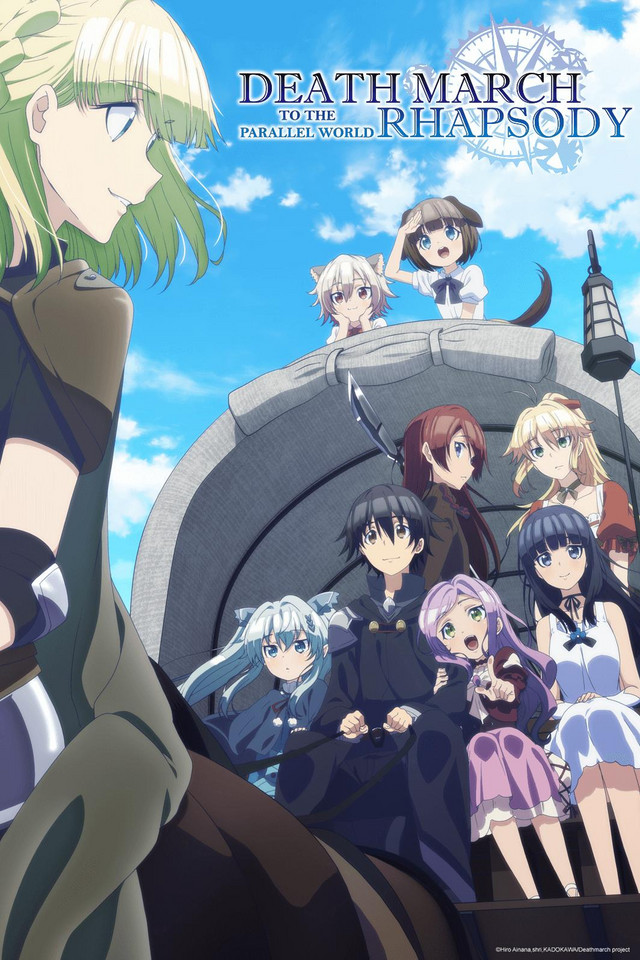
Death March kara Hajimaru Isekai Kyousoukyoku
Death March kara Hajimaru Isekai Kyousoukyoku
نام انیمه: Death March kara Hajimaru Isekai Kyousoukyoku
نام انیمه: デスマーチからはじまる異世界狂想曲
نام انیمه: Death March to the Parallel World Rhapsody
ژانر: Harem, Isekai, Reincarnation, Adventure, Fantasy
تاریخ پخش: زمستان 2018
وضعیت: تمام شده
تعداد قسمتها: 12 قسمت
مدت زمان هر قسمت: 23 دقیقه
منبع: Light novel
استودیو: SILVER LINK., Connect
کارگردان: Oonuma Shin
زیرنویس فارسی و انگلیسی دارد
+ لینک دانلود انیمه (هاردساب فارسی)
+ لینک دانلود انیمه (MKV, EN Sub, 480P & 720P & 1080P)
+ لینک دانلود انیمه (MKV, 720P, ~80MB, EN Sub)
+ لینک دانلود انیمه (MP4, 1080P, EN Sub, ~300MB)
+ لینک فایل تورنت (MP4, BD, 720P, EN Sub, 2.4GB)
+ لینک فایل تورنت (MKV, BD, 1080P, x265, EN Sub, 3.1GB)
+ لینک فایل تورنت (MKV, 1080P, EN Sub, 10.4GB)
+ لینک فایل تورنت (MKV, BD, 1080P, EN Sub, 17.6GB)
خلاصه داستان (منبع)
Ichirou Suzuki, a programmer nearing his thirties, is drowning in work. Worn out, he eventually has a chance to catch up on sleep, only to wake up and discover himself in a fantasy RPG world, which is mashed together from the games he was debugging in reality. In this new place, he realizes that not only has his appearance changed to a younger version of himself, but his name has also changed to Satou, a nickname he used while running beta tests on games.
However, before Satou can fully grasp his situation, an army of lizardmen launch an assault on him. Forced to cast a powerful spell in retaliation, Satou wipes them out completely and his level is boosted to 310, effectively maximizing his stats. Now, as a high-leveled adventurer armed with a plethora of skills and no way to return to reality, Satou sets out to explore this magical new world.
خلاصه داستان (منبع)
داستان برنامه نویسی 29 ساله به نام “سوزوکی ایچیرو” که بطور اتفاقی وارد یک بازی RPG و فانتزی میشود. سوزوکی با ورود به دنیای این بازی متوجه میشود که در درون بازی یک کارکتر 15 ساله به نام ساتو است و ابتدا تصور را به خواب بودن میگذارد ولی طولی نمیکشد که او با دیدن اتفاقات درون آن دنیا و واقعی به نظر رسیدنشان به خواب و خیال نبودن این تجربه پی میبرد.
One Punch Man 2nd Season
https://cdn.myanimelist.net/images/anime/1805/99571.jpg
One Punch Man 2nd Season
نام انیمه: One Punch Man 2nd Season
نام انیمه: ワンパンマン
نام انیمه: One Punch-Man 2
نام انیمه: One-Punch Man 2
نام انیمه: OPM 2
ژانر: Action, Sci-Fi, Comedy, Parody, Super Power, Supernatural
تاریخ پخش: بهار 2019
وضعیت: تمام شده
تعداد قسمتها: 12 قسمت – فصل دوم
مدت زمان هر قسمت: 23 دقیقه
کارگردان: Sakurai Chikara
منبع: Web manga
استودیو: J.C.Staff
زیرنویس فارسی و انگلیسی دارد
لینکهای مربوط به انیمه
+ لینک دانلود زیرنویس فارسی (@AWSub)
+ تماشای تریلر انیمه: لینک // لینک // لینک // لینک
+ تصاویر انیمه: عکس // عکس // عکس

+ لینک دانلود انیمه (MKV, 1080P, 10bit, x265, EN Sub, ~300MB)
+ لینک فایل تورنت (MKV, 1080P, x265, 10bit, EN Sub, 3.6GB)
+ لینک فایل تورنت (MP4, 1080P, Ru Sub, 9.2GB)
+ لینک فایل تورنت (MP4, 720P, Chin Sub, 3.2GB)
+ اطلاعات بیشتر: سایت // سایت // سایت // سایت // سایت
+ لینک دانلود انیمه (MKV, 480P, ~75MB)
+ لینک دانلود انیمه (MKV, 720P, ~140MB)
+ لینک دانلود انیمه (MKV, 1080P, ~280MB)
+ لینک دانلود تریلر انیمه – کیفیت 720
+ لینک دانلود تریلر انیمه – کیفیت 1080
https://youtu.be/NezvLw2gRAY
داستان
فصل دوم انیمهی One Punch Man میباشد.
Dororo - Episode 14 [Review]
https://cdn.animenewsnetwork.com/thumbnails/max300x600/cms/episode-review.2/145799/sadame.png.jpg
Dororo - Episode 14 [Review]
It's interesting that this episode of Dororo isn't marked as a two-parter when it clearly ends without a resolution. It doesn't seem to be a translation error (as much as I'd like to blame Amazon Prime, considering how mad I already am at them for releasing this episode so late). But while streaming services (particularly Amazon) have their problems from time to time, these reviews evaluate the quality of the show's content itself, and in that respect, this episode didn't disappoint. While the story still dangles loose ends that leave it feeling more cryptic than I'd like, this week offers a satisfying story about the many variations that families can take.
The theme is all about family this week. There's the family you're born with, as shown through a somber flashback to Dororo's parents as they discuss what to do about the samurai treasure that will eventually become Dororo's legacy. Dororo's mom refuses to learn the location of the treasure, even though it would have ensured her survival, because her dedication to the family's shared ideals is more important. There's also the found family at the center of this story—Dororo and Hyakkimaru. The obvious family connection they share is as siblings, especially since Dororo frequently calls Hyakkimaru “big bro.” But they take turns protecting one another; Hyakkimaru through his impressive strength, and Dororo through his life experience and understanding of human love, which he attempts to pass on to Hyakkimaru by communicating how much he cares about him in various ways. At the old monk Biwamaru's prompting, Dororo attempts to initiate a discussion about the future with Hyakkimaru. Their closeness is most visible in Dororo clinging to Hyakkimaru or sharing his bed, but this failed discussion, which implies that Dororo wants to keep traveling with Hyakkimaru indefinitely, shows more clearly than ever that he sees him as his new family.
In “The story of Sabame,” there's a strange new family structure made up of humans and monsters alike. Between Sabame's wall-eyed stare and fishy story about a natural disaster that completely ignores the oil spilled right by the site of the burned temple, we know from the beginning that something is off about this ostensibly kind rich man. He treats Dororo and Hyakkimaru like kings (perhaps giving them a taste of what life would be like if they follow Biwamaru's suggestion to seek out Dororo's buried inheritance), but it appears that he wants their lives in exchange, to feed a (literally) monstrous woman and also children with his houseguests' bodies. It'll be tantalizing to spend the week (or longer, depending on Amazon's whims) dissecting the meat of the mystery so far. My theory is that whatever happens, it'll result in Hyakkimaru finally regaining his sight—Sadame's eyes are just so attention-getting.
What of the enormous monster baby that clung to Dororo or the motherly ayakashi who pointed out the oil spill to Hyakkimaru? This seemingly familial pair generates more questions than they answer. It's difficult to evaluate a two-parter when it leaves so much unresolved by design. Instead, it's the reward of the episode's overall message that makes me regard it so highly. Not all of the families featured are functional or healthy, but each unit shows a different side of the same struggle—sometimes people act against their own interests in order to find acceptance within a family unit. Everyone wants a group to which they feel like they belong.
Anime – New Episode [15 Apr 2019]
http://s9.picofile.com/file/8322104968/Anime_All_Folder.png

Anime – New Episode [15 Apr 2019]
MKV, 1080P, EN Sub, RAW, Download Links, Torrent File
[HorribleSubs] Shoumetsu Toshi - 02 [1080p].mkv
Dragon Ball Z - Season Sets [Extras] [1080p] [Blu-ray] [x264]
[HorribleSubs] Hachigatsu no Cinderella Nine - 02 [1080p].mkv
[HorribleSubs] Mayonaka no Occult Koumuin - 02 [1080p].mkv
[HorribleSubs] Nande Koko ni Sensei ga - 02 [1080p].mkv
W'z 01-13 (1920x1080 HEVC2 AAC) (Batch)
[HorribleSubs] Fairy Gone - 02 [1080p].mkv
[HorribleSubs] Boruto - Naruto Next Generations - 102 [720p].mkv
[DB] Tokyo Ghoul:re 2nd Season [Dual Audio 10bit 720p][HEVC-x265]
[HorribleSubs] Gegege no Kitarou (2018) - 51 [1080p].mkv
[HorribleSubs] One Piece - 880 [1080p].mkv
[HorribleSubs] Fairy Tail Final Season - 304 [1080p].mkv
[HorribleSubs] Kono Oto Tomare! - 02 [1080p].mkv
[HorribleSubs] Kono Oto Tomare! - 02 [720p].mkv
[HorribleSubs] Bokutachi wa Benkyou ga Dekinai - 02 [1080p].mkv
[HorribleSubs] Kimetsu no Yaiba - 02 [1080p].mkv
[HorribleSubs] Nobunaga-sensei no Osanazuma - 02 [1080p].mkv
[HorribleSubs] Joshikausei - 02 [1080p].mkv
[HorribleSubs] Amazing Stranger - 02 [1080p].mkv
[HorribleSubs] Cardfight!! Vanguard (2018) - 49 [1080p].mkv
[HorribleSubs] Detective Conan - 936 [1080p].mkv
[HorribleSubs] Mix - Meisei Story - 02 [1080p].mkv
[HorribleSubs] Hitoribocchi no Marumaru Seikatsu - 02 [1080p].mkv
[HorribleSubs] Midara na Ao-chan waBenkyou ga Dekinai - EP02
[HorribleSubs] Senryuu Shoujo - 02 [1080p].mkv
[HorribleSubs] JoJo's Bizarre Adventure - Golden Wind - 26 [720p].mkv
[HorribleSubs] Fruits Basket (2019) - 02 [1080p].mkv
[HorribleSubs] Bungou Stray Dogs - 25 [1080p].mkv [S03EP00]
[HorribleSubs] Bungou Stray Dogs - 26 [1080p].mkv [S03EP01]
[HorribleSubs] Ueno-san wa Bukiyou (01-12) [1080p]
[HorribleSubs] Kemurikusa (01-12) [1080p]
[HorribleSubs] Endro (01-12) [1080p]
[HorribleSubs] Mahou Shoujo Tokushusen Asuka (01-12) [1080p]
[HorribleSubs] Manaria Friends (01-10) [1080p]
[HorribleSubs] Shoumetsu Toshi - 02 [1080p].mkv
School Rumble San Gakki | 60MB | 720p
Black Clover - Episode 78 [Review]
https://cdn.animenewsnetwork.com/thumbnails/max300x600/cms/episode-review.2/145555/bc78.png.jpg
Black Clover - Episode 78 [Review]
The first round of the Royal Knights tournament has now concluded, meaning it's up to the winning teams to face off against each other. I'm still really lost as to who all is participating in these exams, because there are so many side characters left watching on the sidelines, and I figured that the first round's focus on weeding out fodder at least made sense considering there's bound to be hundreds of Magic Knights in the running. I've been flipping through this part of the manga every week, feeling like a crazy person for not being able to find some explanation like "you have to volunteer to be in the tournament" or "the Wizard King hand picked his favorite prospective knights" or something. I feel like I'm being told to just go with it after I've ordered chicken and been delivered only bones (and not even all the bones).
Anyway, it's time to commence Round Two, which begins with Asta, Mimosa, and Xerx (henceforth referred to as "Team B") competing with Magna, Sol, and Kirsch ("Team C"). We can even begin referring to Xerx as Zora, since his true name gets dropped in a flashback partway through the episode, so I'll just start calling him that from now on.
Going into this fight, the conflict appears to be between Mimosa and her brother Kirsch, as well as Zora's eagerness to fight a member of royalty, but what quickly takes center stage is Asta trying to get Zora to act like a team player. At the outset of the battle, Asta unleashes his new demon form, but only long enough to release the traps that Zora laid down ahead of time. I really like Asta this week, because he's more cheeky and smug than usual. He's not trying to rat Zora out for being a cheater, he just wants Zora to let his teammates in on the pranks. I think this is a good compromise for Zora's "arc" or whatever he's going through, where teamwork and friendship won't necessarily fix his bad attitude, just coexist with it. I like seeing Asta's enthusiasm as he puts his own team at a momentary disadvantage so they can form their secret prank cabal and make Zora feel like part of the gang. It's an ironic yet positive twist on the purpose of the tournament, which is to measure teamwork.
So far Kirsch and his cherry blossom magic are the stars of the opposing team, though as of this week we don't see him interacting with Mimosa all that much. He's the token snooty royal and the first victim of Asta and Zora's new traps. Kirsch thinks he's got the trap spells covered, but falls into a hand-dug pit on accident because he's so focused on magic that he can't predict a practical trap. Asta takes him out with his anti-magic (still not an interesting way to win every fight), and I hope Kirsch isn't completely out of the fight already, because he's the only thematically compelling opponent on hand right now.
We're getting into the thick of this tournament at last, so every match from this point forward should have something going for it. I'm a little frustrated at how poorly the conceit of this arc has been holding up, since tournaments are already blank slates that you don't have to bend over backwards to explain but this one still feels undercooked. Otherwise, we're getting back to the most engaging aspects of this story, like classism and Zora's complicated relationship with the Magic Knights. I'm fairly happy with where that stuff seems to be going.
Review
https://cdn.animenewsnetwork.com/thumbnails/max300x600/cms/episode-review.2/145526/dororo.jpg
Dororo - Episode 13 [Review]
Dororo took a week off between cours, and it was sorely missed. Between its expressive visuals, minimalist color palette, and evocative musical score, this was one of the best shows of Winter 2019, so it's great that it's sticking around another season. The show wastes no time returning viewers to the story at its most affecting, giving us moments of true elation and tragedy all in one short episode. In “The story of the Blank-faced Buddha,” the show returns from a focus on Hyakkimaru back to Dororo for a real emotional gut punch.
Now that we're in the second cour of the show, there are new opening and ending sequences to match. I'm wistful that the “party is over,” but these new sequences are just as promising, and the ending sequence, which features blurred visuals evocative of Hyakkimaru's view of the world, gives me hope that we'll see him regain his sight as the anime progresses. But that's not happening yet: as Dororo points out early on, Hyakkimaru didn't regain anything after fighting the fox spirit last time. Instead, he got insomnia as he struggled to deal with his sudden family drama (and it's good that Mom survived her suicide attempt). Dororo wants Hyakkimaru to chill out, so he even lies about the presence of a demon near a relaxing hot spring in order to coax his stubborn big brother into visiting.
Instead, the pair run into Okaka, whose name's similarity to “mama” (Okaa-san) is no coincidence. Okaka takes on the appearance and voice of Dororo's mother, revealing a more vulnerable side to this normally tough and proud child. Dororo has been on his own for so long in a world that's dead set on dealing him a bad hand. His bond with Hyakkimaru is linked to an obvious anxiety that his “bro” will leave him behind. Dororo was intent on helping Hyakkimaru unwind, but he finds his own solace, however temporary, in Okaka. Never mind that Okaka is actually a sculptor twisted by an obsession with carving and re-carving (and slicing off innocent travelers' faces in the process) the face of a giant possessed Buddha statue. The face-stealer is loosely based on Tezuka's original Dororo manga, as an interpretation of a Buddhist myth that many Westerners may have seen before in Avatar: The Last Airbender, when Aang battles a version of this monster. But Hyakkimaru's lack of vision provokes an interesting weakness in the monster—you can't mimic the face of a mother that a child has never seen. It's another example of how Hyakkimaru's disabilities can prove to be strengths in this show. It makes me hope that Dororo gets an English dub so blind Western fans can watch it.
Okaka is far beyond redemption, but through Dororo's smile, she experiences a final moment of solace. I love the nuance of the animation, which shows Dororo's pained smile performed out of kindness at the same time that he's essentially losing his mother for the second time. Dororo finally receives some kindness from an increasingly talkative Hyakkimaru just when he needs it most, and the pair does visit the hot spring after all. The episode ends on a note of surprise rather than resolution when it becomes apparent that there's a burn on Dororo's back that seems to be in the shape of a map. Hyakkimaru's plotline is fully taking a backseat to Dororo's this week, but this show needs both of its protagonists to shine. Maybe this new discovery will bring the duo some good fortune for a change.
@@@@@@@@@@@@@@@@@@@@@@@@@@
https://cdn.animenewsnetwork.com/thumbnails/max300x600/cms/episode-review.2/145468/partfive25.png.jpg
JoJo's Bizarre Adventure: Golden Wind - Episode 25 [Review]
It was only ever a matter of time before Trish's Stand revealed itself, and this week we finally meet the legendary Spice Girl! We generally don't spend time thinking of Stands as gendered beings, but this one talks and inexplicably has boobs, so she kind of embodies a whole new character on her own.
Spice Girl's ability is to make objects soft and malleable, which turns out to be useful in the Notorious B.I.G. fight because the enemy can't aimlessly destroy everything that moves anymore. I presume that Trish's powers are naturally born like the Joestars, but she hasn't had them for long so her current journey is about getting into the spirit of proper Stand battles. That's my favorite aspect of this episode; watching Trish steadily put the pieces together and go from frightened teen girl to wisecracking badass who's too cool to look back at her own explosions. Okay, maybe it's not that extreme of a transformation, but this is definitely a turning point for her. What sets Trish apart from other unsuspecting heroes who have to toughen up in the heat of battle is that she's been around Stands for a while. She's seen danger and has had to watch Team Bucciarati fight on her behalf before, but she never expected herself to participate in the action. It does seem like she should have been more ready for a day like this to come, but it's too late to cry about it now. The gang's sense of resolve is starting to rub off on her.
As far as the Stand battle itself goes, I don't think the finale of the Notorious B.I.G. fight is nearly as compelling as its beginning. This two-parter was front-loaded with so many great creepy ideas, but now that the abject horror has mostly evaporated, we never got around to understanding how the majority of the enemy's powers worked, let alone what was happening during the climactic resolution this week. Everybody's getting their hands cut off now, and I can't tell whose abilities are responsible for what. Notorious B.I.G.'s movement-seeking powers were the only aspect to get fleshed (heh) out, and most of the other trippy stuff was just for spooky flavor. I do like the detail that it can't ever be killed, so the solution is to dump it in the ocean and let it fight the waves forever. The waters of Sardinia are about to become the next Bermuda Triangle.
Obviously this is a big episode for Trish, even if I found the fight itself underwhelming, as she's starting to feel like a proper member of the team and not just a macguffin to keep the plot moving. The gang felt uncomfortably trimmed down when Fugo left, but now it's clear that a new person might be able to fill his shoes. I hope the show can hold on to the emotionally raw side of her character, since her relationship with her dad is such an important aspect of this arc. It's hard to tell right now if this is a full-on transformation for her character where she's just cool and confident all the time now, or if we're still in the midst of a balancing act. Where the story goes from here could make an episode like this come across a little ham-fisted in retrospect, but it's hard to deny character development when it comes delivered in such a neat package.
@@@@@@@@@@@@@@@@@@@@@@@@@@
https://cdn.animenewsnetwork.com/thumbnails/max300x600/cms/episode-review.2/145498/fairy-tale-last-ep-26.jpg
Fairy Tail: Final Season - Episode 303 [Review]
So that's twice now that a member of Fairy Tail has prevented someone from ending this war. First was Happy when he stopped Natsu from killing Zeref, which was a dumb thing to do, but understandable to a degree – he didn't want Natsu to die as well. While that hardly showed much thinking things through, it was in line with Happy's character. This week, though, this week, Mest pulls something that's far less understandable or acceptable. Happy's actions may have been selfish, but Mest flat-out sabotages Brandish's Makarov-sanctioned negotiations with August. Fairy Tail as a guild may not put a lot of stock in power structures, but that's mutiny by anyone's reckoning, and Makarov's no Captain Bligh. It was also an awful thing to do to Brandish – she'd decided to help Fairy Tail, turning her back on her own country in order to end Zeref's war, and not only did Mest make light of that sacrifice, he also demonstrated his lack of respect for someone willing to help his guild by making hers the hands that held the knife. It's just a low blow all around.
It also may be one that gets Natsu and Lucy hurt, because the consequences of his actions aren't only that he screwed over Brandish's negotiations, but that he triggered August into using his powers. Granted, those may be cancelled out by Irene's use of Universe One at the end of the episode, because her spell rearranges the very land and she cast it on all of Fiore, but someone's still going to get a taste of whatever it is August did. The chances that it's Mest feel quite slim.
August's spell may have a slightly better effect on the other major moment of emotional frustration this week, the apparent death of Gajeel. I freely admit that Gajevy is my favorite couple in the show, despite how they started (followed closely by Jerza; aren't portmanteaux fun?), but even if they aren't yours, this week does a really good job of making their parting heartbreaking. It goes back to the idea I discussed last time, about how in fiction partners often make a big deal out of sacrificing themselves for the other to go on living. Levy and Gajeel have both made it clear that that's not acceptable to them, but it doesn't stop either of them from trying. Of course, Gajeel wasn't planning to die – he perhaps was banking on shortening his lifespan in a similar way to Levy's via massive Bane Particle ingestion, but he certainly didn't expect Bloodman to just drag him to hell like that. When he then stops Levy from following him (and Lily ensures that she can't), though, he's just doing the same thing he was upset that she did – sacrifices himself and leaves her behind. The hope I'm selling here is that Irene cast her spell while Gajeel and Bloodman were in transit between Fiore and the underworld, meaning that they'll pop out somewhere very much alive. Even if that happens, though, Gajeel and Levy's parting is very effective, making use of flashbacks to show how they grew to love each other and one heart-rending image of the family Gajeel hoped to have with her. It's all enhanced by some truly great scream-crying from Levy's VA, Mariya Ise, who strikes just the right note of heartbroken desperation.
All in all, things really look bad for our heroes right now. But there's one potential game changer in the wings for the next episode: Cana has finally brought herself to eliminate the lacrima holding Mavis' physical body. That means that the First Master is back on the scene, and while her being in her real body could reactivate the curse she carries, it also gives Fairy Tail an edge against Zeref. He's never had a chance to really deal with his feelings for Mavis, and those are in large part what's driving him, brother be damned. How will he react coming face-to-face with her again? How will she? The name Mavis is one that she shares with the heroine of Marie Corelli's (totally bizarre) 1895 novel The Sorrows of Satan - perhaps she can bring those same sorrows to the man trying to destroy her people.
@@@@@@@@@@@@@@@@@@@@@@@@@@
https://cdn.animenewsnetwork.com/thumbnails/max300x600/cms/episode-review.2/145469/op879.png.jpg
One Piece - Episode 879 [Review]
Okay, so in the manga we got the news that Luffy was the unofficial Fifth Emperor shortly before the full reveal of his new bounty. The whole chapter was loosely structured around a gag where Luffy gets depressed because the number on his wanted poster dropped to 150 million berries for some unknown reason, only to realize at the end of the chapter that he misread a decimal point and was now worth 1.5 billion. It already barely worked in the manga, where the punchline was pretty obvious if you took five seconds to think it over, but it's even more awkward in the anime because that chapter is being split into two episodes, and they've had to shift some scenes around. Now the setup for the joke is coming after the Emperor business, and we're given a full twenty minute episode to scratch our heads and ask "Wait, why would a new Emperor's bounty go down?! That doesn't make sens--OH!"
But it's an exciting time to be alive nonetheless! 1.5 billion is just over Katakuri's bounty, so it makes sense that Luffy would get this kind of bump, and if we take the Emperor title seriously (which I do, haters to the left), then I assume he's still the runt of the big-hitters. The audience hasn't been told Big Mom or Kaido's bounties yet, because they represent the ceiling of the pirate world and the story doesn't want to put a price on that just yet, but I've always adored bounties as One Piece's alternative to classic shonen power levels. It's got the same smashing-your-action-figures-together excitement of "This guy's a big deal! But this guy's the biggest deal! And this guy's the biggerest deal!", but instead of feeding into the fanboy compulsion to objectively measure strength, it's all about status and infamy. Your bounty informs your place in the world, and there's great character writing to be found in how characters choose to live up to their reputations.
Elsewhere, the world is still gearing up for the Reverie, and some surprising characters are crossing paths. Koby, Luffy's bespectacled pink-haired friend from the earliest episodes of the series, is now a captain in the Navy and protecting Dressrosa's royal family from pirates. Even if everyone present is technically on the side of the World Government, they can't help but form an impromptu Luffy fan club over his most recent accomplishments. Rebecca and Koby's interactions in particular are super-cute, and it's fun learning that even the new and improved Koby still needs his glasses to read the paper (assuming he can read through his tears of happiness). This transitions us into another lengthy disposable flashback, this time recapping Luffy and Koby's relationship.
These past two episodes don't flow particularly well with the protracted padding, but the new material they offer is great. It's nice to get back to the usual camaraderie of the crew hanging out on the ship, and the Reverie promises the secondary characters who don't travel with the Straw Hats a chance in the spotlight. We've made so many friends on our adventures whose stories can still be important way after the fact, and there are nearly infinite ways for them to interact with one another. I was disappointed that the anime adapted the montage of the other Emperors reacting to Luffy's new profile completely straight, since I thought that would have been an ideal time to embellish—especially with Big Mom's scene, where we're bound to be curious what a post-Luffy Totto Land looks like. I'm hoping the anime can find more opportunities to flesh out the story beyond just recapping old episodes, because there's so much great stuff to mine from these characters and scenarios now that the focus doesn't have to be on suspense so much.
@@@@@@@@@@@@@@@@@@@@@@@@@@
https://cdn.animenewsnetwork.com/thumbnails/max300x600/cms/episode-review.2/145483/boruto101.jpg
Boruto: Naruto Next Generations - Episode 101 [Review]
The latest arc kicks off its endgame in this week's Boruto: Naruto Next Generations. In search of Jugo, Karin and Suigetsu encounter an injured Sumire, whose distrust of the duo leads Suigetsu to knock her out just before Team 7 appears on the scene. Following a heated argument between Boruto and Suigetsu about what's best for Jugo, the group decides to wait until Sumire wakes up to launch their rescue operation. Later, under cover of night, Boruto, Mitsuki, Sumire, and Suigetsu are able to infiltrate the Land of Rivers' research compound as Sarada (in the guise of Sumire) and Karin act as decoys and lure the Curse Mark twins into the woods. Although Sumire is able to free her teammates and inject them with a Curse Mark serum, the twins eventually catch wind of the gang's plan, and the as-yet-unnamed brother intercepts the girls shortly after their escape. Meanwhile, the head researcher attempts to murder Konohamaru in his sleep, only to discover that he's already escaped from the facility. Boruto and Suigetsu eventually find Tosaka, who leads them to Jugo, but before they're able to free him and make a break for it, Tosaka plunges syringes into their backs, grins maniacally, and welcomes them to his research lab.
Since Taka's occasional turns in the spotlight made for some of the parent series' most compelling episodes, it should come as no surprise that Karin and Suigetsu—and their various dynamics with the members of Team 7—serve as the latest installment's highlights. As the most talkative and forthright members of Sasuke's old team, Karin and Suigetsu tend to be the most fun to watch. Given how headstrong and determined Boruto and Suigetsu are, it makes sense that they'd clash on the subject of Jugo's best interests, and their arguments feel genuine and believable. Whereas Suigetsu has arguably changed the least of any Taka member, Karin has probably undergone the biggest change in personality. While the Karin of old cared about nothing but winning Sasuke's affection, the character has become far more levelheaded and collected in her adults years. Her Sakura-esque fits of rage are nowhere to be seen, and she now claims to view Jugo and Suigetsu (whom she was endlessly annoyed by in her younger years) as the closest thing she has to family.
Despite the rescue mission being underway, there isn't much in the way of action this week. Still, watching the remnants of Taka and Team 7 formulate and carry out a stealth mission is fairly exciting. While there aren't any large-scale clashes, the episode is able to convey a genuine sense of peril when the gang infiltrates the research facility—as if things could go horribly south at any second. Personality-wise, the Curse Mark twins continue to function as stock-grade anime-original villains, but there's never any doubt as to whether their abilities pose a significant threat. Tosaka's big reveal isn't terribly surprising, since guest characters are often reluctant friends or enemies in disguise, but learning more about his grand plan in the coming weeks should prove interesting. Whether he's a shades-of-gray antagonist or full-on evil is still up in the air, but based on how much fun he's been, the answer will hopefully be the former.
Although the fisticuffs don't begin in earnest until next week, episode 101 serves as a nice breather before the final battles commence. It's nice to see Taka (almost) fully reunited, and its members' interactions with the kids are both fun and fascinating. With almost all of the big surprises out of the way, Boruto's latest adventure now heads into its climax without overstaying its welcome.
Black Clover - Episode 77 [Review]
https://cdn.animenewsnetwork.com/thumbnails/max300x600/cms/episode-review.2/145415/bc77.png.jpg
Black Clover - Episode 77 [Review]
We've got two new matches on the docket this week, the first of which features Luck and Klaus on a team together. Notably, Luck has upgraded some of his spells and Klaus has been doing some push-ups after Asta inspired him. There's not much to say about this one, but it's over quick. The most important fight this week is clearly Noelle and Yuno's team-up, which features way more substance than any of the other tournament matches so far. You have Noelle and Yuno bickering, Noelle's sibling rivalry coming to a head, and Yuno facing off against one of his own Golden Dawn comrades.
Noelle and Yuno's dynamic is pretty straightforward. They have the same royal/peasant relationship that Noelle has with Asta, except Yuno is skilled with magic, which makes Noelle feel even more inadequate. This isn't a source of conflict for the episode so much as an anchor to make the moment that cements Yuno's trust in Noelle even more meaningful. Yuno's strong enough that he probably could have taken the other team's crystal by himself, but Noelle wants to fight her brother and thus the tournament has an opportunity to reach emotional stakes beyond just winning and losing.
Honestly, that alone would have been enough story momentum for me. The tournament has been on auto-pilot until this point, so any emotional weight would have been refreshing, but there's also a more significant attempt to flesh out the side character participating in this fight. Yuno's opponent is Alecdora, a fellow Golden Dawn member who resents him for the preferential treatment he receives from their captain, William Vangeance. We get a flashback highlighting why Alecdora looks up to William so much—a little story about how William saved his life once and reminded him of a painting he saw as a child—and this gives us some added texture to the cult of personality that's been forming around William. However, Yuno could not be less impressed by Alecdora's jealous pity party.
Both Noelle and Yuno's victories this week have some punchy thematic work going for them. Noelle's fight is about how she doesn't need her siblings' acknowledgement anymore, since she's now been acknowledged by much cooler people like the Vermillions and the Black Bulls. Approval is one of those weird things where you might know that you shouldn't seek it from certain people, but it's hard to move on from that cycle until something better comes along. Truly, the power of friendship is the only constant in life. Yuno's victory is equally savage, but considerably less sweet. Alecdora believes he's more deserving of William's attention because he's working to make William's dream come true, to which Yuno replies, "I don't know anything about other people's dreams. The only dream I see is my own." That's so cold! Hopefully that pragmatism at least spares him from William's Voldemort-y side.
This is closer to what I expected from a Black Clover tournament arc, where the character work gets to be front and center. The animation is still keeping things chill, though it's not a drawback this week like it has been in the past, and there's a surprising amount of focus being put on the ancillary characters. I don't know if we'll see much of Alecdora or En Ringard, but the show went out of its way to fill us in on what they're fighting for, just to make the episode feel a little more dense. There's a good mix of humor, tragic backstories, and big uplifting speeches—just enough to deliver an entertaining episode.
25-sai no Joshikousei
25-sai no Joshikousei
نام انیمه: 25-sai no Joshikousei
ژانر: Romance, Erotica, School Life
تاریخ پخش: زمستان 2018
وضعیت: تمام شده
تعداد قسمتها: 12 قسمت
مدت زمان هر قسمت: 3 دقیقه
منبع: Web manga
استودیو: Lilix
کارگردان: Oota Hideta
زیرنویس ایتالیایی دارد
+ لینک فایل تورنت (MP4, 720P, x264, Ita Sub, ~30MB)
خلاصه داستان (منبع)
Once most students are done with high school, they leave and never come back. However, at 25 years old, Hana Natori finds herself in the role of a student once more at her aunt's request.
Since Hana's cousin, Kaho Miyoshi, refuses to go to school, her aunt begs Hana to take Kaho's place, since the two of them are practically identical. But as luck would have it, she is recognized by Okito Kanie—an old classmate from her days in high school—who is now a teacher! With her cover blown, Hana assumes Kanie will expose her secret. But when he suddenly kisses her, she soon learns he has other ideas.
The anime aired in three versions: an all-ages broadcast version, a 15+ version on AT-X, and an uncut 18+ version streamed on ComicFesta Anime Zone.
W'z - Episode 13 [Review]
https://cdn.animenewsnetwork.com/thumbnails/fit400x1000/cms/episode-review.2/145250/wz-13.png.jpg
W'z - Episode 13 [Review]
Seeing as I likely won't get another chance to stand on this particular soapbox, I wanted to take this opportunity to point out something that's been bothering me for years now: Hand Shakers is a terrible title for this show, and it makes no sense. Everyone in this series is holding hands, not shaking them – there's a difference. If this were a show about colleagues who all gained super-powers after a brief but cordial introduction, then that would be one thing, but the name of this franchise should be something like Hand Holders, or Palm Pals, or Finger Feelers.
Now that I've finally gotten that off my chest, we can continue on to the W'z series finale. Back when Hand Shakers ended in 2017, I was bowled over by how stunningly anticlimactic its conclusion turned out; W'z no longer has novelty on its side, so while its ending is just as lame and unsatisfying as its predecessor's, I'd be a fool to have expected anything else. To W'z's credit, “My wish is surely…” at least attempts to tie a bow on the story, instead of just leaving things open for an OVA or God forbid another sequel. It still isn't any good, though.
First, the fight against Midori and Seba. We get a lot of buildup for Yukiya and Haruka's big plan, but it's poorly explained. It just amounts to calling on the two new Hand Shaker pairs from this season for backup, though Gai, Masataka, Senri, and Hana only show up for a brief moment to blast the bad guy and his butler with some energy beams before disappearing again. Then Yukiya and Haruka do their thing, by which I mean there's a lot of ugly CGI and characters flipping about with Nimrods, and the show tries to make Yukiya seem like the kind of level-headed badass that even scares a villain like Midori, but it doesn't work at all. Instead, when Seba and Midori retreat and promise to return with a vengeance, it feels more like Team Rocket is blasting off again.
With the villains having unceremoniously retreated, the three central pairs of Hand Shakers are put in charge of wrapping up the story. Tazuna, Koyori, Mayumi, Nagaoka, Yukiya, and Haruka all gather together and start waxing philosophical about the true nature of being a Hand Shaker, which has something to do with overlapping hearts and harnessing the power of a wish or some such nonsense. Tazuna explains that two of the three pairs have already met God, and since Yukiya and Haruka beat Seba and Midori, they must be at a similar power level. Apparently, this meansat if they all hold hands on top of each other's hands, then by their powers combined, Yukiya should be able to make his wish to magic away all of the story's conflict.
So that's literally what he does—Yukiya's wish is to “get rid of all the unwanted wishes granted by God”. Nielsen mentions that this wish is some kind of “repeat”, which I didn't fully understand; maybe it's a reference to the 13th episode of Hand Shakers I never saw. Either way, Midori loses the big gem in his chest, and he no longer has the ability to take advantage of Ziggurat, so I guess he's done being a bad guy. Seba then shares a sexually charged moment with Midori, where he princess-carries his teary-eyed master like a man carrying his groom across the threshold on their wedding night. The romantic subtext of the Hand Shaker pairings has never been subtle, but this pair has had such little presence in this series that their amorous little coda felt totally out of place (and more than a little weird, seeing as the two met when Seba was a full-grown man and Midori was maybe ten).
Everybody else gets their own happily ever after, too. Mayumi and Nagaoka are still doing their thing, and Koyori looks to finally be aging, which will be good for Tazuna, who probably gets asked plenty of uncomfortable questions about his tiny girlfriend. As for Yukiya and Haruka, they're just going to keep holding hands and spinning records, “meshing” together for all time. It's a nice enough note to end the series on, but it's also unearned. Nothing in this story has mattered – all of the stakes have been contrived or downright nonexistent. Mayumi and Nagaoka never needed rescuing, Midori and Seba were defeated with ease, and Yukiya's entire character arc consisted of learning to be less awkward sometimes.
This is why I think W'z is actually worse than Hand Shakers. That first season might have been literally unwatchable at times, but its superhuman level of failure merited a certain level of notoriety. W'z is technically superior, both as a work of animation and as a story, but all that means is that it's graduated from being a mythically terrible garbage fire to merely an everyday sort of bad. It's not horrible enough to be memorable, but not good enough to warrant any praise or recognition. Years from now, when my great-grandchildren wander the wastelands of our former civilization in search of answers to why humanity fell so far, I'm sure they'll be told stories of the legendary Hand Shakers. I'll give W'z maybe a week before I start to forget it even existed at all.
The Morose Mononokean II - Episode 13 [Review]
https://cdn.animenewsnetwork.com/thumbnails/max300x600/cms/episode-review.2/145288/abeno-vs-ashiya.jpg
The Morose Mononokean II - Episode 13 [Review]
Spoiler warning for the manga version of this arc.
Ashiya Hanae not only starts out this episode possessed, but ends up getting possessed twice: first by Sasa, the spider yokai, then by his own father, Sakae. Episode 13 is the perfect coda for all the speculation about Sakae that's built up over this season, suggesting even more father-son strife in the future, should we get a third season. It's left me eager to dig into the source material—even if it does things much differently from the equivalent manga chapter. Either way, The Morose Mononokean II is powerful for how its supernatural drama ties into more universal concerns: Who are we, and how much does our upbringing factor into our identities?
Being "doomed to become your parents" is a thing that even people with wonderful relationships with their families worry about, because nobody likes to think they're set on an irrevocable course by fate. We all like to think we're autonomous individuals, and that our choices are our own, with our backgrounds and histories playing only a marginal role that's less important than our individual wills and desires. This becomes much worse if you know your parent was not a great person, and you still see aspects of them in yourself. Ultimately, that's why the saga of Ashiya Sakae is so compelling, because of what it means for Ashiya Hanae. How much can Hanae escape his father's legacy, both as an employee of the Mononokean and as a person moving forward?
Hanae starts out this episode under Sasa's hypnotic control, trying to open up her cage to set her free. Given how powerful she appears to be and her malicious attitudes toward humans, she'll be a real threat if she's set free to menace Hanae and Abeno. The latter has to use his hypnotic "influence" to avoid being killed by her; in the manga, she almost has Hanae do this under her influence. But suddenly, Hanae is able to shake off Sasa's influence—only to be possessed by a new entity, giving him a deeper voice and yellow eyes. But if those eyes aren't enough of a clue for us, Sasa recognizes this person; it's his father Sakae, using Hanae's own body and abilities to enact his revenge on yokai. Now Abeno has to fight for the suddenly much smaller and terrified Sasa.
We never quite get an explanation for Sakae's beliefs other than that he sees yokai as "beneath him" as a human, and he's proud of himself for shaking off "Aoi's influence." This is the first direct confirmation we get that he worked under Aoi—something Abeno later confirms looking through the coded pictures Aoi put in the "record" on Sakae. She had to keep Sakae's employment from the rulers of the Underworld, because she knew that they wouldn't trust her employing a human. Then Sakae did nothing but prove them right by killing and imprisoning yokai. Now he wants to force his ideals on his son. It's only through proving to Sakae that Hanae wouldn't want this—that he's a nonviolent guy who loves yokai, despite fearing them at first—that he's able to back down. When he doesn't believe Abeno's words, he sees the truth through the memories in Hanae's brain.
At first, this seemed like Sakae's own memory, but we learn later that the "Sakae" that Hanae saw as a child was really Aoi in disguise. She has the ability not only to shapeshift, but to make herself visible to humans who can't see yokai like Hanae's mother and sister. So Hanae has never really met his father, only an idealized version of him. Still, his father "exists" in his mind in some form, which is able to take over in sufficiently stressful situations. It's like a higher-stakes version of the way people might sound like their parents when they get angry. I like the way that this subverts the usual "lineage" prophecies in similar anime. Hanae does indeed come from a powerful bloodline, but one that could be a hindrance to his goals rather than helping him. His powers can easily take a turn for the worse, so he needs to suppress them to some extent. And Abeno needs to suppress the knowledge of this connection in order to protect him, hoping Sakae doesn't pop out at any inopportune moments. Since Sakae does seem as least somewhat motivated by protecting his son, I hope he doesn't take things too far. But this still poses the question of why Sakae is able to do this from beyond the grave. Did his spirit go into his son when he died? Does he have the ability to come back from the afterlife via Hanae's mind? Or is he not really dead? Is it only because he bound Sasa, so maybe a "piece of him" was residing within her?
Despite all these questions, The Morose Mononokean II manages to tie enough of a bow on things to feel like a conclusion or at least a pause in the action. The manga version of this scene greatly differs, because Sasa actually dies, the nature of Sakae's "possession" is even more ambiguous (he's never stated to be living in his head), and the overall tone is one of more foreboding and sadness than the comparatively optimistic anime. I like some of the anime's changes, like Sasa surviving; Fuzzy's speech to her about how humans saved him is really sweet, a solid reminder we need at that moment as to why Hanae is worth all this trouble. Sasa's arc in general was a nice reminder that even the most seemingly "evil" yokai still have understandable motivations, and they deserve the chance to keep living just like humans. It's a nice way for a finale episode to sum up the themes of the season in a way that still leaves room for more. But Abeno's reaction to Sakae's connection to Hanae rang false for me. He seems far more relaxed about this in the anime than I expected; the manga's tone worked better for me in that case. I understand the need to keep an upbeat tone for the finale, but this feels like something that will be handled very differently if we get a season three.
Episode 13 is far from a perfect episode, particularly in how it tries to adapt a tonally-disparate manga chapter to work as a season finale for the anime. The manga chapter works more like a cliffhanger, so making it feel like a proper ending was always going to be a struggle. Still, there's a lot of promise here to get me excited for the possibility of a future season. I always enjoyed The Morose Mononokean, but season two felt like far more "essential" viewing for the story. Even when the plot structure got somewhat confused, it always nailed the emotional and character beats underneath. Now that I'm hooked, I really hope we get more in the future, because I can't wait to see where it grows from here. Until then, we'll always have the manga.
One Piece - Episode 878 [Review]
https://cdn.animenewsnetwork.com/thumbnails/max300x600/cms/episode-review.2/145253/op878.png.jpg
One Piece - Episode 878 [Review]
With Whole Cake Island behind us, it's time to gear up for a new story arc. The Straw Hats' next destination is the samurai country of Wano, where Zoro and the rest of the crew are waiting for us, but before we get there we'll be jumping around the rest of the world and catching up on what we've missed since slinking into Big Mom's domain. Normally at the end of an arc, we'd get all these big-picture info dumps while the Straw Hats celebrate a well-fought battle on whichever island they just saved, but we didn't earn a party this time around, and the upcoming story developments are significant enough to warrant their own mini-arc in the form of the Reverie.
The Reverie is a political convention held every four years, where established government figures and monarchs all come together to discuss world events. This is an event that's been talked up in the series for quite a while, and a multitude of important characters have notable agendas, like how Fujitora wants to propose the abolishment of the Seven Warlords program, and the people of Fishman Island want to formally join the World Government so they don't have to align with pirates like Big Mom for protection. Many long-term story threads will come to a head here, and disaster is low-key inevitable.
But that stuff is just barely getting started this week, and the main bulk of this episode still focuses on the Straw Hats. At least half of this episode is filler in the form of a re-animated Luffy/Shanks flashback, and I could probably recite this story from memory at this point, so I'm the last person who needs a refresher. I'd say this is an especially unremarkable take on this flashback too—it looks like the Episode of East Blue TV special where they use more modern character designs, but it isn't nearly as well-directed or animated—it's simply here to kill time. I guess they have to make room for filler somewhere to keep themselves from overlapping with the manga, so these transition episodes are the sacrificial lambs.
Back in the present, news has spread about the crew's exploits in Totto Land, and it seems Morgans has written a massive puff-piece all about Luffy. The most exciting surprise is that the paper dubs him the new "Fifth Emperor," putting him in the same league as Shanks, Big Mom, Kaido, and Blackbeard. Whether this qualifies him as an official Emperor or not is up for debate (Sakazuki of the Navy rejects the announcement) but no individual person gets to decide who is and isn't an Emperor, since it's a matter of world power and reputation more than anything. According to the paper, Luffy's a mastermind who deliberately blew up Big Mom's tower, led groups like the Sun pirates, Firetank pirates, and Germa 66 to victory, and singlehandedly defeated two of Big Mom's strongest officers—Cracker and Katakuri. The paper also acknowledges the Grand Fleet that pledged allegiance to Luffy at the end of Dressrosa, so as far as the world is concerned, Luffy is a super-powerful genius who commands an army of 5,000 men and fears absolutely nothing.
Luffy and Sanji are both getting bounty upgrades as a result of this adventure, though sadly Luffy's new number is being held until next week. Sanji is now a man of 330 million berries, so for a brief moment his wanted level is slightly higher than Zoro's. But that doesn't mean everything is going right for Mr. Swirly Brow! Earlier in the episode, Luffy discovered a mysterious can in his pocket, and it turns out one of Sanji's brothers snuck in a Germa 66 transformation raid suit as a "gift" to Sanji. Sanji's annoyed by this and tries to throw the can overboard, but Luffy and Chopper are eager to see him transform into a Power Ranger and shoot laser beams. This surprise also comes around the same time that Sanji realizes the name on his wanted poster has been changed to "Vinsmoke Sanji," even after he went through all that trouble to properly disown his family. Life's just punking him at this point.
I feel like in another story Sanji would have disowned his family and that would have been considered closure, but here it's almost the opposite. Sanji got to re-establish his separation from the Vinsmokes, but in the process of dealing with them, their fingerprints are more visible on his life than ever. Sanji hasn't used the raid suit yet, but you know there's got to be a scene in the future where he has to choose between being stubborn or using this new tool, even if he doesn't like where it comes from. It's too complicated of a situation for me to definitively say this is a good or a bad direction to take his character, though it would have been strange for the story to introduce the Vinsmokes just to tell them to screw off and make them disappear again. Sanji kept his relationship to them secret for a very long time, and now the luxury of that secret is gone.
It's a shame that the anime is holding on to the exact size of Luffy's new bounty at this time, since it goes hand-in-hand so well with the Fifth Emperor reveal. This is a fairly weak episode all things considered, but I really like the compromises being made in upgrading the Straw Hats post-Whole Cake Island. It's a nice payoff to what was already a spiritual victory at best. I love the contrast between the chaotic mess that was the Big Mom assassination plot, and the perfectly executed middle-finger that the rest of the world assumed. It takes guts to fail upward this hard, and Luffy's a man of guts if nothing else. Nami is also getting a power upgrade in the form of Zeus, the right-hand-cloud who was seduced away from Big Mom. It's not clear how Zeus can operate independently of his original master, since he was given life by Big Mom's own soul, but I like that Nami now has a super-powerful (but still kind of dopey and cute) ability that's also technically its own character.
PERSONA 5 the Animation - Episode 28 [Review]
https://cdn.animenewsnetwork.com/thumbnails/max300x600/cms/episode-review.2/144982/p5284.jpg
PERSONA 5 the Animation - Episode 28 [Review]
Christmas comes late (or incredibly early depending on how you look at it) in this PERSONA 5 the Animation finale special (that's not even the last anime we're getting). Those of us who played through the game can see how this adaptation handles everything that happens at the end, and those experiencing the material for the first time get to see how the story generally wraps up. Either way, it's a question of how much loyal fans will be rewarded after waiting all this time.
The good news is that after two cours and a poorly-paced previous special, ‘Stars and Ours’ finally seems to have a handle on executing its material in anime form. There are obviously a ton of last-stage revelations to get through, but the episode never feels like it's rushing through the big important information. There is one major case where a huge moment misses the mark enough to lessen its impact that I'll cover later, but at least the show still moves by smoothly in the process. This episode has a little bit of everything Persona 5: dungeon crawling, fights with monsters, existential dialogue, and even a few real-world antics with our team of kids just being friends at the end. It's all juggled well with almost no scene wearing out its welcome.
I say ‘almost’ because there are certainly some structural stumbles. The biggest issue with this special episode stems from how all the Phantom Thieves besides Ren are portrayed. Since their personal character development was already covered in past arcs, they're reduced to surprisingly little personality for this last outing. Even their particular quirks and tics seem extremely reduced in favor of taking turns sharing exposition or reflecting on the story's themes of thinking for yourself. It's an ironic message given that everyone sounds like they're trading off the same lines for this episode.
Anyway, the ultimate reveal of Persona 5's ending ties back into the cliffhanger from the previous special, where society struggles with a seemingly irrational inability to recognize the crimes committed by the likes of Shido and definitively "cancel" him for it. There are definitely shades of where our own culture stands on ousting public figures who fail a trial in the court of public opinion, though my knowledge of how this affects society in Japan is limited compared to the examples I know about in America. The trickier issue with this plot point in-universe is how one of the first revelations of this episode lays the blame for these shortcomings not at existing societal structures, but rather at the hands of a tangible antagonistic force. So, the societal problems in the story that mirror our own are here caused by the presence of an actual supernatural villain.
That's a difficult conceptual pill to swallow, depending on how you approach Persona's particular brand of escapism. On the one hand, I can see this fitting with the general fantastical teen power fantasy Persona 5 has traded in from the word go. Just as in this game, you have the ability to forcibly reform corrupt authority figures and magically make them confess their crimes, it would seem cathartic and liberating to do battle with an actual presence that could make society less frustrating once defeated. The main problem is that Persona 5 doesn't offer any real-world analogue for overcoming the corrupt God of desires that's causing its world's issues, beyond basic platitudes about free-thinking individuality.
The reveal of that supernatural villain is also the big stumbling point of the episode that I need to talk about. There are many layers to the story's endgame ‘Fake Igor’ reveal, tying back to recognizing Igor's personality and character from previous games in the series and playing on the audience's meta-knowledge about recasting his voice actor. It set the stage for an absolutely mind-blowing reveal in the game's version of events, but the anime version comes up short by comparison. I feel like it spends too much time focusing on explanations from Caroline and Justine and their subsequent fusion back into Lavenza, with the fake Igor stuck standing in the background not communicating the proper level of malice or threat. On top of that, the anime version has seen viewers spending much less time with Igor, Caroline, and Justine than players of the game, so people experiencing this version exclusively aren't going to be as invested in them. This revelation already depended on how familiar you were with Igor in the Persona franchise, so being even further removed from that context dilutes it more.
The final fight against the revealed Yaldabaoth at least hits the mark as suitably epic. The design and direction makes great use of this boss' CGI model. It's got real impact and just looks cool as hell. I'm thankful that the final Persona battle of this show ended up being one of its few good efforts, impressively illustrating just how a fight against something of this massive scale would even look in real-time (compared to the game's turn-based attacks). And it would be difficult for even the most struggling production to miss the massive cool factor of Joker's final attack: summoning Satan to shoot God in the face to save Christmas! It's another important moment the anime absolutely nails.
But then after that grand finale, we have to come to the epilogue of Persona 5, which has more of its own problems. The big issue is how things get resolved: Sae convinces Ren to turn himself in for his crimes, so he can testify against Shido and have him brought to justice. The insidiousness of this development is how easy it is to shrug off, because it fits into our ideas of how society usually works, but the problem is that the message of this story was always that society shouldn't have to work like that. For all their trials and efforts, the Phantom Thieves don't get to be hailed as heroes, the system is trusted to bring down Shido instead, and Ren happily sacrifices his own freedom ‘If it'll help reform society’. He gets out of juvenile hall just a few months later, of course, a reward for assisting prosecutors and owing to the efforts of all his Social-Link friends on the outside, but even that keeps speaking to the unfairness of this ending. "Everything can work out just fine, so long as you work with the system and have connections in all the right places!" It flies in the face of the societal upheaval the Phantom Thieves were working toward all this time, as they pass the baton on to ‘responsible adults’, like their teenage rebellion was just a passing phase.
I should make clear that I still have a lot of fondness for the original Persona 5 game's story, but its ending has always been one of the least interesting things about it. This anime version, for better and worse, retains all the issues of that ending. This finale overall looks great and moves its story well, only dinged in structure by most of the main characters not having room to express their individual personalities, and missing the punch of one of the story's biggest revelations. But the bigger issues with Persona 5's ending lie at the heart of its source material. Like the fleeting fires of youth it was portraying, the final takeaway from PERSONA 5 the Animation seems to be that the journey is much more interesting than the destination. Just one more reason why this story made a better video game than a TV show.
Fairy Tail: Final Season - Episode 302 [Review]
https://cdn.animenewsnetwork.com/thumbnails/max300x600/cms/episode-review.2/145245/fairy-tale-last-ep-25.jpg
Fairy Tail: Final Season - Episode 302 [Review]
This season of Fairy Tail has a consistent issue where it tries to introduce too many plot threads in a single episode. I can see why it'd want to try that approach – there's a ton of characters all doing a lot of things, all of which are important and happening concurrently. Giving each its own episode would not only potentially raise the number of episodes needed to cover the material, but also feel like the show was choosing sides, so to speak, in terms of which were the most important. The unfortunate downside is that you get episodes like this one, where maybe one major thing is allowed to happen and everything else is in various stages of happening, with none of the plots getting quite enough development.
The winners of this week's plot lottery are Levy and Gajeel, and now that I've written that, I admit to qualms about my word choice. The two of them are engaged in the fight against Bloodman, a wizard made entirely of Bane Particles, which are deadly to wizards. Gajeel's all right because of his particular skill (iron lungs make for difficult Bane absorption), but Bloodman's not going to concentrate his attack on only one person. That means that everyone fighting with Gajeel, including Levy, is in danger of dying, and that's not something Gajeel can stand. What he doesn't realize (or want to acknowledge) is that Levy can't stand for that either, and she's not just going to sit on the sidelines and watch him fight, or worse yet, leave him alone to fight himself. They may have had a questionable start to their relationship (which Gajeel seems to acknowledge this week and definitely feels guilty about), but they're one of the few officially committed couples in the show at this point. Either would sacrifice their lives for the other.
That's a vaguely selfish way of thinking, of course. It leaves one half of the couple alive knowing that they're only that way because the other died. As of the end of this episode, it looks like Gajeel's going to be the one left alone, and I don't see him handling that well. Of course, Levy didn't only save him with her actions; her magic protected a lot of other people as well. But Gajeel is likely to see it as entirely his fault if she dies, and while that might motivate him to kick major ass, it could also cause him to lose his way.
While all of that is going on, there are other plots simmering. The least acknowledged is Mavis trying to get Cana to free her real body from the lacrima that imprisons it, but we also have Saber Tooth and Blue Pegasus regrouping and getting their feet back under them after Sting suffered an emotional setback. Probably the most fun this week, though, is Brandish solving Natsu's travel problem by simply growing Happy to an enormous size so that they don't have to walk to meet August. (Or is it so that she can snuggle a giant kitty…?) Mest, who snuck along for the trip, rightly assuming that Natsu is the least suitable person to send on a diplomatic mission, is less impressed with his companions' attitudes and trusts Brandish as far as he can throw Giant Happy, but that doesn't necessarily mean that he'll be an asset when their discussion with August gets going. He's clearly thrown by August's power level, which Lucy and Natsu seem to be ignoring, which could make him as much of a threat as Natsu himself if he lets his nerves get the best of him.
Whether or not that happens remains to be seen, along with whether Levy lives or dies and if all of the foreshadowing that's going into Irene's appearances is a red herring or not. This may not be the best-structured episode, but it's still moving things in exciting directions as the story inches closer to its endgame.