جادوی ِ خاطرات
هر کسی از ظن خود شد یار من ... از درون من نجست اسرار منجادوی ِ خاطرات
هر کسی از ظن خود شد یار من ... از درون من نجست اسرار منReview3
https://cdn.animenewsnetwork.com/thumbnails/max300x600/cms/episode-review.2/139043/op860.png.jpg
One Piece - Episode 860 [Review]
Capone "Gang" Bege: Pirate. Crime boss. Murderer. Absolutely stellar husband and father.
Our heroes have hit a low point in their attempt to soothe Big Mom with the most delicious wedding cake in the world. Luffy's fight with Katakuri is currently a bust, and Charlotte Oven has stopped the cake-baking team in their tracks. The heart and soul of this episode belongs to Chiffon and the new life she's carved out with Capone and his crew. She's determined to repay her debt to the Straw Hats, even if that means letting her brother kill her, but since this is One Piece, such a scene is merely an opening for her actual loved ones to rush in and fight, no matter how dangerous or reckless it is to do so. The Charlottes are so messed up as a family unit that even a crew of backstabbing mafia bros look amazing and heroic in contrast. Capone and Chiffon were paired up in a political marriage just like any of Big Mom's children, but like Sanji and the Straw Hats, they've developed a real family now, and their enduring love will see them through the end of this battle while the rest of the Charlottes self-destruct.
This is an especially slow and padded episode, but I'm impressed that the emotional core manages to shine through so clearly regardless. Chiffon is great. Capone is great. Sanji and Pudding are great. (And I love seeing Pudding graduate from blushy tsundere to unabashed horndog—character development!) The tides are turning back in our favor confidently, and the show knows how to wring this small amount of story material for all its worth. I felt like the soundtrack choices were notably effective throughout the whole episode, and the numerous subplots that we jump between all make sure to show our heroes regaining control of their circumstances.
Moving away from the shore of Cacao Island, we briefly revisit the Sunny crew. Not much has changed for them as they remain in the clear, but we're teased about what's to come with them—especially Carrot, who spends her time looking up at the afternoon sky, wondering if tonight could just so happen to be a full moon. We know something happens to the Minks during a full moon, so it's time to prepare for some were-bunny action!
And then we conclude the episode by wrapping up Luffy's Nuts Island shenanigans. As long as Luffy has a grip on Brulee, Katakuri can't actually escape from the mirror world at all. If Luffy was simply concerned with surviving this adventure, he could just leave Katakuri behind and one of the arc's strongest enemies would be effectively taken out of the story. But of course, Luffy isn't smart in that way. Rather than rejoining his crew early and helping out in the Big Mom chase, he decides he wants to go back and fight Katakuri some more, believing that winning the fight and growing stronger from it would make him a much more effective captain for future battles. When else is he going to have the chance to beat a man worth one billion and learn some of that future-reading Haki for himself?!
This is where the recent structural issues come into play. I don't dislike the recent Nuts Island detour on its own, but either Luffy's decision to return to the mirror world is another disappointing hit of the reset button or this is an essential character choice for the arc that's let down by the numerous episodes of dillydallying before it. The Katakuri fight is too damned long as it is, but it does have an integrity that's necessary for understanding the pathos of the story. Luffy doesn't have to fight Katakuri anymore, but he wants to. It's like the golden bell on Skypiea, where a huge chunk of the final battle persisted because Luffy had something personal he wanted to accomplish.
This is a thoughtful and sharply directed episode that ends this particular story act on a high note. The Katakuri fight should resume next week, and the cake is now finally seaborne. Despite how bloated it felt in pacing, the quality of its material and execution do a fantastic job compensating. Everything's coming together for our heroes in a delightfully messy way.
@@@@@@@@@@@@@@@@@@@@@@@@
https://cdn.animenewsnetwork.com/thumbnails/max300x600/cms/episode-review.2/139068/boruto80.jpg
Boruto: Naruto Next Generations - Episode 80 [Review]
After last week's battle-heavy action extravaganza, Boruto: Naruto Next Generations slows things down in one of its most reflective episodes yet. Having overexerted himself in his fight against Boruto, Sekiei is growing weaker by the second as his body deteriorates. While Kokuyou returns to base for help, Mitsuki sits with Sekiei and shares everything he's learned about being human. Shortly before passing out, Sekiei forces Mitsuki to tell him the truth about what happened on the night the group departed the Leaf. Despite learning that Mitsuki intentionally saved the guard's life and left a message for Boruto, he agrees to keep his friend's secret and vouches for him when Kokuyou returns with Kirara and Kako in tow. Meanwhile in the Hidden Stone, Kurotsuchi is attacked and subsequently captured by Ku, who claims that he needs her to step down as Tsuchikage.
In the first distinctly Mitsuki-centric episode in a while, we're given a bit of additional insight into what went down at the main gate on the night Mitsuki left with the Stone shinobi. As his actions at the end of the previous episode indicated, Mitsuki willingly chose to accompany Sekiei and company, although their plans had apparently been to capture him had he refused. This arc continues to do a good job of not revealing too much information at once, and despite everything we learned this week, there are quite a few questions that have yet to be answered. For a while, it seemed like a foregone conclusion that Mitsuki was playing these guys, but now it seems entirely possible that he went with them out of genuine curiosity about the nature of his existence instead of going undercover on behalf of the Leaf. We're also left in the dark as to the exact nature of Ku's grand scheme, but so far, the mystery surrounding his plans helps lend an air of menace to the character, setting him apart from many of the franchise's anime-original villains.
Mitsuki's blossoming friendship with Sekiei continues to be one of the most interesting facets of this storyline. As Mitsuki shares his observations of humanity with Sekiei, both boys regard his findings as strange and alien. As naïve as Sekiei seems, Mitsuki's comments reveal that he isn't much smarter when it comes to everyday customs and interactions. Even after Sekiei reveals that he knows about the messenger snake, the two are quickly able to get past this as Sekiei takes Mitsuki's definition of friendship (i.e., two people sharing secrets) to heart. Though Mitsuki never betrays emotion of any kind, he certainly appears to have inherited his parent's ability to bring people around to his way of thinking.
Featuring virtually no action to speak of, this week's Boruto is an intriguing character study of one of the series' most fascinating personas. Even with the titular character gone for all but the final few seconds, episode 80 is no weaker for his absence. Despite finding friendship and acceptance in the Leaf, Mitsuki often stands out from his contemporaries, but in Sekiei, he's finally found a kindred spirit of sorts.

Review
https://cdn.animenewsnetwork.com/thumbnails/fit400x1000/cms/episode-review.2/139019/juliet-5.png.jpg
Boarding School Juliet - Episode 5 [Review]
Boarding School Juliet's fifth episode takes us into a multi-week sports festival storyline, introducing us to new foes while giving Romio and Juliet more opportunities to develop their relationship and experience all of the traditional woes of being forced to hide their relationship, lest their reputations be ruined and the school be enveloped in a bloody gang war. This amounts to a parade of the usual anime romcom clichés, such as the episode's first story, which sees Romio wanting Juliet to make him a bento, except there's just one catch: Juliet just happens to be a terrible cook!
This is one of the most overused anime sitcom plots that I can think of, and the only thing BSJ brings to the table is its usual mix of madcap Dahlia Academy shenanigans. Juliet gets the dorm cook to whip up a passable meal for Romio, but Char steals it for herself, until a passing branch catches her boob (because why not?), and the errant bento flies into the hands of Scott. Scott challenges Romio to a duel for it, everyone goes a little mad over the boxed lunch, and everything resolves exactly as you might expect. I don't necessarily fault Boarding School Juliet for playing it safe with familiar story beats; this is cotton-candy comfort food, after all. What drags this segment down, along with much of the overall episode, is how uncharacteristically janky the show's animation and direction turned out.
Throughout “Romio and the Sports Festival”, the main cast are consistently off-model, and their movements are noticeably stiff; extras are stuck frozen in place while the camera pans across static backgrounds, and several scenes go out of their way to hide characters' mouths (though one of these instances was admittedly setting up a joke, with Char faking out Romio to snag the aforementioned bento). None of these aesthetic issues are glaring enough to ruin the show's visual presentation completely, but many gags do suffer from some wonky timing, and the brief action beats don't fare any better. When it premiered, Boarding School Juliet stood out because of its pleasing production values, along with Romio and Juliet's adorable chemistry, and the show struggles to make a case for itself when one of its two central pillars starts to crumble.
Thankfully, Romio and Juliet remain as cute as ever, which is what saves this episode from feeling completely ancillary. While I didn't dig Romio's pushy insistence on having Juliet feed him a homemade lunch (and the tacky way the episode presented his request as cornering Juliet for sex didn't help either), I was relieved to see him reassure Juliet that she can be comfortable in her own skin around him, which means she doesn't have to be a good cook to make him happy. The bit with him repeatedly eating and spitting out Juliet's burnt cookies was one of the jokes that landed this week, as was his reaction to being invited to practice running a three-legged race with her, which was to scream in delighted panic for hours.
This practice session also shows Juliet and Romeo bonding over Romio's failure in the big race at last year's sports festival. Not only does Juliet want to win this festival for the sake of her own ambitions, she also wants to instill some confidence in her boyfriend – she tells him that she cares as much about him having fun and enjoying the festival as she does about winning glory for herself. It's a really sweet scene, probably the most well animated/directed sequence of the entire episode.
The big plot point that looks to be carrying us to next week involves two new rivals from the White Cats, Aby Ssinia and Somali Longhaired. Groan worthy cat-breed names aside, (“Ssinia” isn't even a word!) the characters are perfectly fine - they're the kind of pompous rich-kid antagonists you'd expect to see planning a hostile takeover of the dorky summer-camp from across the lake. While I don't appreciate their tomfoolery as much as Char's, next week promises plenty of snobby treachery to go along with the sports and romance, and I think I can get invested in that, provided the show reclaims some of its visual mojo first.
@@@@@@@@@@@@@@@@@@@@@@@@
https://cdn.animenewsnetwork.com/thumbnails/max300x600/cms/episode-review.2/139033/touko-swoons.jpg
Bloom Into You - Episode 5 [Review]
One of the best moments of this episode of Bloom Into You was when it suddenly became Skull-face Bookseller Honda-san. It opens with Yuu working at her family's bookstore and recalling all her friends' book-buying habits. One loves manga; others are more "serious" and prefer literary magazines or academic journals. It culminates in Touko approaching the counter with a lesbian romance title, with Yuu worrying that Touko is judging her reaction. While we knew that Yuu's family worked at a bookstore before, this really digs into how working there has shaped her as a person. This scene finally does a little something I wish Bloom Into You had done episodes ago: give Yuu a personality.
I think that's key to why I've struggled to connect to Bloom Into You's central romance so far. Yuri anime characters can sometimes feel more like ciphers than real people. Arguably, that's part of the appeal; as with BL, the reader needs to be able to project onto the protagonist to a certain degree, which is harder to do the more distinctive you make their personalities. But Bloom Into You feels like it wants to challenge itself with a more realistic slow-burn romance, where its characters struggle with a different set of teenage feelings than the usual "BUT WE ARE BOTH GIRLS!" melodrama. The problem is that slow-burns require both characters having interesting personalities. Both Touko and especially Yuu just feel like too-perfect archetypes. Thankfully, that's starting to change; on Touko's end, with the slow reveal of how nervous and hollow she feels outside of her Type A class president role, and with Yuu, smaller touches like her love of reading and connections to other friends are beginning to show. I hope Koyomi's writing aspirations go beyond this episode, since that's definitely a way we can see Yuu outside of who she is with Touko.
We also get more and more clues that Yuu does indeed return Touko's feelings on some level. Maki's continued role is the most obvious one; there's no trope quite like the "friend who sees what's happening before you do" to put wind in the sails of a romance. Even if Yuu hasn't realized what she feels yet, Maki's observations ensure that the audience does. The fact that Maki seems totally disinterested in romance, still insisting that's not really who Yuu is, pushes this point further. I think what Yuu struggles with is is related to "love languages"—affecting how she feels love as well as how she expresses it. Not everything will feel like the pounding, doki-doki, passionate love, but it's clear the way that Yuu is always thinking of Touko means something. I wish at this point she'd realize what that is though, because five episodes in, this particular plot is starting to drag.
I also struggle with if I'd find Touko's behavior creepier were she a boy. She seems to have accepted that Yuu feels differently than she does, but she continues to push for the possibility of a relationship. At the same time, there's also an aspect of her that feels achingly familiar if you were ever a crushing teenager, especially this week, when she goes to Yuu's house and gets to sigh over her crush's pillows. When Yuu says her sister bringing her boyfriend over shows how serious they are, you can feel Touko's excitement at the implications for her and Yuu. This is a lot of what sells Touko as a character, since she's been a bit of a cipher so far too—even if that's changing faster than it seems to be with Yuu. At least Bloom Into You gets the feelings right, even if I sometimes wish I cared more about the result.
I talked a little about the music last week, but I really want to discuss it further, since it's a key part of what makes this show work so well. Also, its absence from the first part of the episode gave it a weird over-seriousness, while its bouncy, playful return made the second half feel all the more fun and refreshing. Bloom Into You has a pretty prolific anime composer working on it: Michiru Oshima. Oshima is likely best known to anime fans for her work on the first Fullmetal Alchemist anime, possibly her most eclectic anime score, and more recently for the Little Witch Academia soundtrack. She also worked on the recent Masaaki Yuasa film The Night is Short Walk On, Girl and its TV predecessor The Tatami Galaxy, which are the scores that Bloom Into You's music reminds me of most. For someone with an extensive catalog in both anime and live-action Japanese film, Oshima's scores often sound similar across different shows (again, with Fullmetal Alchemist being a notable exception). Despite that, she shapes them to each individual show's world. It makes sense that Bloom Into You would sound like another slice-of-life series with a slight romance focus, but Oshima's music still fits into the show's gentle world more than Tatami Galaxy's madcap one. She varies it just enough to fit it in, and the result is a score that elevates what could be a more pedestrian yuri series into something more special.
Still, Bloom Into You has a long way to go before it can be truly great. It needs to do more to develop its main characters, especially Yuu, beyond genre archetypes. That will make the moments when they do get more affectionate all the more satisfying. Yuu and Touko already feel like far more realistic teenagers than many other yuri characters, but the story just needs to go that extra mile to become a great romance in its own right.
@@@@@@@@@@@@@@@@@@@@@@@@
https://cdn.animenewsnetwork.com/thumbnails/max300x600/cms/episode-review.2/139039/sg051.jpg
SSSS.Gridman - Episode 5 [Review]
SSSS.Gridman is an extremely indulgent show. The very first second of this episode is dedicated to Akane in a bikini, as lovingly-drawn as other instances of fanservice in Studio Trigger shows. But beyond that surface presentation, this opening scene also shows off how much the staff of this series seem to love animating their characters in general. The socially-maladjusted villain of the series has consistently gotten next-level character acting animation, and her resigned backwards flop into a pile of garbage as she talks about how much she doesn't want to go on her school trip is just another instance of the artists' care. It's that kind of quality that contributes to these characters becoming so endearing already.
Anyway, it's time for an obligatory swimsuit episode, though in this case we get a slightly-more original river rafting trip rather than a simple beach sojourn. Aside from seeing the show's now memetically popular female leads in revealing bikinis, this whole episode seems to be dedicated to the crew showing off in various ways. The forested mountain area the trip takes place in provides distinct scenery from the oppressive cityscapes the show has reveled in so far. There's some recursive acknowledgement of atmospheric appreciation, as Yuta and Utsumi remark on how the omnipresent frozen Kaiju feel just like part of the background at this point, only to have a part of this episode's background actually turn into the Kaiju they fight this week!
That Kaiju is the source of plenty of its own spectacle by the end of the episode. First of all, the detail of the creature's size is incredibly clever, given this show's origins. In tokusatsu shows, most of the monsters and robots and heroes that fight have to be around the same scale, a necessity of using human actors in suits for everything. But SSSS.Gridman, being an animated production, has no such restrictions, so it can drop a truly massive Kaiju down to fight and then ask how Gridman would deal with it. It shows how the series works both when it's paying homage to its source material and also when moving past it in ways that only this production can.
So it's a bit disappointing when the answer to how Gridman would deal with the massive monster turns out to be simply “equipping a new toy and shooting it a bunch”. Don't get me wrong, I'm ecstatic to see Borr finally join the fight, and there is some truly gorgeous animation bringing all this together. That theme of the crew showing off what they love drawing in this series continues to come through, with the combination scene and the Macross-esque missile barrages from both Gridman and the recurring Anti being particular highlights. From a pure spectacle angle, it's all a blast to watch, watching the animators indulge themselves as much as the audience. But narratively, it is frustrating that the question posed by the unconventional Kaiju wasn't answered in a more fulfilling way.
That seems to be the main issue holding this episode back, as it winds up being more style than substance. It feels at times like the crew was spending so much time drawing cute girls, cool monsters, and sexy robots that they neglected to move the plot or characterization forward enough for a serial story. Akane gets the lion's share of the small amount of character work this week. Combined with the care they take in animating her, it often seems like she's coming away the true focal main character of the show. It might beg the question of how she can work as an effectively detestable villain when the staff clearly love her so much. However, as the episode goes on, her standoffish nature even toward classmates who are trying to include her, her use of any chemistry she has with Yuta or Rikka simply to ply information from them, and especially her callous treatment of Anti (who clearly has his own attachment to her) all work to hammer home that she's the bad guy in spite of her appealing points.
Unfortunately, the same attention to detail doesn't seem to have been afforded any of the other characters this episode. Utsumi has been frustratingly underutilized for several episodes now, and Yuta and Rikka's potential romance is limited to some furtive glances and pining by Yuta. It threatens to cast a shadow over the show with a nigh-obligatory development carried by two characters that don't have much chemistry yet. Yuta and Rikka generally strike more sparks in their dynamic with Akane; perhaps it's in the same grand cartoon tradition that the villain just turns out more interesting than the heroes. There also just isn't much movement on the overall plot this week, limited to Akane confirming her suspicions that Yuta is Gridman in a nicely understated way, and some portents about future events are seemingly teased with an effective “What the heck is going on?” explosion at the end.
Alongside the spectacle, the other point this episode succeeds at is conveying many appreciable little details. For all the franchise's embracing of how technology enhances our everyday lives, the inconveniences of working it into an extremely analog countryside are demonstrated here. Yuta can't transform without Junk, so the Neon Genesis Junior High Students have to actually buy the computer from the shop and transport it to him. The briefest shots of them carting its components around on dollies is an understated highlight, and the Gridman Alliance all pooling their pedestrian talents to make a simple phone call was an amusing touch that showed how they worked well as a team, even as their own character development was still lacking this episode. But fun as these parts were, they still felt like simple snippets of the crew behind the show having fun, while there was no time for themes and deeper character work this week. That's hardly a bad thing once in a while, but I hope the crew behind SSSS.Gridman haven't set aside this show's potential richness just yet.
Review
https://cdn.animenewsnetwork.com/thumbnails/fit400x1000/cms/episode-review.2/138964/karakuri-4.png.jpg
Karakuri Circus - Episode 4 [Review]
Episode 4 of Karakuri Circus concludes the climax of the arc that started last week, with a newly reinvigorated Masuru making a bargain for his life with Eiryo and his Kill Team (which has now been translated as the much more intimidating “Slaughter Team”). Meanwhile, the increasingly intimate Shirogane and Narumi find themselves battling Uncle Zenji's traps and hired thugs; eventually, all three of our heroes end up in the quagmire of a jailbreak, a Karakuri fight, and a mass of bombs that are set to blow the entire castle to smithereens. It's a plot that's both entertaining and messy, with every tender moment and triumphant victory offset by a weak narrative shortcut or an underwhelming set piece. The episode ends up breaking even, mostly due to its shocking final scenes, but “Swirling Tiger” nevertheless serves as a perfect example of the facets and foibles that make Karakuri Circus such a fascinatingly flawed gem.
Masaru has quickly grown into a fiercely steadfast little hero, though this week's story has a few too many stops and starts in concluding his struggle against Zenji than I would have liked. I enjoyed Masaru recruiting the Slaughter Team to his side, even if it meant bringing back that terribly convenient Exposition Journal, but I was disappointed in the way the show handled him turning the tables on his uncle. He storms the castle in an appropriately heroic fashion with Eiryo, but then Zenji almost immediately flips the script on him by capturing Shirogane and Narumi, though it only takes another moment for Eiryo to convince Masuru that Zenji is obviously lying, which results in an overdramatic villain laugh from Zenji, and all of this sees Masaru and Eiyro just leap off to rescue their friends directly anyway. Zenji doesn't even get any direct comeuppance from one of our heroes; his exit comes simply from staying in his control room when the castle explodes later. It's an unsatisfying payoff to an arc that was already a little weak in its foundation.
But as was the case last week, things pick up on Narumi and Shirogane's side of the story, with the two once again trapped (this time in Zenji's cage) and growing closer to one another. I found it clunky the way this scene executed the double-flashback combo of Shirogane remembering both her time imprisoned as a youth and the way Shoji Saiga treated her with the same kindness as Narumi, but I'm a sucker for sap, and I made some audible daws during Shirogane and Narumi's cuddle session, not to mention when Masuru was finally reunited with his true adoptive family.
The fight scenes that followed were easily the weakest of the series so far, unfortunately. Narumi's rage-fueled use of hard qigon to bust everyone out of the cage was pretty satisfying, but his actual fight with the Kidnap Team goons was barely animated and generally uninspired. Masaru and Shirogane's joint use of Arlequin was a bit better, though I don't know how I feel about Masaru being able to so easily take over for Shirogane; the script makes it clear that he's nowhere near as skilled, yet he's still able to destroy the other Karakuri in a single blow, which feels like the show is robbing Shirogane of some of her spark. It's also yet another example of a killer Karakuri design essentially being wasted on a battle that lasts lest than thirty seconds, which is a shame.
While the action in “Swirling Tiger” may have been forgettable, that final scene certainly wasn't. With Shirogane out of commission, Masaru and Narumi end up trapped in the burning rubble of Zenji's Karakuri Castle, with the boy being sheltered from the flames by his swiftly fading mentor. The entire sequence is framed as an emotional farewell to a self-sacrificing Narumi, which initially felt odd considering we're only a tenth of the way through the story, but then Narumi wakes after the fire to find himself clutching Narumi's severed arm, the rest of him seemingly consumed by the fire. The image is surreal and incredibly goofy, yet oddly affecting too. Granted, I don't believe for a minute that Narumi's actually dead, since shonen anime tend to follow the rule of “They're only dead if you see the body, and even then they're probably just going to come back after a brief pit-stop in the afterlife or something”.
Still, both Narrator Masaru and Tragic Little Masaru seem to believe that Narumi's gone for good, and the fact that Karakuri Circus can pull off a scene like this so early in its run is a testament to how well a messy story and weak aesthetics can be buoyed by a good cast. With Masaru having experienced such personal loss, and Shirogane being injured and also likely in mourning, the show seems poised for some manner of narrative shift or time-skip. Even though the series wasn't at its best for much of the week, I have become endeared to this world and these characters, and I'm looking forward to seeing where Karakuri Circus takes us over the next thirty-two weeks.
@@@@@@@@@@@@@@@@@@@@@@@@@@
https://cdn.animenewsnetwork.com/thumbnails/max300x600/cms/episode-review.2/138958/bc56.png.jpg
Black Clover - Episode 56 [Review]
There's really just no winning when it comes to adapting this Black Clover novel. It's more significant than a one-off flashback—it's a story that runs concurrently with the anime's events thus far, so the audience is tasked with keeping up as Fanzell pops in and out of the Black Bulls' lives. This is mostly to explain why Noelle and Finral also know this man, but I think the show could do more to ease us between the present day story and the past. It makes me wonder what this subplot would have looked like if they had adapted everything chronologically, but that doesn't sound satisfying either.
And so, we enter Round Two of the Fanzell mini-saga. This time Fanzell's encountering the rest of the Black Bulls (with an off-handed mention that he and Yami have met in the past, due to Fanzell being a former Diamond Kingdom commander) and confronting his flip-flopping pupil Mariella once more. The plotting is very haphazard, with one of the main points of contention being that the Diamond Kingdom has kidnapped Fanzell's fiancée, the third of these novel-original characters and the creator of Noelle's magic wand. We're told that Dominante Code (the aforementioned fiancée) is in the Diamond Kingdom's possession, we get a big battle between the Diamonds and the Bulls, and then plot twist: the whole battle was a scheme to rescue Dominante off-screen! We hadn't even met this woman yet, and now she drops into the cast with extraordinarily little fanfare. If there's any situation where a story is allowed to take its time introducing characters, it's in a quasi-filler exposition flashback within a long-running shonen series.
I'm also still having issues with how Mariella is characterized. There's such a game of "I'm betraying my master. BUT I still have respect for him. BUT maybe I'm actually betraying the Diamond Kingdom," with no clear logic behind any of these changes. She's stoic, but also extremely upfront and blunt about how she's feeling at any given time, so there isn't any actual character consistency to speak of in her turnarounds. It's not like she's an emotionally distant person who simply makes a mistake and feels guilty about it, nor is she a cunning mastermind who's setting the Diamonds up for betrayal—even when she's on the bad guys' side, she's still high-key bragging about how strong her master is. If the show was going for any sincerity in her arc, it would help if it could at least wait more than five minutes between each time she changes her mind.
This episode is another example of Black Clover just not keeping it together as a story. I don't care to find out what happens next for these new characters, and contradicting the already extraneous nature of these flashback episodes, we're also not offered enough breathing room. It's tiresome enough that we're jumping around through the series' timeline, filling in blanks we didn't need filled, and then we're ultimately left with means without an end. It's an uneventful flashback that derails the present day story so that we can get to know characters whose development is bafflingly undercooked. Blah.
@@@@@@@@@@@@@@@@@@@@@@@@@@
https://cdn.animenewsnetwork.com/thumbnails/max300x600/cms/episode-review.2/138957/boyfriends-huggin.jpg
Banana Fish - Episode 17 [Review]
It's nice to have Ash and Eiji back together again, isn't it? I feel like I've been starved for affection between these two, and episode 17 delivers in spades. Luckily, that's not all that it has going for it, or else it wouldn't be that exciting of an episode. "The Killers" is a showcase for the series' current best villain, Yut-Lung, that also introduces a new challenger for that title.
After hovering around the shadows for the last few weeks, Yut Lung finally gets to exact his revenge on his horrible family. He strikes a deal with Golzine that basically involves them using their skills to go after each other's enemies, like the evil mafia don version of "I scratch your back, you scratch mine." Both succeed, but since Yut-Lung is a multidimensional character we care about more, his family's destruction gets more actual screen time and feels far more thrilling. My only complaint would be that this feels like it happens far too quickly. For all the build-up we've had over several episodes, it's a bit anti-climactic to see Wang-Lung dispensed with over the course of just one scene. Then again, Yut-Lung does have six brothers and hopes to wipe out each one's entire family, so I'm guessing this is only the beginning.
But ultimately, this isn't Yut-Lung's story, it's Ash's and Eiji's, even if episodes like this can make you sometimes wish that it was the other way around. It's obvious Yut-Lung's desire to wipe out the entire Lee clan would eventually means killing himself too, and we've seen more and more indication that this might be what he wants. While he's not doing anything to try to reverse course, he does seem to be aware on some level that he's a twisted person who's drowning in loneliness and despair. Whatever's leading him to want to end his existence, it makes him more sympathetic than I had ever expected when he was first introduced. So in some ways, it makes him a more interesting character than Ash, who for all his trauma and pain still feels unrealistically perfect at times. Yut-Lung also is super-smart and capable beyond his years, but that's eating him away inside at a much faster pace. Ash still has a survival instinct and basic goodness that's probably more due to his upbringing than any sort of "cursed" aspect of the Lee lineage.
At least in between all this dark stuff, we get some sweet scenes. I'm glad that Ash has finally realized how much he needs Eiji emotionally. It's frustrating that they needed to both be captured and separated from each other in order to see that, but I'm glad they finally got there. It felt like MAPPA was trying to make up for all that separation by really turning up the romantic ambiance, with that soft orange lighting during some of their scenes alone. While some things have improved, you don't have to read between the lines much to see that there's trouble in paradise. Eiji is reluctant to tell Ash about how he met Yut-Lung, and even when he does, he withholds details about how Yut-Lung will go after Eiji as long as he's the key to Ash. Eiji doesn't want Ash to worry too much, but he also knows that Ash will baby him and get overprotective, suggesting that the two still have some trust issues.
Adding to that is Ash's mounting paranoia this week, leading the boy who always trusts his own instincts to begin doubting them. He can't put his finger on why, but he just has an eerie sense of constantly being watched, making him even clingier about Eiji, which probably isn't helping these trust issues. Of course, Ash turns out to be right, introducing what I've heard from many manga fans is one of the series' best characters, Blanca.
Blanca is an assassin hired by Golzine to track down Ash, and he seems to have a history and a bond with his target that initially makes him reluctant to take the job. Spying on Ash makes him reconsider, because he's curious about what the boy has been up to and sees him as a worthy opponent. There are suggestions that Blanca might have taught Ash his own gun skills, complimenting him for following his methods. All this makes it puzzling that Blanca is willing to kill this boy he seemingly helped train and raise, but the "checking in on a former pupil" part makes sense. If only that "check-in" wasn't so deadly in nature…
Despite the title "The Killers" sounding like it could describe any Banana Fish episode, it's a reference to a 1920s short story by Ernest Hemingway about Prohibition-era mob violence and the inability of ordinary people to do anything to stop it. I don't think I have to explain how this relates to Banana Fish and this episode in particular, full of cascading mob hits. As the bodies stack up, the complexity of our cast of characters does too (except Golzine, who's as one-dimensionally evil as ever). I hope he dies soon. Ash has enough more interesting opponents to make up the difference, especially after this week.
Review
https://cdn.animenewsnetwork.com/thumbnails/max300x600/cms/episode-review.2/138867/nico-yuki.png.jpg
Run with the Wind - Episode 5 [Review]
The biggest struggle for any ensemble show is developing the cast without leaving anyone behind. By episode five, “The Ones Not Chosen,” Run with the Wind has this down to a science. As the dorm begins to divide into factions of enthusiastic and reluctant runners, the show begins to delve into the specifics of students' motivations (or lack thereof). As forward momentum continues to push the team toward its ultimate race goal, brief but meaningful scenes offer up significant individual character development. Through glimpses, these moments define why runners want (or don't want) to be part of the team.
King already has a lot on his plate. As a senior in college, he's spending a big portion of his time on job hunting. He applies to the aptly named “Dream Top Co.”, but things don't work out in his favor. Most of us can relate to the tedious depression that is looking for a job, and King's relatable stew of emotions draws him out from the background of the show for the first time. What's finally going to bring him relief? Well, this is a show about running, so I have one guess.
It bothers me that King's arc is a cliffhanger because I don't think it has the weight to be a two-parter. But I'll save my judgment for the resolution next episode. There might be some additional reason for cutting his story in half while jumping around to other characters' perspectives in the same episode. This episode is particularly heavy on Nico-chan-senpai, the laid-back ex-smoker who spends this week trying to convey his motivation to Yuki. From his easy dialogue to the odd wire figures that litter his room, Nico's personality comes out through his quirks. Likewise, framing Yuki in contrast to Nico makes each character stand out more. It's all in the details this week, with Shindo's country accent coming out in his inebriated impromptu pep talk and the shots of each boy's sleeping habits. (I was particularly amused by Musa's sleeping cap and Prince's bed of manga.)
These focal scenes on Run with the Wind's B-team align directly with Kakeru's thoughts regarding who should be “allowed to participate” in a track meet. In real life, running is one of the most accepting sports around. Because it occurs on an individual level, it's easier to adjust racing for people of different paces and ability than it is for most other athletic events. It's typical for official races to divide runners into groups based on their predicted pace, or for people who use canes or other equipment to get an early start time. Haiji may be a demon coach, but he also divides his team into similar-speed groups, so even Prince, who runs like an Abnormal Titan, at least doesn't have to deal with the indignity of getting lapped.
More than their ability, the show differentiates the characters by their reasons for running. Joji and Jota want to be popular with the ladies. Nico wants to improve his health. And it's clear that Prince, who muses about how much this is like a “real track team,” wants to be a part of something too. They're not all track stars like Kakeru, but they each get something out of running. I hope that ends up being the message of the show, not that anybody can become super fast, but that everybody can at least feel better when they run or feel “clean,” as Nico puts it. I like the acceptance of different abilities and motives, and that Haiji is turning out to be much more welcoming than he initially seemed, but these are hardcore practice sessions with one-hour warm-up runs. My muscles ached sympathetically when the boys decided to go on yet another run after practice—they're going to get injured if they don't rest!
From the morning run to afternoon practice to a late-night drinking session, we get to spend all hours of the day with this eclectic running club. The lighting in each scene establishes the atmosphere for this beautiful show, and visual cues that carry from one episode to another show a story progression of their own—I'm thinking of Prince's butterflies, Nira the dog's excited sprint, and the multiple times a day that the team gathers around the table for meals. This show is slice-of-life in many ways, but its team perspective on running—which is frequently a solitary practice—elevates it to something multifaceted and new.
@@@@@@@@@@@@@@@@@@@@@@@@@
https://cdn.animenewsnetwork.com/thumbnails/max300x600/cms/episode-review.2/138837/shiraishi-is-ridiculous.jpg
Golden Kamuy - Episode 16 [Review]
With a title like "The Great Plan to Infiltrate the Asahikawa 7th Division!!" (complete with exclamation points!!) you'd expect a lot more plot movement than we actually get this week. Episode 16 fully lives up to its title in that there's a lot more planning than actual infiltrating. Still, it's a pretty thrilling quarter-hour of planning, and even if all the characters end up in the same places they started (including poor Shiraishi), it's a harbinger of more excitement to come.
The episode bounces between our two main factions: Sugimoto/Hijikata's and Tsurumi's. (There's a brief detour to talk about Cikapasi's little found family, who are obviously going to become more Important as the story goes on.) This has been the case with most of the series so far, with a few episodes that zero in on one group over the other. What struck me about Golden Kamuy is how well it balances its moral universe with fleshing out its large and growing cast of characters. The show has done everything it can to make Tsurumi as interesting as possible, and I didn't always feel that way in past reviews. Still, you're never unsure of who you're "supposed to" root for among the characters. Tsurumi and Hijikata's motives are understandable, but not as sympathetic compared to Sugimoto and Asirpa's. They're still fundamentally twisted in their own ways, but we love learning more about Hijikata and especially Tsurumi's twistedness.
Case in point is the introduction of Lt. Gen. Anisaka in one of the 7th Division scenes. Anisaka is a genius weapons creator, and he's arrived with some new guns for Tsurumi's group. (He even makes a gun out of Nikaidou's new leg!) While Anisaka and Tsurumi joke about whether Anisaka's line of work is "cursed" or "beautiful", Sgt. Tsukishima begins to piece together a darker side of the 7th Division's goal. This is especially true after Anisaka reveals Tsurumi's previously secret goal of wanting to create poppies that survive in cold weather, all the better for making money off opium. Tsukishima realizes that centering Hokkaido's economy around items needed for war—guns for killing or morphine for wounded soldiers—would only mean bigger wars. It's dark enough subtext if you know what's to come in the 20th century, but also what happened before the events of the show. Golden Kamuy spells out that parallel for us when they mention how Britain's part in the opium trade had turned public opinion against it. What Tsukishima predicts is exactly what had happened in China throughout the 19th century, with Western imperialistic influence over the opium trade resulting in two wars. More recent to the time of Golden Kamuy was the Boxer Rebellion against that influence.
It's a reminder that Golden Kamuy is an explicitly anti-war narrative. For all that it revels in blood and gore, it's also clear that war has a destructive force on everyone involved. This can be forgotten sometimes because Golden Kamuy has such a dark sense of humor, which is on full display this week. After Tsurumi waxes rhapsodic about the "beauty" of blood spurting on the battlefield, Anisaka tells him that he's messed-up in the head. Tsurumi cheerfully responds that this is true, because he doesn't have his frontal lobe! These moments can seem like they make light of topics like war-induced brain injury, but the jokes also starkly remind us of the cost war has had even on its strongest proponents. Dark humor more often than not is a way for us to process the upsetting sides of life, and I think that Golden Kamuy's jokes follow in that tradition.
On Sugimoto and Hijikata's side of things, most of the episode is spent trying to rescue Shiraishi. While a lot of the group finds him irritating and might prefer not to have him around, Sugimoto disagrees, and they all realize he's still pretty useful even if they've traced his tattoos. He's the only one who can get them into Nopperabo, after all. The first attempt to rescue him is unfortunately met with failure, largely because of Shiraishi's lingering guilt about betraying Sugimoto, which keeps him from taking Kiroranke's offer of rescue quick enough. The 7th Division finds him anyway, and the group needs to find a new ally to help them break him out of Asahikawa. That comes in the form of Suzukawa, a "marriage fraudster" and another tattooed convict. They need to find someone who's important enough to gain that information about Shiraishi's location, without being so high up that he'd be instantly recognizable. They find the right guy in Hijikata's old enemy, the warden Inudou, and Suzukawa convincingly fakes him.
There are more reminders of how Sugimoto and Asirpa are slightly more "moral" than the rest of the group. While they disguise Suzukawa, Asirpa gets sleepy and winds up nodding off on Hijikata's lap. This causes Sugimoto to recognize Hijikata as the man in the herring longhouse and therefore realize Shiraishi's betrayal. Kiroranke says he thinks Shiraishi expects Sugimoto to kill him for it, and everyone else agrees that this is the sensible thing for Sugimoto to do once they find him. But Asirpa wakes up and reminds Sugimoto that he shouldn't kill anyone he doesn't need to, and while Sugimoto looks conflicted over it, I'm guessing he'll probably choose Asirpa's side over propagating more violence.
For all it gets done this week, perhaps the most important part of this episode of Golden Kamuy is how much it excites me for the rest of this season. The first few episodes felt like they were going through the motions, starting right where the last season stopped with no attempt to remind us why we were here. There are fewer and less-glaring animation mistakes, but other than that, not much change from what came before. While episode 16 is ultimately just more setup, its new developments pop with the action, thoughtfulness, and humor that initially got me invested in this series. Golden Kamuy is always full of new plot twists, but now that energy extends to the show as a whole.
@@@@@@@@@@@@@@@@@@@@@@@@@
https://cdn.animenewsnetwork.com/thumbnails/max300x600/cms/episode-review.2/138868/ss-2018-10-30-12_25_40.jpg
Tokyo Ghoul:re - Episode 16 [Reveiw]
I don't want to sound like a broken record every week, so I'm going to ask you, dear readers to take it as a given that this season of Tokyo Ghoul:re has atrocious pacing issues that I don't foresee going away. I'll be sure to comment if they do let up, but trying to condense about two cours worth of material into one is just not going to work without incredibly judicious and smart rewrites. Instead, this anime has taken the route of either excising material or rushing through it, and irrespective of my feelings on Tokyo Ghoul as a story, it's a shame to see any adaptation come out so patchwork. I feel bad for the people actually working on the show, because I speculate they're doing their best with a situation they had no say in. But I still have to call a spade a spade, and Tokyo Ghoul:re's anime continues to feel rushed and rough.
That said, this episode didn't blitz through its material as mind-numbingly fast as the previous three, and it afforded itself some time for contemplation, much to my relief. The Quinxes, for example, actually say things. It's not much, but we get a glimpse of how they've been handling things since Shirazu's death. For Urie and Saiko, their grief has manifested as a stern determination to not lose anybody else. Saiko was something of a cypher back in season one, mostly a source of comic relief due to her NEET lifestyle. In the interim, she seems to have become more serious about being an investigator, and she and Urie have a better rapport. I feared earlier that Urie had slid back into his cynical obsession with gaining power and prestige in the CCG, but his anger and desperation reveal that like Saiko, he has grown to appreciate his comrades above all else. His driving concern during this whole operation has been Mutsuki, who he finally finds alone in a pool of blood in the cave where Torso had dragged him. We don't know much of anything about what happened to Mutsuki, and if I had to guess, there's probably a ton of material in the manga that got cut out. Given that this is Tokyo Ghoul, however, it was probably extremely traumatic—something like Torso finally pushing Mutsuki past a point of no return, and Mutsuki killing (and eating) his captor. The last thing Tokyo Ghoul needs is more torture porn, so I'm totally okay with skipping past that, thank you very much. However, Mutsuki was my favorite of the Quinxes, so I do hope he gets more of a focus in the future. I just hope I'm not inadvertently dooming him by doing so.
The big reveal of the episode is the true nature of the guys who have been commandeering the CCG this whole time, the Washus. Turns out they're ghouls! Surprise! It's actually not that surprising after Eto hinted about as much in her final book, which was clearly a tactical play meant to lead to this conclusion. I'm not quite sure how to feel about Tokyo Ghoul leaning fully into this conspiratorial plot, especially because the Washus, while important figures in the context of the CCG, haven't been important characters with much focus. I understand the desire to escalate the conflict, but this development doesn't feel earned, and Tokyo Ghoul works better on a smaller scale anyway. I care about Kaneki's struggle to love himself and deal with his trauma. I don't care about him being used as a pawn in some three-dimensional chess game between competing ghoul factions. I will say that the Washu revelation falls in line with the all-too-common narrative of an elite class sowing the seeds of conflict between different oppressed groups in order to reap the benefits themselves. And now that the line between what constitutes “ghoul” and “human” is basically nonexistent, this unending war seems even more pointless.
Amon is already wise to all this, and it looks like his intervention last week was done in order to protect Mado and bring her over to his side. This becomes rather easy after Mado passes out from shielding Takizawa. I understand why she'd feel guilt about what happened to him—their rivalry drove Takizawa to prove himself in an ultimately fatal way—but I don't get why she doesn't react more to Amon's presence. Maybe she knew all along? I'm sure they'll have a big scene together at some point later. It's just wild to me that they don't even exchange words here, and it feels like a consequence of the story having so many moving pieces that it doesn't know what to do with all of them. It's comforting to see that Amon remains a good guy though, and that memories of his encounters with Kaneki pull him back from going completely berserk. After the dust settles, it'll be interesting to see if he and Kaneki end up finally working together.
The other big scene this episode is Kaneki saying goodbye to Arima. This takes up a good chunk of the running time, and I appreciate that there's an effort to wallow in the sadness of the situation. Unfortunately, Arima's dying breaths are saddled with a veritable ton of exposition, which detracts from the mood. Turns out he's another half-human half-ghoul (and who isn't these days?) who was born as a result of a breeding program spearheaded by the Washus, except that in most cases, the child doesn't become a badass one-eyed ghoul like Eto. Arima was born strong, but he was also born to die, with accelerated aging already claiming his eyesight (and hair color). And apparently, this makes him the One-Eyed King that Kaneki was supposed to kill, all as part of a plan orchestrated between Arima and Eto to turn Kaneki into some kind of ghoul folk hero. To what end, I don't know. I think I'm supposed to feel sad for Arima, but mostly I'm angry at him for being another awful parental figure who manipulated Kaneki under the pretense of a greater good for all ghouls. Our poor hero just can't catch a break.
Despite all of its twists and turns, this is a strangely hollow episode. The raid on Rushima is over, nobody knows who won, and at this point, it doesn't even matter. The Clowns show up, but they're not even some of the well-known Clowns. The big Clown is out on the prowl now that Cochlea is busted open. The Washus are all dead except for obviously-a-bad-guy Matsuri. Eto is dead, maybe. Kaneki is now the Chosen One. So much is crammed together that actions are now divorced from consequences, so it's difficult to discern where all of this conflict is leading, and it's difficult to care. This is still an improvement over prior weeks, but this is a story in dire need of some focus before it spirals out of control entirely.
Review
https://cdn.animenewsnetwork.com/thumbnails/max300x600/cms/episode-review.2/138749/fairy-tale-last-ep-4.jpg
Fairy Tail: Final Season - Episode 4 [Review]
Although this episode covers the usual decent amount of manga chapters, I have to admit that I'm glad the Evil Gray storyline doesn't drag on past this episode, because it gets dark. The Avatar cult is a particularly vicious group of foes, made up of so-called black wizards (magicians who use black magic) who aren't kidding around when it comes to fighting dirty. Gomon's specific magic is manipulating torture devices, and even without Mary's pain magic or Abel's use of Mr. Cursey (from the debacle on Tenrou Island), that's dangerous enough. Poor Lucy takes the brunt of it this week as Gomon pinpoints her as the weak link, not necessarily magic-wise, but certainly on the emotional front. This leads to some very upsetting imagery as he prepares Lucy for torment – specifically the moment when he strings her up by her wrists and spreads her legs. It really shouldn't be such a relief that he's “only” planning to chop her in half with an axe. (The fact that he doesn't need her legs apart to do so still makes for some worrisome motivations on his part.)
Of course, what Gomon isn't counting on is that Lucy is Gray's weakness as well. Our favorite ice mage has, as it turns out, been undercover in the cult in order to help put a stop to them from the inside, and it's strongly implied that he and Levy were working together on this at Erza's behest. He's not willing to break his cover to keep Natsu from being pounded, because he knows that Natsu can take it. But Lucy is another story; she doesn't have the physical strength to make up for the sealstone depriving her of her magic and she's frankly at risk for something much worse than just a punch to the nose. We could argue, really, that the jig was up the minute Lucy slapped Gray before Mary hit her with stomach pain (or cramps) – Gray is visibly taken aback and not quite sure how to handle the situation once she's involved. Him being shown with his eyes closed from that point on until he leaves the scene is really very telling.
The kicker here is that if Natsu understood what the word “sneak” meant, none of this would have happened. (Probably. This is still Fairy Tail after all, so something would probably have gone wrong.) The minute Virgo tunnels them into the cult's stronghold, Natsu starts bellowing for Gray at ear-destroying volume, ensuring that every single person in the building knows that someone has managed to infiltrate their stronghold. It's very Natsu, and in his defense, it never once occurred to him that Gray might not jump at the chance to rejoin Fairy Tail. After all, Gray isn't Wendy; he's been around much longer and a part of Team Natsu from the start. He, Natsu, and Erza are effectively siblings, orphaned a second time when Makarov disbanded the guild, so why wouldn't he want the chance to come home?
That doesn't mean that it isn't still a relief when we find out that he's able to manipulate the black markings on his body at will and had only done so to cover up his old guild mark. The moment when Gray freezes Gomon in his icky, icky tracks is like letting out a breath you didn't know you were holding. For poor Lucy, Natsu, and Happy, it may be a little late for true comfort, but the important thing here is that it happened.
That's really the highlight of this week's episode – the swift end to the brutality Lucy is about to suffer with a helpless Natsu looking on. The moment poking fun of people who get tattoos in Japanese or Chinese without knowing what they really say is also pretty great, but it's really that release of tension that makes this episode worthwhile. Not only does it reassure us that Gray's still who he always was, it also gives us hope for the eventually recreation of the Fairy Tail guild. That's not worth some of crap Lucy, Natsu, and Happy went through, but it does go a way to making it better.
@@@@@@@@@@@@@@@@@@@@@@@@@
https://cdn.animenewsnetwork.com/thumbnails/max300x600/cms/episode-review.2/138762/boruto79.jpg
Boruto: Naruto Next Generations - Episode 79 [Review]
The gang faces two harrowing battles and gets hit with a shocking revelation in an action-packed Boruto: Naruto Next Generations. While engaged in battle with Kokuyou, Boruto's group is joined by Cho-Cho and Inojin, who arrive just in time to lend a hand. Ino-Shika-Cho then advise Boruto and Sarada to continue their pursuit of Mitsuki while they keep Kokuyou busy. Hoping to head them off, Sekiei entrusts a couple of Akuta with guarding Mitsuki, intercepts Boruto and Sarada, and engages them in combat. Although he initially has the upper hand, Sekiei eventually depletes his energy, but just as Boruto is about to deal the finishing blow, he's stopped by Mitsuki, who helps his new “friend” to his feet and guides him to safety. To further punctuate his point, Mitsuki slaps away the forehead protector Boruto attempts to hand him, hits Boruto with a burst of Snake Lightning, and leaves with Sekiei and Kokuyou. Upon seeing how thoroughly defeated Boruto is, Kokuyou calls him a husk and reasons that he's not even worth killing.
This week's installment serves as the current arc's most action-packed installment to date. While Kokuyou and Sekiei are far from the most creative villains the franchise has given us, their signature techniques are unique enough to prove entertaining and put Boruto and company through their paces. Consistently on-point visuals and reasonably fluid animation also help make this battle-heavy episode a fun ride from start to finish. Also of note is that our heroes lose both of this week's big fights, illustrating that the current crop of Genin have a long way to go before they're ready for the big leagues. In all likelihood, Mitsuki is running a long con on the Hidden Stone shinobi in an effort to learn who their boss is, but seeing Boruto at such a low point will hopefully make the eventual payoff feel all the more rewarding.
Sekiei's blooming friendship with Mitsuki is proving to be one of the most fascinating aspects of this storyline. Like Mitsuki, Sekiei is somewhat socially oblivious while also being good-natured and energetic, making them a natural pairing. Although Mitsuki's loyalties are probably still to the Leaf, it's hard to believe that he isn't becoming fond of Sekiei on some level. On the flipside, Boruto and Garaga have yet to fully work out their differences, with the latter stubbornly refusing to assist his summoner until the absolute last second. Predictably, the giant snake gloats after Mitsuki coldly rejects Boruto's olive branch, though he seems slightly hesitant to do so. (He also doesn't make good on his vow to eat Boruto in the event that Mitsuki chooses the Stone shinobi over him.)
Now that we're fully into this arc's third act, it would be great to see more episodes like this one. After devoting a significant number of episodes to outlining the stakes and core mystery, the time has come to get to the bottom of the villains' scheme and lay the smackdown on the mastermind. While episode 79 hardly breaks new ground in the shonen action department, it's an above-average battle episode that leaves the audience eager to see what comes next.
@@@@@@@@@@@@@@@@@@@@@@@@@
https://cdn.animenewsnetwork.com/thumbnails/max300x600/cms/episode-review.2/138741/op859.png.jpg
One Piece - Episode 859 [Review]
With the first stage of the cake baking finished, the Big Mom chase is getting ready to transition into the next phase. There's a refreshing new direction for the majority of our concurrent subplots, but as usual we're still waiting until the story can get its original momentum going again.
There are two main plotlines we're concerning ourselves with the most this week:
1. Luffy's Nuts Island Adventures—With Brulee in tow, Luffy's left Katakuri trapped in the mirror world without an exit, but while he's waiting for his Haki to recharge before he re-engages with that battle, he must dodge Big Mom and a handful of her more powerful children. There's a lot that this sequence offers, since it gives the Katakuri fight a chance to move between multiple locations beyond just the mirror world. This feels like the kind of detour the audience is likely to quickly forget, but then eventually go "Oh yeah! Remember when ______ happened?" It really pushes the comedy and surrealism of Totto Land. Brulee is our heroes' new overwrought hostage to take Caesar Clown's place, and we're weaving between several of Big Mom's tougher daughters as Luffy stays on his toes long enough to get back to the Katakuri fight.
I love the idea of baking little pocket set pieces like this into the narrative, but I wish that it was a more meaningful change-up for the story. Imagine if Katakuri had to follow Luffy to Nuts Island, and the rest of the fight took place with a raging kaiju Big Mom in the background? Rather, this set piece is more about compensating for how inconvenient Luffy's Fourth Gear is, and your regularly scheduled mirror world fight will resume shortly as if nothing had happened.
2. Sanji and the cake—The wedding cake is officially on the move, which means the Sanji crew has to get it by Oven without raising any red flags, which turns out to be futile anyway because Oven finds Chiffon untrustworthy to begin with. Chiffon's father, Pound, is also in the mix, and so there's a whole 'nother layer of family drama going on between a man trying to meet his daughter for the first time in years, and said man trying to fend of his ex-step-son because nobody in the Charlotte family has any respect for Big Mom's former husbands. Trying to keep his presence low-key, Sanji has to intervene by moving so fast and hitting Oven so hard that he's invisible to the naked eye. It's pretty much Sanji's only unique feat of strength in the entire arc, and it's really badass, but it comes at the cost of Chiffon being awkwardly forced into a damsel role so that the men can beat each other up a little. One step forward, three steps sideways!
These past few episodes have been a pallet cleanser to extremely mixed results. There are a ton of ideas that are interesting, but not especially productive towards the endpoint that the story is actually building to. The family drama stuff is tender, but also poorly defined. The only thing that really separates Big Mom's children from each other is that some of them have turned over to Team Straw Hat by pure happenstance, and some are still antagonistic out of an unexplored sense of family pride. Oven doesn't have his mom breathing down his neck in this scene. He's a jerk because he wants to be, and there are currently so many other places we could be drawing conflict from in a situation like this. Whether a given Charlotte kid is misguided or straight-up evil seems kind of arbitrary.
For all of its faults, this episode certainly isn't boring. I think this is the messiest stretch of the Whole Cake Island climax that we get, and it comes just as the anime's recent boom in quality is starting to calm down. Production-wise, this is a perfectly average episode. But "average" by Toei standards isn't really helpful once the story starts to get this tedious. A little more TLC could have gone a long way here.
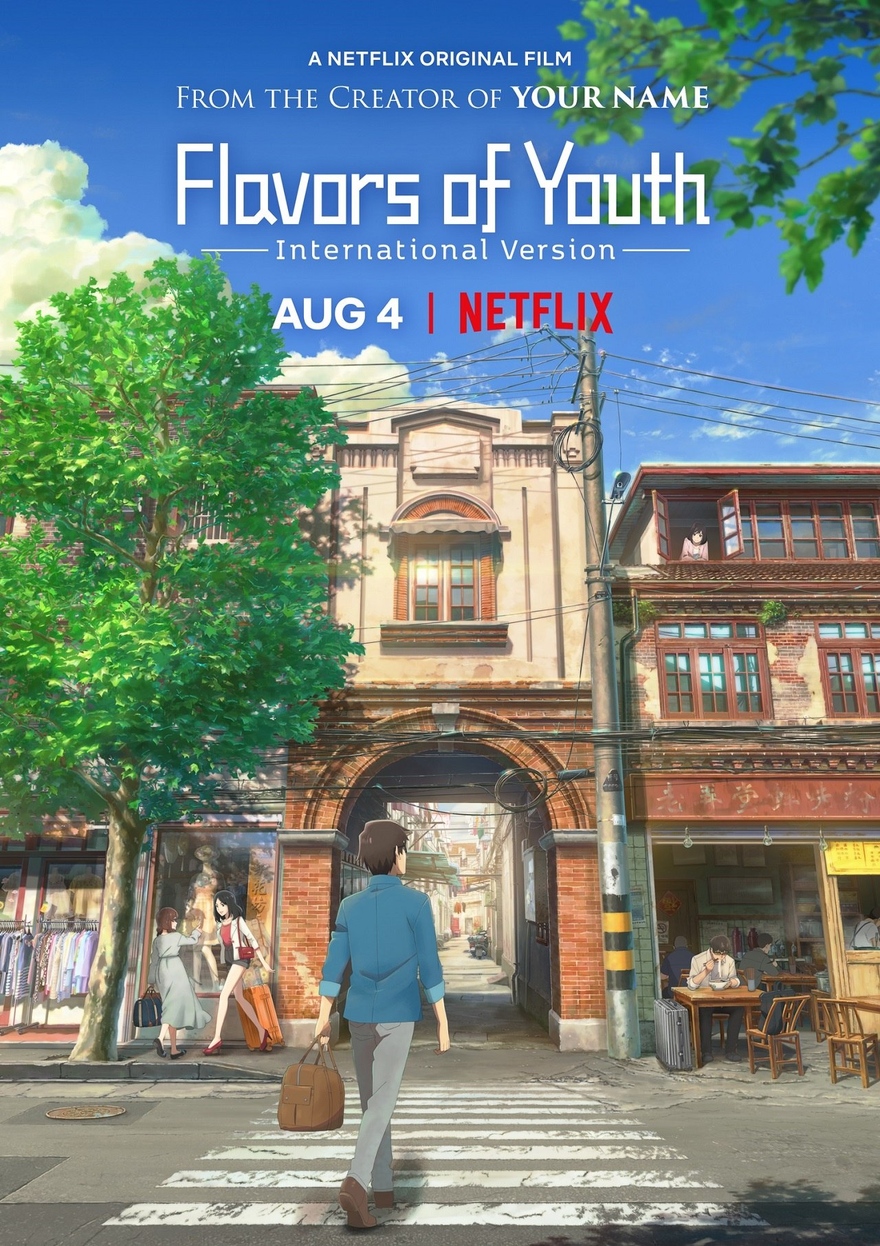
Shikioriori – 2018
https://cdn.myanimelist.net/images/anime/1529/93093.jpg
Shikioriori – 2018
نام فیلم انیمهیی: Shikioriori
نام فیلم انیمهیی: Flavors of Youth
نام فیلم انیمهیی: 肆式青春
نام فیلم انیمهیی: Si Shi Qing Chun
نام فیلم انیمهیی: 詩季織々(しきおりおり)
ژانر: Drama, Romance, Slice of Life
تاریخ پخش: تابستان 2018
وضعیت: تمام شده
تعداد قسمتها: سه قسمت
مدت زمان هر قسمت: 26 دقیقه
منبع: Original
استودیو: CoMix Wave Films
کارگردان: Li Haoling
زیرنویس فارسی و انگلیسی دارد
لینکهای مربوط به فیلم انیمهیی
+ لینک دانلود فیلم انیمهیی (MKV, 480P & 720P & 1080P, EN Sub)
+ اطلاعات بیشتر: سایت // سایت // سایت // سایت // سایت
+ تماشای تریلر فیلم انیمهیی: لینک // لینک // لینک // لینک
+ لینک فایل تورنت (MKV, 1080P, Web-dl, EN Sub, 2GB)
+ لینک فایل تورنت (MKV, 720P, EN Sub, 670MB)
+ لینک فایل تورنت (MKV, 1080P, EN Sub, 1.1GB)
+ لینک فایل تورنت (MKV, x265, WebRip, 1080P, EN Sub, 616MB)
+ لینک فایل تورنت (MKV, 1080P, EN Sub, 3GB)
+ لینک فایل تورنت (MKV, 720P, EN Sub, 1.6GB)
+ لینک فایل تورنت (MKV, 480P, EN Sub, 990MB)
+ تصاویر: عکس // عکس // عکس // عکس


+ لینک دانلود فیلم انیمهیی (MKV, 1080P, Web-dl, EN Sub, 2GB)
+ لینک دانلود فیلم انیمهیی (MKV, 720P, HDRip, EN Sub, 736MB)
+ لینک دانلود فیلم انیمهیی (MP4, 720P, EN Sub, 1.6GB)
+ لینک دانلود فیلم انیمهیی (MKV, 1080P, Web-dl, EN Sub, 3.6GB)
+ لینک دانلود فیلم انیمهیی (MKV, 1080P, EN Sub, 3GB)
+ لینک دانلود فیلم انیمهیی (MKV, 720P, EN Sub, 1.6GB)
+ لینک دانلود فیلم انیمهیی (MKV, 480P, EN Sub, 990MB)
https://i.loli.net/2019/01/18/5c41de4cf40b8.jpg
خلاصه داستان (منبع)
یک فیلم گلچین ادبی به منظور معرفی سه داستان کوتا تحت عنواین: “هیاداماری نو چوشوکو” (نودلهای برنجی)، “چیسانا فشن شو” (یک نمایش مُد کوچیک) و “شانگهای کوی” (عشق در شانگهای) است. هر سه داستان در سه شهر متفاوت در چین رخ میدهند. تم سه داستان شامل غذا، لباس و حمایت میشود. “هیداماری نو چوکوشو” راجب کارمند جوانی مقیم پکن و مادربزرگ وی مقیم در زادگاه وی است. “چیسانا فشن شو” راجب زندگی دو خواهر مقیم در گوانگژو است. “شانگهای کوی” داستانی در بازه زمانی شانگهای سال ۱۹۹۰ است و ادای احترامی به “بیوسوکو ۵ سنتیمیترز” (۵ سانتیمتر بر ثانیه) است. موسیقی متن پروژه بنام “WALK” اثر ویکبلانکا.
https://youtu.be/GHo2Tt6wLMU
خلاصه داستان (منبع)
The rigorous city life of China, while bustling and unforgiving, contains the everlasting memories of days past. Three stories told in three different cities, Shikioriori follows the loss of youth and the daunting realization of adulthood.
Though reality may seem ever changing, unchangeable are the short-lived moments of one's childhood days. A plentiful bowl of noodles, the beauty of family and the trials of first love endure the inevitable flow of time, as three different characters explore the strength of bonds and the warmth of cherished memories. Within the disorder of the present world, witness these quaint stories recognize the comfort of the past, and attempt to revive the neglected flavors of youth.
Anime – New Episode [30 Oct 2018]
http://s9.picofile.com/file/8322105034/Anime_All_Folder_2.png

Anime – New Episode [30 Oct 2018]
MKV, EN Sub, 1080P, Download Links, Torrent File, RAW
[HorribleSubs] Owari no Seraph S1 & S2 [480p]
[HorribleSubs] Wotaku ni Koi wa Muzukashii - 01-11[480p]
[HorribleSubs] One Room S2 - 00-12 [480p]
[HorribleSubs] Ryuuou no Oshigoto! - 01-12 [480p]
Rokka no Yuusha S01 [BDRip 720p 10bit HEVC]
[HorribleSubs] Hataraku Saibou 01-13 [480p]
[HorribleSubs] Overlord III (1-13) [720p]
[HorribleSubs] Akanesasu Shoujo - 05 [1080p].mkv
[HorribleSubs] Thunderbolt Fantasy S2 - 05 [1080p].mkv
[HorribleSubs] Tensei Shitara Slime Datta Ken - 05 [1080p].mkv
[HorribleSubs] Golden Kamuy - 16 [1080p].mkv
[HorribleSubs] Uchuu Senkan Tiramisu S2 - 05 [1080p].mkv
[HorribleSubs] Souten no Ken Re-Genesis - 17 [1080p].mkv
[HorribleSubs] Kitsune no Koe - 03 [1080p].mkv
[HorribleSubs] Ken En Ken - Aoki Kagayaki - 05 [1080p].mkv
[NoobSubs] Shirobako Complete (1080p Blu-ray 8bit AAC MP4)
[Magilou] Xiao Men Shen NF WEB-DL 1080p [Multi-Audio]
[NoobSubs] Shingeki no Kyojin- S3 (1080p 8bit AAC MP4)
Rosario + Vampire Capu2 [Dual Audio 10bit BD1080p]
Rosario to Vampire Rosario + Vampire [Unsensored] 10bit BD1080p]
[Pixel] ReLIFE [Dual Audio 10bit BD1080p][HEVC-x265]
[HorribleSubs] Black Clover - 56 [480p].mkv
[HorribleSubs] Black Clover - 56 [720p].mkv
[HorribleSubs] Black Clover - 56 [1080p].mkv
[HorribleSubs] Shounen Ashibe Go! Go! Goma-chan - 84 [1080p].mkv
[HorribleSubs] The iDOLM@STER Side M - Wake Atte Mini! - 04 [1080p].mkv
[HorribleSubs] Tokyo Ghoul re - 16 [480p].mkv
[HorribleSubs] Tokyo Ghoul re - 16 [720p].mkv
[HorribleSubs] Tokyo Ghoul re - 16 [1080p].mkv
Boku no Hero Academia 3rd Season
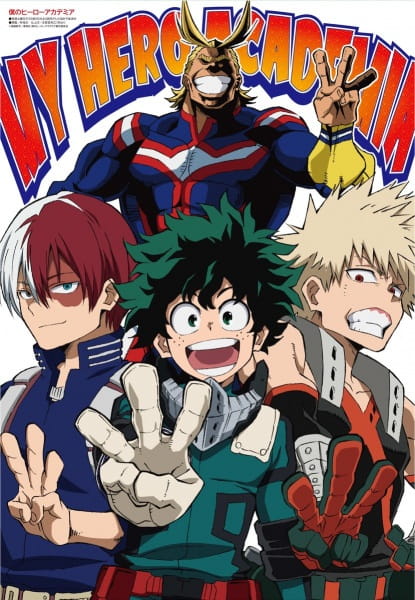
Boku no Hero Academia 3rd Season
نام انیمه: Boku no Hero Academia 3rd Season
نام انیمه: My Hero Academia 3
نام انیمه: 僕のヒーローアカデミア 3rdシーズン
ژانر: Action, Comedy, School Life, Shounen, Super Power
تاریخ پخش: بهار 2018
وضعیت: تمام شده
تعداد قسمتها: 25 قسمت
مدت زمان هر قسمت: 23 دقیقه
کارگردان: Nagasaki Kenji
منبع: Manga
استودیو: Bones
زیرنویس فارسی و انگلیسی دارد
لینکهای مربوط به انیمه
+ لینک دانلود انیمه (MKV, 480P, ~75MB)
+ لینک دانلود انیمه (MKV, 720P, ~125MB)
+ لینک دانلود انیمه (MKV, 1080P, ~190MB)
+ تماشای تریلر انیمه: لینک // لینک // لینک // لینک // لینک
+ لینک فایل تورنت (MKV, 1080P, EN Sub, 22.4GB)
+ لینک فایل تورنت (MKV, 720P, EN Sub, 10GB)
+ لینک فایل تورنت (MKV, 1080P, x265, EN Dub, 8.5GB)
+ تصاویر انیمه: عکس // عکس // عکس // عکس


+ لینک دانلود انیمه (MKV, 720P, EN Sub, ~400MB)
+ لینک دانلود انیمه (MKV, 1080P, 10bit, ~350MB, x265, EN Dub)
+ اطلاعات بیشتر: سایت // سایت // سایت
خلاصه انیمه
فصل سوم انیمهی Boku no Hero Academia
ادامهی فصلهای قبل میباشد.
Anime – New Episode [28 Oct 2018]
http://s9.picofile.com/file/8322104968/Anime_All_Folder.png

Anime – New Episode [28 Oct 2018]
MKV, 1080P, EN Sub, RAW, Download Links, Torrent File
[Wasurenai] Kamisama Minarai Himitsu no Cocotama - 103
[Manjiknights] Youkai Watch 162 [English Softsub]
[HorribleSubs] Chuukan Kanriroku Tonegawa - 16 [1080p].mkv
[HorribleSubs] Kaze ga Tsuyoku Fuiteiru - 04 [1080p].mkv
[HorribleSubs] Kitsune no Koe - 01 [1080p].mkv
[HorribleSubs] Kitsune no Koe - 02 [1080p].mkv
[Erai-raws] Tokyo Ghoul - re 2nd Season - 03 [1080p].mkv
[Cleo] Overlord III [Dual Audio 10bit 720p][HEVC-x265]
[RH] Free! Dive to the Future (Batch) [WEB Dual Audio Hi10 1080p]
[Cerberus] Eve no Jikan (Movie) [BD 1080p 10-bit]
[Cerberus] Shiki + Special [BD 1080p HEVC 10-bit AAC]
[HorribleSubs] Yu-Gi-Oh! VRAINS - 74 [1080p].mkv
[Tsundere] Yoku Wakaru Gendai Mahou [BDRip h264 1280x720]
[HorribleSubs] RErideD - Tokigoe no Derrida - 08 [1080p].mkv
[HorribleSubs] Ore ga Suki nano wa Imouto dakedo Imouto ja Nai - 03 [1080p].mkv
[2nd Division][RUS ENG] Violet Evergarden 1-13 [1080] + BD
[HorribleSubs] Sora to Umi no Aida - 04 [1080p].mkv
Magic Kaito 1412 [BD 1080p HEVC_10 AAC]
[HorribleSubs] Kindaichi Case Files R S1 (01-25) [1080p]
[HorribleSubs] Seishun Buta Yarou wa Bunny Girl Senpai no Yume wo Minai - 04 [1080p].mkv
Made in Abyss 01-03 [Dual Audio 1080p]
[HorribleSubs] Beelzebub-jou no Okinimesu mama. - 03 [1080p].mkv
[Gelatin] Hugtto! Precure 1-12 [BD 10bit 1080p AAC]
[HorribleSubs] Merc Storia - Mukiryoku Shounen to Bin no Naka no Shoujo - 03 [1080p].mkv
[HorribleSubs] Zombieland Saga - 04 [1080p].mkv
[Kiyome] Konohana Kitan [Dual Audio BD1080p]
[HorribleSubs] Banana Fish - 16 [1080p].mkv
[HorribleSubs] Bakumatsu - 04 [1080p].mkv
[HorribleSubs] Tonari no Kyuuketsuki-san - 04 [1080p].mkv
[HorribleSubs] Gurazeni - 16 [1080p].mkv
[HorribleSubs] Toaru Majutsu no Index III - 04 [1080p].mkv
[HorribleSubs] Hinomaru Sumo - 04 [1080p].mkv
[HorribleSubs] Satsuriku no Tenshi - 16 [1080p].mkv
[HorribleSubs] Uchi no Maid ga Uzasugiru! - 04 [1080p].mkv
[HorribleSubs] Karakuri Circus - 03 [1080p].mkv
[HorribleSubs] Yagate Kimi ni Naru - 04 [1080p].mkv
[HorribleSubs] Dakaretai Otoko 1-i ni Odosarete Imasu. - 04 [1080p].mkv
[HorribleSubs] Dakaretai Otoko 1-i ni Odosarete Imasu. - 04 [720p].mkv
[HorribleSubs] Dakaretai Otoko 1-i ni Odosarete Imasu. - 04 [480p].mkv
[HorribleSubs] Kishuku Gakkou no Juliet - 04 [1080p].mkv
[HorribleSubs] JoJo's Bizarre Adventure - Golden Wind - 04 [1080p].mkv
[HorribleSubs] Irozuku Sekai no Ashita kara - 04 [1080p].mkv
[HorribleSubs] Senran Kagura Shinovi Master - Tokyo Youma-hen - 03 [1080p].mkv
[HorribleSubs] Castlevania S2 (01-08) [1080p]
[HorribleSubs] Bonobono - 132 [1080p].mkv
[HorribleSubs] Gakuen Basara - 04 [1080p].mkv
[HorribleSubs] Radiant - 04 [1080p].mkv
[HorribleSubs] Detective Conan - 918 [1080p].mkv
[HorribleSubs] Cardfight!! Vanguard (2018) - 26 [1080p].mkv
[HorribleSubs] Ace Attorney S2 - 04 [1080p].mkv
[HorribleSubs] Goblin Slayer - 04 [1080p].mkv
[HorribleSubs] Sword Art Online - Alicization - 04 [1080p].mkv
[HorribleSubs] SSSS.Gridman - 04 [1080p].mkv
[HorribleSubs] Release the Spyce - 04 [1080p].mkv
[HorribleSubs] Fairy Tail Final Season - 281 [1080p].mkv
[HorribleSubs] Fairy Tail Final Season - 281 [720p].mkv
[HorribleSubs] Satsuriku no Tenshi - (01 - 16)
[HorribleSubs] One Piece - 859 [480p].mkv
[HorribleSubs] One Piece - 859 [720p].mkv
[HorribleSubs] One Piece - 859 [1080p].mkv
[HorribleSubs] Gegege no Kitarou (2018) - 30 [1080p].mkv
[Erai-raws] Fairy Tail (2018) - 04 [1080p]
[Erai-raws] One Piece - 859 [1080p]
[Erai-raws] Boruto - Naruto Next Generations - 79 [1080p]
[HorribleSubs] Double Decker! Doug and Kirill - 06 [1080p].mkv
[HorribleSubs] Ulysses - Jeanne d'Arc to Renkin no Kishi - 04 [1080p].mkv
[HorribleSubs] Anima Yell! - 04 [1080p].mkv
[HorribleSubs] Himote House - 04 [1080p].mkv
[HorribleSubs] Gaikotsu Shoten'in Honda-san - 04 [1080p].mkv
[HorribleSubs] Tsurune - 02 [1080p].mkv
Black Clover - Episode 55 [Review]
https://cdn.animenewsnetwork.com/thumbnails/max300x600/cms/episode-review.2/138625/bc55.png.jpg
Black Clover - Episode 55 [Review]
I had heard whispers of something like this going on, but now it's finally time to suss out whatever the hell is up with Black Clover's light novels. It turns out there was quite a bit of important canon information relegated to Black Clover: Stubborn Bull Book (a collaboration between Yūki Tabata and Johnny Onda). I wish I could speak to even a little authority on the matter, but details are extremely scarce in this hemisphere. There's no English release whatsoever, and it leaves this current stretch of the story in a funky position. The manga just acts like you're supposed to recognize these new characters on the spot, and now the anime is trying to adapt the novel but must do so by shoehorning in a very unexpected flashback.
Last week's cliffhanger saw Noelle and Finral traveling to meet with a man named Fanzell Kruger, hoping to find a lead on healing Asta's broken arms. Fanzell was the man who taught Asta how to swing a sword way back at the beginning of the story, before Asta took the Magic Knights' entrance exam. It's good that the anime is going through the trouble of showing us this never-before-seen backstory, but an episode-long flashback to fill us in on this random yet important character relationship is still extremely disruptive. I was just getting into the groove of the subplot about fixing Asta's cursed arms, but that story's now on pause so the show can tidy up its inadvisable synergy efforts.
This episode is a mess. The visuals are a dump and the character arcs are nonsensical. Fanzell is a devil-may-care runaway from the Diamond Kingdom who has a subordinate named Mariella, with the plot-twist being that Mariella is still loyal to the Diamond Kingdom and tries to assassinate her instructor—all while Asta helps Fanzell get his mojo back just in time to defend himself. We remain at arm's length with these two new characters (both of them are pretty aloof), and the story is astonishingly non-committal about both of them. Mariella is betraying her teacher, but she still cares about his honor and reputation. She's just as expressionless when she's antagonistic, so you don't have a sense of her priorities whatsoever, and Fanzell is your Red-Haired Shanks type cool uncle character, but it takes the wimpiest pep talk ever for him to reclaim a sense of meaning in his life.
This is a strange episode that's necessary for understanding the story as we move forward, but it's astoundingly ineffectual. It's not the most contrived "actually, this really important event happened off-screen" expositional flashback I've seen from the genre, but it's easily the least interesting. This episode is sentimental yet vapid, disorienting yet generic. There's a novelty to it existing at all, but there isn't much to say about it at the end of the day.
Tokyo Ghoul:re - Episode 15 [Review]
https://cdn.animenewsnetwork.com/thumbnails/max300x600/cms/episode-review.2/138579/ss-2018-10-23-12_58_54.jpg
Tokyo Ghoul:re - Episode 15 [Review]
Hey, remember that raid on Rushima that we saw like one minute of back at the beginning of this season? Well, we're putting Kaneki's story on hold and going back to that. In fact, this is an entirely Kaneki-less episode of Tokyo Ghoul:re, which I don't mind in theory, and I'm actually surprised it doesn't happen more often given the story's constantly ballooning cast and byzantine collection of subplots. I even mentioned last week that I wanted to follow up with the Quinx squad and how they've been handling the loss of Shirazu. It's just too bad that we get practically none of that.
This is a mess of an episode, jumping around the island of Rushima between about half a dozen miniature conflicts, which themselves vacillate between at least a dozen different side character arcs and subplots. Mutsuki is captured by Torso. Takizawa kills Hachikawa (that guy who looks like Vash the Stampede). One of Juzo's goons has a fight with one of Aogiri's goons, which then gets interrupted by some ghoul named Kurona, which then gets interrupted by Juzo himself, who also has a history with this new ghoul. Eto's right-hand man Tatara squares off against Mado's squad and turns into a Dark Souls boss. Takizawa swoops in and kills Tatara because he still wants the CCG's approval. Kurono goes off to complain to a mad doctor named Kanou that she wants her sister, who is currently grafted into her torso, to be revived. Said doctor sics an army of ex-investigators-turned-half-naked-half-ghouls on her. Also this doctor created Owl-Takizawa and probably Kaneki too. Mado still orders Takizawa to be killed. Amon's alive. He's a half-ghoul now too. Nishiki arrives at Kanou's lair. Urie and Saiko show up to exterminate Takizawa. Remember Naki? He's that blond ghoul with the white suit. He's poised to have a heroic sacrifice. And look at that, Shu's here.
I don't even know if I covered everything that happened, but you get the idea. This feels less like a Tokyo Ghoul episode and more like an episode of Riverdale, determined to cram in more plot and more twists than the human body can handle. But whereas Riverdale lets itself be absurd and fun, everything here feels grim and exhausting. You might have noticed that I dropped in the revelation about Amon unceremoniously in the middle of the paragraph, but I was only trying to mimic how the episode itself handles that bombshell. In a way, I appreciate the nonchalance, which seems to respect an audience who by now have surely figured out that nobody dies in Tokyo Ghoul. Or at least, nobody dies only once. But Amon's death was a huge lingering concern at the end of Root A and at the start of :re. He used to be the show's secondary protagonist! This revelation should be treated like a big deal, especially by Mado, who loved him, grieved his death, and is right there when he swoops in, but the episode's pacing simply doesn't allow for it. He's thrown into battle immediately, and even that heavy confrontation between former coworkers and friends is cut short by more players entering the scene. There's no room to form an emotional connection with anything that goes down.
But Tokyo Ghoul needs that emotional connection. One of its defining characteristics is its willingness to dive into the pathos of every character regardless of their allegiances. However, this requires time and thoughtfulness, and while I'll admit that Sui Ishida is better than most at turning a minor character into a tragic figure on a dime, this technique breaks down in this rushed environment. Take Hachikawa's death, for example. I can only remember him from one or two prior scenes, so he's hardly been an important character. His partner, Hogi, I definitely don't remember. Maybe she's been in the background before, but let's just say she's a brand new character. Anyway, he dies protecting her, and all we get is a short flashback between her and Hachikawa where he comments that she shouldn't hide her freckles with her hair. The expectation is that we're supposed to feel sad for her loss. But we only met this character a minute ago! All we know is she was insecure about her freckles, and Hachikawa was nice to her. That's not enough time or information to form a connection. You can't go through the motions of a tragedy and expect it to feel like a tragedy. There's an art to painting the spectrum of human emotions, and this episode sacrifices all of it for the sake of jamming through as much plot as possible.
At least there are some interesting nuggets in this episode. Owl-Takizawa's genesis as an attempt to create another Kaneki, horrific torture and all, fully establishes him as a foil. He's an example of what would have happened to Kaneki without the support of Anteiku and people like Hide. Urie seems to have taken Shirazu's death hard and reverted back to caring only about moving up the CCG ladder. Kanou's experiments further blur the line between ghouls and humans—and raise a lot more questions about the CCG's real relationship with its supposed enemy (and vice versa). I'm sure we'll get there eventually, and maybe these events do set off interesting trajectories, but for now this episode stands as a graceless dump of exposition. The only way it might have worked is with some captivating direction and above-average animation, turning it into a technical showcase. Sadly, it's rather boilerplate, and if this is how we're starting, it doesn't bode well for the rest of the season. I will still hold out hope that Tokyo Ghoul can find its dramatic footing once again, but it needs to let itself breathe if that's ever going to happen.
Banana Fish - Episode 16 [Review]
https://cdn.animenewsnetwork.com/thumbnails/max300x600/cms/episode-review.2/138638/ash-in-the-elevator-shaft.jpg
Banana Fish - Episode 16 [Review]
This week's episode takes its title from a short story by F. Scott Fitzgerald, "Lo, the Poor Peacock!" The original story focuses on an affluent family that's fallen on hard times, symbolized by the daughter needing to switch from private to public school. It's not as obvious a connection as some of the previous Banana Fish episode titles have been, but I have a couple of guesses. It could refer to Prof. Dawson, once a genius but now reduced to a zombie-like state by the drug he helped create. But more likely, it refers to Golzine, who's been reduced from his head honcho position to be just another observer making suggestions, while the incompetent Baron Zahkarev calls the shots. Zakharev might be better at some things when it comes to running the National Mental Health Institute, but he sure doesn't know their latest escapee the way Golzine does.
The short story "Lo, the Poor Peacock!" ends (spoilers!) with the family regaining their fortunes, after the daughter charms a potential investor while her dad is taken ill. Likewise, by the end of this episode, Golzine retakes his place atop the pyramid in a far less pleasant manner, by violently murdering the Baron. After all, it's the Baron's underestimation of Ash that makes it so much easier for him to escape. Not that Ash couldn't have escaped if Golzine had been running the show—he's eluded him multiple times—but presumably Golzine would've known how to make better use of the building's "top level security system" to thwart the teen genius. The fact that he has to suggest relatively late in the game to disable the pass Ash stole is pretty ridiculous. Baron more than deserves what's coming to him. That said, does the Baron know Ash's actual age? He seems to be under the impression that he's prepubescent, not one year away from legal adulthood, given his assumption that he'd be so much easier to capture than a grown-up on the run.
Then again, the Baron isn't the only one who underestimates Ash this week. Ash's allies, Max and Ibe, also assume that they would need to rescue Ash from the Institute. Granted, the stakes are pretty high, since Ash was almost turned into a zombie like all the other patients in the Institute. But of course, the tables get turned; Ash ends up needing to rescue them at the end. This particular situation does seem like it's specifically set up to test Ash's natural problem-solving and fighting skills, but for them to assume they'd be able to handle it better shows that they haven't been paying attention for the past 15 episodes.
Other than that, this episode is one big chase scene, so the fact that there's still a lot to unpack thematically testifies to the strength of Banana Fish. I also liked the way Ash's character development was allowed to flow more naturally. It was getting a little obnoxious having every character testify to Ash's super-genius. Not only was it unnecessary—we can see Ash's prodigious skills in action—but it was the kind of protagonist-worship I expect from a more poorly-written anime. It took away from the supposed seriousness of this show and made Ash less interesting to watch than characters whose traits were communicated more via their actions. (For example, this is what makes Yut-Lung such a good character.) So I liked getting an extended sequence of Ash solving problems and taking out baddies on his own, rather than just being told about it. But more importantly, this sequence communicates something about Ash that's less remarked-upon by his allies and enemies: his compassion.
We've heard plenty of characters tell us about how Ash's love for Eiji is his "one weak spot," but I think this episode proves that this extends beyond Eiji. His whole rescue of Prof. Dawson involves him repeatedly getting screwed over in order to help someone who doesn't benefit him in any way. Dawson has been reduced by the B1 drug to being unintelligent with seemingly no survival instincts, so he's basically just a load who slows Ash down. But Ash still helps him, because Dawson was kind to him in the past, and because it's the right thing to do. It's a reminder that while Ash's bond with Eiji may be his greatest quality, he's a good person overall deep down. Frankly, he wouldn't be able to have the relationship he does with Eiji if he wasn't good at heart; Eiji wouldn't return those feelings if Ash was truly a terrible person. (And that's why the two of them tend to fight when Ash betrays Eiji's expectations of him.) It's that broader compassion, not just his ability to fall for one person, which sets Ash apart from his enemies. It particularly sets him apart from Yut Lung, the character most clearly set up as his foil. Moon Dragon-kun is motivated by hatred and revenge. Ash is too, but also by compassion and love.
Speaking of Eiji, it's a little weird to have an episode of Banana Fish without him, isn't it? Eiji only shows up during one of Ash's inner monologues, where he laments "older guys" getting in his way. (We get some great goofy Ash faces throughout this episode, especially in his interactions with said "older guys.") Luckily, we're about to see way more of him, as Eiji refuses Max's offer of rest and relaxation to run off in search of Ash. I wonder how pleasantly surprised he'll be to find out how Eiji managed to wrestle his way out of Yut Lung's clutches. Even apart, Ash and Eiji's love connection has brought out the most in both boys—for better or for worse.
Anime – New Episode [23 Oct 2018]
http://s9.picofile.com/file/8322104968/Anime_All_Folder.png
Anime – New Episode [23 Oct 2018]
MKV, MP4, 1080P, RAW, EN Sub, Download Links, Torrent File
[project-gxs] Star Driver [10bit BD 720p]
[project-gxs] Star Driver the Movie [10bit BD 720p]
Ingress The Animation S01 1080p NF WEB-DL
[HorribleSubs] Bakumatsu - 03 [1080p].mkv
[Commie] Banana Fish - 15 [F1AEE1C4].mkv
[DrK] Zettai Karen Children (BDRip 1280x720 x264 FLAC)
[HorribleSubs] Sword Art Online - Alicization - 03 [1080p].mkv
[SUBS] Fate Apocrypha 1-25 COMPLETE
[HorribleSubs] Tonari no Kyuuketsuki-san - 03 [1080p].mkv
[AnimeRG] Boku no Hero Academia Season 3 (1-25) [720p]
[AnimeRG] Shingeki no Kyojin S3 (01-12) (Season 3) [720p 10bit]
[HorribleSubs] Muhyo to Rouji no Mahouritsu Soudan Jimusho - 12 [1080p].mkv
[HorribleSubs] Yagate Kimi ni Naru - 03 [1080p].mkv
[HorribleSubs] Toaru Majutsu no Index III - 03 [1080p].mkv
[HorribleSubs] Gurazeni - 15 [1080p].mkv
[HorribleSubs] Satsuriku no Tenshi - 15 [1080p].mkv
[HorribleSubs] Hinomaru Sumo - 03 [1080p].mkv
[Erai-raws] Sword Gai The Animation - 01 ~ 24 [1080p]
[HorribleSubs] Uchi no Maid ga Uzasugiru! - 03 [1080p].mkv
[HorribleSubs] Dakaretai Otoko 1-i ni Odosarete Imasu. - 03 [1080p].mkv
[HorribleSubs] Dakaretai Otoko 1-i ni Odosarete Imasu. - 03 [720p].mkv
[HorribleSubs] Kishuku Gakkou no Juliet - 03 [1080p].mkv
[HorribleSubs] JoJo's Bizarre Adventure - Golden Wind - 03 [1080p].mkv
[HorribleSubs] Irozuku Sekai no Ashita kara - 03 [1080p].mkv
[HorribleSubs] Senran Kagura Shinovi Master - Tokyo Youma-hen - 02 [1080p].mkv
[HorribleSubs] Bonobono - 131 [1080p].mkv
[DrK] Zettai Karen Children - 11-22 (BDRip 1280x720 x264 FLAC)
[HorribleSubs] Gakuen Basara - 03 [1080p].mkv
[Prof] Bungo Stray Dogs S1 (1080p x265 HEVC 10bit AAC Dual Audio)
[LCE] Black Clover OVA [DVD x265 AAC 480p][5AD701D5]
[480p] Boruto- Naruto Next Generations [01-77]
[HorribleSubs] Radiant - 03 [1080p].mkv
[HorribleSubs] Cardfight!! Vanguard (2018) - 25 [1080p].mkv
[HorribleSubs] Ace Attorney S2 - 03 [1080p].mkv
[HorribleSubs] Sword Art Online - Alicization - 03 [1080p].mkv
[HorribleSubs] Sword Art Online - Alicization - 03 [1080p][v2].mkv
[HorribleSubs] Sword Art Online - Alicization - 03 [1080p][v3][HD]
[HorribleSubs] Sword Art Online - Alicization - 03 [1080p].mkv
[HorribleSubs] Goblin Slayer - 03 [1080p].mkv
Fate/Stay Night: Unlimited Blade Works S1&S2+Specials & Extras (BD x264 1080p)
[HorribleSubs] SSSS.Gridman - 03 [1080p].mkv
[HorribleSubs] Sword Art Online - Alicization - 03 [1080p][x265].mkv
[HorribleSubs] Release the Spyce - 03 [1080p].mkv
[HorribleSubs] Fairy Tail Final Season - 280 [480p].mkv
[HorribleSubs] Fairy Tail Final Season - 280 [720p].mkv
[HorribleSubs] Fairy Tail Final Season - 280 [1080p].mkv
[HorribleSubs] One Piece - 858 [480p].mkv
[HorribleSubs] One Piece - 858 [720p].mkv
[HorribleSubs] One Piece - 858 [1080p].mkv
[HorribleSubs] Gegege no Kitarou (2018) - 29 [1080p].mkv
[HorribleSubs] Hataraku Saibou (01-13) [1080p]
[HorribleSubs] Boku no Hero Academia (01-63) [1080p]
[HorribleSubs] Pop Team Epic (01-12) [1080p]
[HorribleSubs] Boruto - Naruto Next Generations - 78 [480p].mkv
[HorribleSubs] Boruto - Naruto Next Generations - 78 [720p].mkv
[HorribleSubs] Boruto - Naruto Next Generations - 78 [1080p].mkv
[HorribleSubs] Kindaichi Case Files R S1 (01-25) [720p]
[HorribleSubs] Double Decker! Doug and Kirill - 05 [1080p].mkv
[HorribleSubs] Ulysses - Jeanne d'Arc to Renkin no Kishi - 03 [1080p].mkv
[HorribleSubs] Anima Yell! - 03 [1080p].mkv
[HorribleSubs] Himote House - 03 [1080p].mkv
[HorribleSubs] Gaikotsu Shoten'in Honda-san - 03 [1080p].mkv
Boruto- Naruto Next Generations - [1x78] [480p][x265-10Bit]
[HorribleSubs] Tsurune - 01 [1080p].mkv
[VON] Baki (2018) - 18 [1080p][01D9B2BF].mkv
[Erai-raws] Baki (2018) - 18 [1080p][Multiple Subtitle].mkv
[HorribleSubs] Akanesasu Shoujo - 04 [1080p].mkv
[HorribleSubs] Thunderbolt Fantasy S2 - 04 [1080p].mkv
[HorribleSubs] Tensei Shitara Slime Datta Ken - 04 [1080p].mkv
[HorribleSubs] Golden Kamuy - 15 [1080p].mkv
[HorribleSubs] Uchuu Senkan Tiramisu S2 - 04 [1080p].mkv
[HorribleSubs] Souten no Ken Re-Genesis - 16 [1080p].mkv
[HorribleSubs] Ken En Ken - Aoki Kagayaki - 04 [1080p].mkv
[HorribleSubs] Black Clover - 55 [720p].mkv
[HorribleSubs] Black Clover - 55 [1080p].mkv
[HorribleSubs] The iDOLM@STER Side M - Wake Atte Mini! - 03 [1080p].mkv
[HorribleSubs] Tokyo Ghoul re - 15 [720p].mkv
[HorribleSubs] Tokyo Ghoul re - 15 [1080p].mkv
[HorribleSubs] Jingai-san no Yome - 04 [1080p].mkv
[HorribleSubs] Conception - 03 [1080p].mkv
One Piece - Episode 858 [Review]
https://www.youtube.com/watch?v=Jsw13qBCY8g
One Piece - Episode 858 [Review]
The enthusiastic but slapdash structure of Whole Cake Island's climax has been starting to take its toll these past few week. Things were just heating up with Fourth Gear Luffy's onslaught against Katakuri, but the entire reason Luffy waited this long to bust this transformation out in the first place is that he knows it has a time limit and a gnarly recharge time. Katakuri's Observation Haki has returned and now Luffy's power is beginning to deflate, meaning he has to hightail it out of the mirror world altogether. He finds Brulee hiding around one of the corners, so he's able to kidnap her and escape.
There's a lot that's hit and miss about this portion of the battle. It seems with each escalation of the stakes, something else has to get dramatically undercut in the process. Luffy is able to escape the battle and leaves Katakuri stuck in the mirror world. That's good! But the mirror he exits from just happens to bring him to Nuts Island, where Big Mom is actively rampaging and throwing skyscraper-sized peanuts around. That's bad! I love that the second Luffy uses his Get Out of Jail Free Card he accidentally stumbles into a much, much worse scenario. There are so many places this could go, but unfortunately this will ultimately prove to be a momentary breather from the Katakuri fight, and all we're doing is wasting our time. The tension that was building during the actual important part of the story has been shot in the foot.
The animation isn't helping a ton either, and it really shows during the scene that needs it the most: a new musical number! That's right, this is still a musical arc, even in the heat of battle, and this time it's Praline singing away the Big Mom pirates' territory sea slugs. This is a nice return of Jimbei's Sun pirates, and a further extension of this arc's crazy Rube Goldberg machine of a plot. Though, it should feel a lot more effective and whimsical, really nailing the arc's equilibrium between the Straw Hats' crazy luck and their systematic domination of the Big Mom pirates, but it's barely animated and the song's composition feels unfinished. This could have been a perfectly timed breath of fresh air to contrast against the same-y Katakuri fight, but instead it's just really boring.
This is a big turning point for the climax of the arc. Luffy has changed locations, the Sunny crew is getting ready to make their next move, and the breading of the new wedding cake has been finished, meaning Sanji and company will be heading out to sea while they put on the finishing touches. Sadly, it's all too little too late. We're constantly waiting for the next big shake up, and yet when we get it we still feel like we're jogging in place. I like a lot of what this big operatic chase adventure is going for, but the weaknesses are showing through way too much this week.
Goblin Slayer - Episode 3 [Review]
https://cdn.animenewsnetwork.com/thumbnails/max300x600/cms/episode-review.2/138424/gs032.jpg
Goblin Slayer - Episode 3 [Review]
An elf, a dwarf, and a lizardman walk into an Adventurer's Guild. Setting aside the issues I've taken with Goblin Slayer, I at least admire its commitment to economical storytelling. A real story arc kicks off in this episode, as the Goblin Slayer picks up a proper adventuring party alongside Priestess, who accompany him on his goblin-slaying simply because they've got nothing better to do. This seems fine considering that this series is so informed by tabletop adventuring (down to an opening narration of ‘gods’ determining the world by rolling polyhedral dice). So many campaigns I've played consciously started with “You meet in an inn and decide to go squish some monsters”, so it's an acceptable way to get the show on the road.
That aside, this episode of Goblin Slayer doesn't actually kick off the adventure properly, instead spending a shocking amount of time building up more background details for its setting. There's some to-be-important details about GS's previous witch companion and some magic scrolls he acquired with her. There's also a clever bit where it's revealed that an epic demon-lord-battling quest is building up in the background, which Goblin Slayer doesn't actually care about since he's entirely focused on slaying goblins, of course. Slayer generally takes the piss in this episode, with his attentive reaction to any mention of goblins already reaching memetic levels. This episode seems less concerned with painting him as a singular badass and more as a central excuse to start a plot that only currently features goblin-slaying.
That may be for the best, since the internal consistency of that portrayal is still in as much flux as it was before. The “other adventurers don't respect Goblin Slayer for slaying goblins” bit gets trotted out again for the second time in two episodes, and it still doesn't gel. The crowds around him act like goblins are easy pickings that he shouldn't be considered impressive for wasting his time on, but the whole point of that shocking first episode was to demonstrate that this wasn't the case. Goblins are both a nothing threat no half-decent adventurer needs to bother with and also potentially dangerous enough that the trio introduced in this episode have to seek GS as a specialist to help them take out their targeted nest.
Arbitrary storytelling issues like that shouldn't be as big a deal to enjoyment as they seem to be, but they're emblematic of the dissonance Goblin Slayer has settled into at this point. This gritty fantasy world still has fanservice-heavy designs, complete with slow zoom-ins on the witch's bountiful breasts and stock gags about the elf archer being flat-chested. We're constantly told how ugly and lame the Slayer's armor looks, despite it being an objectively striking design that the entire franchise is marketed on. Slayer's an always-alert badass who doesn't ever take his armor off in case of a sneak attack, but then he goes and overindulges on wine and passes out inside his helmet for the sake of a gag.
For what it's worth, the snippets of personality that the new adventuring crew contribute are appreciable compared to the pragmatic dryness that characterized the first two episodes. These characters may not have names (and the script dancing around that fact does get awkward at times), but they've already got an amicable chemistry with each other, Goblin Slayer and Priestess included. Nearly half this episode is dedicated to the characters just sitting around a campfire talking about being adventurers, and it does well on that level. The scene actually sneaks in some world-building details we haven't heard already, speculating on the space-based origins of the goblins in a way that feels somewhat natural, especially given that I totally believe a socially-awkward walking tank like GS would just casually blurt out that he heard goblins come from the moon.
All this breather time being used to actually set up a long-term story is appreciated, but right now I feel like Goblin Slayer is stuck between the priorities of its two different mediums. The detailed descriptions and world-building logs might've worked well in novel form, where a detached and names-free approach to narrative is easier to accept. But the anime version tries to pack in all the character gags, fanservice, and thrilling action set pieces you might expect from a more typical series, which rubs up against other aspects of the story's intended tone. We'll see if this balance clicks more next episode, as the series goes into another of its potentially-harrowing goblin battles.
Boruto: Naruto Next Generations - Episode 78 [Review]
https://cdn.animenewsnetwork.com/thumbnails/max300x600/cms/episode-review.2/138452/boruto78.jpg
Boruto: Naruto Next Generations - Episode 78 [Review]
This week's Boruto: Naruto Next Generations answers some big questions as the latest arc heads into its third act. Now awakened, the injured gatekeeper informs Naruto that Mitsuki is headed to the Land of Earth with a group of Hidden Stone shinobi, prompting the latter to make a call to Kurotsuchi and brief her on the situation. Meanwhile, the gothic lolita-clad Kirara and an as-yet-unnamed member of the Stone group return to their hideout and inform a heavily veiled figure known as Ku that they've taken care of the Leaf's trackers. As Mitsuki and the other two members of the team prepare to cross the border into the Land of Earth, the childlike Sekiei reveals that he and his cohorts are artificial beings with very limited lifespans—and that Mitsuki holds the key to making them more human. After sending Cho-Cho and Inojin back to the Leaf, Shikadai and the remaining two thirds of Team 7 nearly manage to catch up to Mitsuki at the edge of the border. However, before they're able to make contact, the gang is intercepted by the no-nonsense Kokuyou, who's able to control Akuta (creepy canine-like creatures who appear to have a similar genetic makeup to the Leaf's newest enemies).
Compared to the past few installments, quite a bit of progress is made on the story front this week. Although we still don't exactly why Mitsuki chose to accompany Kokuyou and company, we're finally given some insight into why they've taken an interest in him. Now that we've finally gotten an extended look at this arc's antagonists, it's safe to say that, character-wise, none of them appear to be anything special. While their mysterious origins and combat techniques are mildly interesting, we've seen these same character archetypes assigned to countless small-scale Naruto villains, particularly the ones found in the feature films and filler arcs. That said, seeing how the gang fares against their respective techniques (not to mention the Akuto) may make for some entertaining action sequences in the coming weeks. While it's pretty clear that Mitsuki isn't a traitor, it'll be interesting to see the exact nature of his interest in this band of baddies.
Although this was touched on several episodes back, it's good that the show didn't simply gloss over Konohamaru's reaction to the revelation of Mitsuki's parentage. The fact that one of his students is the child of his grandfather's killer continues to weigh on him, but as he reiterates to Mirai, it doesn't change the way he feels about Mitsuki. Since Mirai wasn't born until after Sarutobi's death, she serves as the perfect audience for Konohamaru's musings on why the Third was such an influential figure. Also interesting is the conversation between Naruto and Kurotsuchi. Given the nature of the accusations against citizens of her village (and her country), it makes sense for the Tsuchikage to be skeptical of Naruto's claims and demand hard proof, although the gatekeeper's word ultimately suffices. Even though this series is set in a time of relative peace and cooperation amongst the Hidden Villages, exchanges like this help illustrate that tensions still exist.
This week's episode resumes the search for Mitsuki in earnest, with the gang's adventure in Ryuchi Cave hardly given a mention. Now that the villains have made a proper appearance and revealed their intentions, the stage is set for big revelations and exciting battles in the weeks to come. Although this arc's second act had some pacing issues and felt somewhat disconnected from the main story, episode 78 shows signs that Boruto will ultimately stick the landing.
Fairy Tail: Final Season - Episode 3 [Review]
https://cdn.animenewsnetwork.com/thumbnails/max300x600/cms/episode-review.2/138446/fairy-tale-last-ep-3.jpg
Fairy Tail: Final Season - Episode 3 [Review]
Despite the fact that we're moving through the source material at a decent clip, Fairy Tail is still managing to cover all the important bits while maintaining its sense of the characters and lighter moments. That's mostly because the adaptation is good at picking out which pieces of the original manga are the most important to the central storyline, as well as the arc (Avatar) we're on now. Do we need to linger on Juvia's depression or her life with Gray? Not really; we just need to know that it happened. Right now it's more important to devote episode time to a flashback of Future Rogue telling Natsu about Frosch, because that piece of the past directly informs what's going on in the present moment.
And what is going on is that Gray appears to have been taken over by his dark side and joined a Zeref-worshipping cult. That's a major blow for Natsu, Lucy, Wendy, and the cats, because he was one of their closest friends when the guild was still operational. Natsu theorizes that Gray learned Demon Slayer Magic too quickly and wasn't able to properly acclimate to it, but what's more important is that a piece of him has been expecting this moment to come. A year ago, Future Rogue told him that Gray would kill Frosch in, well, a year, and when Natsu hears that Gray has vanished, he immediately thinks that the future might not be as changed as he'd hoped.
More importantly, this episode reminds Natsu that he really did do a pretty awful thing to Lucy, marking one of the few times he's really had to consider his actions and their impact on people rather than buildings he's destroyed. When the gang finds Juvia living alone in a rainy village and she tells them that Gray just up and left without a word, Natsu gets angry at his former friend for doing something so awful to Juvia. Lucy quickly points out that he did the exact same thing to her, and we get a few moments of Natsu just staring at Lucy with a conflicted look on his face. It's as if it's finally hitting him what effect his actions had on her, and it isn't a comfortable moment for him. Perhaps that's in part why he grabs Lucy's hand as he charges off after Gray to stop him from killing Frosch rather than just charging off himself.
None of this is to imply an advancing romantic subplot, although on the whole I'd call Lucy and Natsu's relationship healthier than whatever Juvia and Gray have. It's more a statement on Natsu doing a little thinking and maturing, as well as his devotion to making sure Fairy Tail is more than just the group assembled thus far—and I think that regardless of anything Gray might do to Frosch, Natsu's probably looking forward to having an excuse to beat the crap out of him.
How easy that will be remains to be seen, because Gray looks well and truly evil now, a clear sign of which is his slicked back hair. (I mean, the black marks covering his body. I'm sure the hair is just evil's devotion to style.) The Avatar group he's now a part of is basically a cult rather than a guild, made up of people who worship Zeref as a god. (How you feel about that is likely tied to your thoughts on Fairy Tail Zero.) They look like the series' usual rogues gallery, but I'm going to go on record here as saying that if you ever meet someone who says “smile” without smiling, you probably should run the other way. Fortunately for Natsu and Lucy, there is help en route in the form of Gajeel and Lily, who are now basically enforcers for the new Council – although Gajeel isn't likely to show Gray any kind of mercy.
Tsurune - Episode 1 [Review]
https://cdn.animenewsnetwork.com/thumbnails/max300x600/cms/episode-review.2/138497/tsurune-owl.png.jpg
Tsurune - Episode 1 [Review]
What if Free! was about an archery club? With Tsurune, we no longer have to wonder. Kyoto Animation is sticking with what works for them, a concoction of harmless slice-of-life tropes mixed with heavy sports trauma that is so far underwhelming in every aspect but its visuals. Tsurune promises to be a beautiful show, but not a groundbreaking story. We've seen these character beats before in shows like Free! among many others. It might be fun to watch these predictably gorgeous Kyoto Animation characters run through the same angst-driven storylines as always, but I'm already concerned that this plot isn't going to offer up anything new.
Minato has a scar on his stomach and a chip on his shoulder. More specifically, he's struggling with a real mental illness that affects archers called Target Panic. The real illness creates symptoms similar to what happens in the show—afflicted archers tend to release the arrow too early. To use archery terminology, the show has a draw: what happened to Minato to give him this condition? Everything in his life is surely hurtling him toward a rediscovery of the sport he has abandoned (but not forgotten, as he still carries his archery glove in his schoolbag). Still, Minato's story is nothing new. He's a relatable everyman trying to overcome an injury that has both physical and mental impact on him in order to achieve excellence in his chosen sport. (We saw this last season in Hanebado!, for example.) Amidst a cast of predictable characters (the jokester, the delinquent, the class rep), it's difficult to predict the potential for anything beyond the same slice-of-life high school sports story we usually see. Keep in mind that the director here is Takuya Yamamura, the pupil of Free! director Eisaku Kawanami. It makes sense that he has taken a lot of storytelling cues from his mentor.
What does stand out are the music and visuals. The title “Tsurune” itself comes from a word we don't have in English—the taut sound of a bow at the moment of release. Needless to say, sound is deeply significant to the story. Delicate piano and (aptly) string melodies frame Minato's painfully typical struggles with more heart than the dialogue does. The biggest visual treat comes at the end of the episode when a defeated Minato emotionally bikes up a hill at sunset to encounter a mountain shrine at the top. There, a stranger in a hakama hits a moonlit target amidst a swirl of cherry blossoms. This fateful encounter, which somehow also involves a snowy owl, is the most memorable visual moment of an episode full of beautiful scenes. A muted color palette and a focus on light give the show its warmth, while an understated musical background that emphasizes the sound of a drawn bow and an arrow slicing the air underline the poetic appeal of this timeless sport. The soundtrack creator, Harumi Fuuki, is new to anime with just a few credits to her name (Forest of Piano among them), and I can predict that Tsurune will showcase her as a promising new composer.
This show's story isn't special, but it still comes with all of the quality visual and audio trappings we've come to expect from Kyoto Animation titles. This is only the first episode, so it's certainly too soon to write it off. I'm not wowed by the typical slice-of-life sports plot and the exact same characters and problems we've seen a dozen times already, but there's still time to see if it can hit the target a little more squarely in episode two.
SSSS.Gridman - Episode 3 [Review]
https://cdn.animenewsnetwork.com/thumbnails/max300x600/cms/episode-review.2/138426/sg034.jpg
SSSS.Gridman - Episode 3 [Review]
One hard-to-deny advantage that technology has brought our world is ease of communication. The internet and cell phones connect us to our friends, family, and others in a manner so simple and instantaneous that it's difficult to imagine going back to a time without them. It could be argued that we take for granted how easy it is to contact others. So it's interesting that SSSS.Gridman hasn't dealt directly with the realms of cyberspace to the same degree as the original series that inspired it so far. Rather, the series seems to be reckoning with how our interactions play out in this densely-connected always-online future we're living in.
This episode of Gridman seems focused on telling you not to hesitate in calling your friends and to pick up your damn phone if they call you. In many anime and tokusatsu shows, conflict and plot progression can be facilitated through a lack of communication. Various situations may only crop up when characters refuse to directly speak with their allies and discuss what's going on. That's the central thread running through the first half of this episode. Rikka doesn't answer Yuta's call at the beginning, then delays in apologizing to him for it. Utsumi doesn't explain to Rikka that Yuta's worried the Kaiju he's fighting might be a human. Various non-communications like that pile up in this episode's suspiciously early monster fight, and the result is the first defeat handed to our huge hero and his socially-awkward sword.
We're barely three episodes in, but SSSS.Gridman's initial commitment to genre status quo lets a huge upset like this land. Yuta and Calibur quickly jump into battle when the fight starts, practically going through the motions in a way that telegraphs a big shake-up like their defeat coming. Post-fight, the point seems to be selling what a real shock a loss on this scale in these Saturday-morning battles would be. Gridman and Yuta are only gone for a few minutes of the episode, but their absence is felt in the hopelessness of Rikka and Utsumi's reactions. They can't even bring themselves to check his apartment or ask their friends about them, fueling their sad spiral even further.
That turns out to be the whole point, demonstrated by the rest of Gridman's power-up pals in their snappy suits arriving. The 'Neon Genesis Junior High Students' (now that has to be an Evangelion reference, right?) already make a great quirky group of heroic allies (my favorite is Borr, the tiny twin-tailed girl voiced by Aoi Yuuki), but their outsider context also allows them to dispense some anime-atypical advice to Rikka: you've got a phone. Just try calling your friend if you want to talk to him. From there, everything comes together for the Gridman Alliance. Yuta's fears about fighting another human are quelled by simply asking the kaiju if it's a human, in a brilliantly simple solution that lines up with the themes of this episode. While Gridman seemingly winning by just getting a new power-up in the form of giant arms made from Max's mechanized fist truck comes off a bit contrived, it still fits within that framework of happily calling on your friends for help when you need it. Just look at what these kids can learn from Gridman and his pals!
Much of the information that's imparted to the audience in all this pro-communication storytelling does admittedly come off as clumsy. The whole “are the Kaiju people?” question at the heart of Yuta's dilemma is only floated by Utsumi as a joke before becoming relevant a few minutes later. It might have worked better had this possibility been presented to the heroes in one of the previous episodes. And when we do finally get around to explaining all the details of the Kaiju, a boy named Anti created by Akane, it feels somewhat circuitous. Some audience members might enjoy speculating on what Anti is before the reveal is properly explained, but with all the other complications this episode works into its plotting, it might be more obtuse at some moments than necessary.
Storytelling quibbles like that would be more of an issue if this show weren't still so darn fun to watch. This episode gives us the most giant-size battle so far, deftly mixing CGI and traditional animation through some of the most effective direction yet. The 3D models get surprisingly evocative animation, especially effective given that Anti's the first Kaiju with some semblance of a personality. And I love how this series commits to showing how much city-wide destruction these giant fights wreak. I could honestly gush forever about various little touches of animation and direction in this show. There are the terrific moody elements of the rain at the beginning of the episode, sudden cuts like Anti's transformation that let the shock hit hard, or Utsumi and Rikka's emotional distance in the wake of their defeat being literally reflected through two separate mirrors.
But just describing a Studio Trigger production like this doesn't do justice to what you get out of actually watching it. SSSS.Gridman successfully marries storytelling based around the solid theme of open communication to great atmospheric direction and killer giant fight scenes. It succeeds as a ‘third-episode twist’ that illustrates how it's not committed to a structural status quo, while also enforcing why we root for these characters. Yuta and Utsumi's relationship deepens with their discussions of the Kaiju and humans, and Rikka further cements herself as the emotional core of the show. It all adds to that sense of the series' high ambitions for concept and entertainment, not just checking off what power-ups Gridman is going to get next. (Though I'm pretty excited to see those new toys in action too.)
Skull-face Bookseller Honda-san - Episode 3 [Review]
https://cdn.animenewsnetwork.com/thumbnails/max300x600/cms/episode-review.2/138453/skullface3.jpg
Skull-face Bookseller Honda-san - Episode 3 [Review]
In its third episode, Skull-face Bookseller Honda-san delivers another funny and informative take on life behind the counter. The first segment finds the store being set upon by sales representatives from various publishing companies. Although assertive types like Pestmask and Okitsune are able to lay out specific boundaries with relentlessly pushy reps, Honda-san, ever the people-pleaser, has considerable trouble saying no to their demands. This segment concludes with a guest appearance by Frédéric Toutlemonde, one of the French manga world's most prominent figures. Despite having a far more agreeable demeanor than the other reps, Mr. Toutlemonde ultimately tries to push his luck and presses Honda to place his books next to popular titles, specifically One-Punch Man. In the second segment, Honda puts his eagerness to please to good use when an elderly French man enlists his help in selecting a manga for his granddaughter. In spite of the man's very specific criteria (the book must be appropriate for an 11-year-old, sufficiently “Japanese-y,” and translated into French), Honda, with the help of his coworkers, sells the man on a French-language version of Chihayafuru and earns his immense gratitude.
In addition to featuring an assortment of funny gags and character interactions, both of this week's stories illustrate how vital a bookstore's employees are to the success of certain titles and publishers. They're not just responsible for stocking books and ringing up purchases—they can help make or break a book depending on the resources allotted to them by publishers and their own personal enthusiasm for a title or genre. This first story in particular provides viewers with a fascinating (albeit comically inflated) peek at the Japanese bookselling scene's close relationship between publishers and individual stores. While you'll occasionally come across a company sales rep while working retail in the U.S., you're unlikely to experience efforts that are this consistent or forceful. As usual, the demure Honda makes a reliable comic foil to the animated individuals that converge around him—particularly the overly pushy salespeople.
Like episode two, both of this week's stories strongly emphasize teamwork within the store. When Honda is left alone with the salespeople, he's a pushover. However, when more forceful members of the team get in on the action, the reps are less likely to have their demands met. In the same vein, when Honda is unable to think of a title that meets all of the elderly French man's criteria, the booksellers pool their knowledge to produce suitable recommendations. Nearly every retail employee has dealt with customers with comically specific needs, and it often takes stark determination and knowledgeable staff to send these individuals home happy.
Skull-face Bookseller Honda-san continues to use over-the-top characters, minimal animation, and awkward interactions to present a consistently entertaining portrayal of the retail experience. It's equal parts educational about the industry (in Japan specifically, though some things are universal) and laugh-out-loud funny, even with the chaotic nature of the first two episodes being somewhat muted this week.